A measured return to tailoring, quiet luxury, and buyer confidence ushers in a new chapter for men’s fashion.
Milan woke to the familiar hum of anticipation as the menswear season opened with Zegna, the house long trusted to set the tone for what comes next. Buyers, editors, and industry insiders filed into the venue with the sense that this opening moment mattered more than usual. In a season marked by recalibration rather than spectacle, Zegna’s decision to lead Milan Fashion Week sent a clear message: stability, craftsmanship, and modern restraint are once again at the center of men’s fashion.
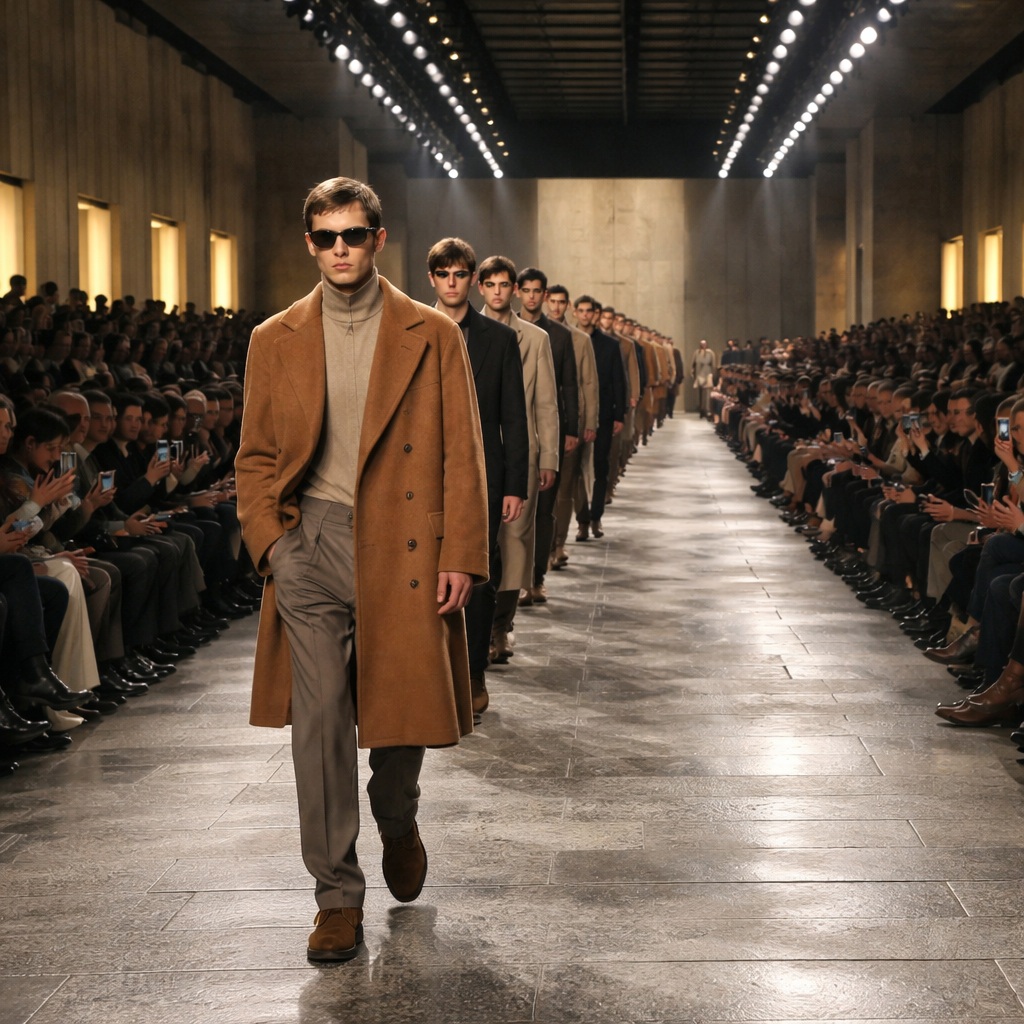
The opening show unfolded with the calm authority of a brand confident in its identity. Zegna’s runway favored movement over drama, allowing fabric, cut, and texture to do the work. Silhouettes were relaxed but deliberate, tailored without stiffness. Jackets softened at the shoulder, trousers fell with an easy line, and knitwear replaced rigid layering. The palette leaned toward natural tones—stone, deep brown, muted greens—punctuated by occasional flashes of warm color that felt seasonal rather than trend-driven.
For many in attendance, the collection read as a continuation of a broader shift that has been building quietly across recent seasons. Menswear is moving away from overt statements and toward longevity. Zegna’s opening reinforced that direction, emphasizing garments designed to be worn, lived in, and returned to. It was luxury articulated through feel and function rather than logo or excess.
Industry reaction inside the show space was notably focused. Editors spoke less about headline trends and more about construction, materials, and how the clothes translated off the runway. Buyers, many of whom arrived in Milan with cautious optimism, responded to the collection’s clarity. Several described it as “reassuring,” a word that surfaced repeatedly in post-show conversations. In a market still balancing ambition with realism, Zegna’s offering provided something buyers could commit to with confidence.
The collection also reflected a nuanced understanding of the modern client. Outerwear played a leading role, with coats and blousons designed to bridge formal and casual settings. Knit pieces were elevated, often styled as stand-alone statements rather than supporting layers. Accessories were understated, reinforcing the idea that the clothes themselves carried the message. The result was a wardrobe that acknowledged shifting lifestyles without abandoning the principles of tailoring that define Milan.
Beyond the runway, the opening show set the mood for the days ahead. Milan Fashion Week’s menswear calendar, traditionally anchored by heritage houses, is increasingly defined by how those brands adapt rather than reinvent. Zegna’s showcase suggested that adaptation today means refinement: refining silhouettes, refining supply, refining communication with the customer. It is an approach that aligns closely with where the market appears to be heading.
Buyer response after the show pointed to strong interest in versatile pieces that could perform across seasons. There was particular attention on lightweight tailoring and transitional outerwear, categories expected to perform well at retail. Several international buyers noted that Zegna’s emphasis on comfort and wearability resonated with clients seeking fewer but better purchases. The opening show, in that sense, functioned not just as a creative statement but as a commercial one.
The buzz around trends following the presentation was notably restrained. Rather than chasing novelty, conversations centered on proportion, texture, and the evolution of classic menswear codes. Relaxed tailoring emerged as a key theme, along with a continued blurring of boundaries between formal and informal dress. These were not radical shifts, but incremental adjustments—signals of a market favoring continuity over disruption.
Zegna’s role as opener carried symbolic weight. In recent seasons, the industry has looked to established houses for signals of confidence and direction. By leading Milan’s menswear season, Zegna positioned itself as a stabilizing force, offering a vision that balanced heritage with modern needs. The show suggested that progress in menswear does not require abandoning tradition, but rather reinterpreting it with care.
As Milan Fashion Week moves forward, the opening set by Zegna is likely to influence both tone and expectations. The season begins not with spectacle, but with assurance. For an industry navigating changing consumer habits and economic realities, that assurance may prove to be the most valuable trend of all.

 The Tower Post