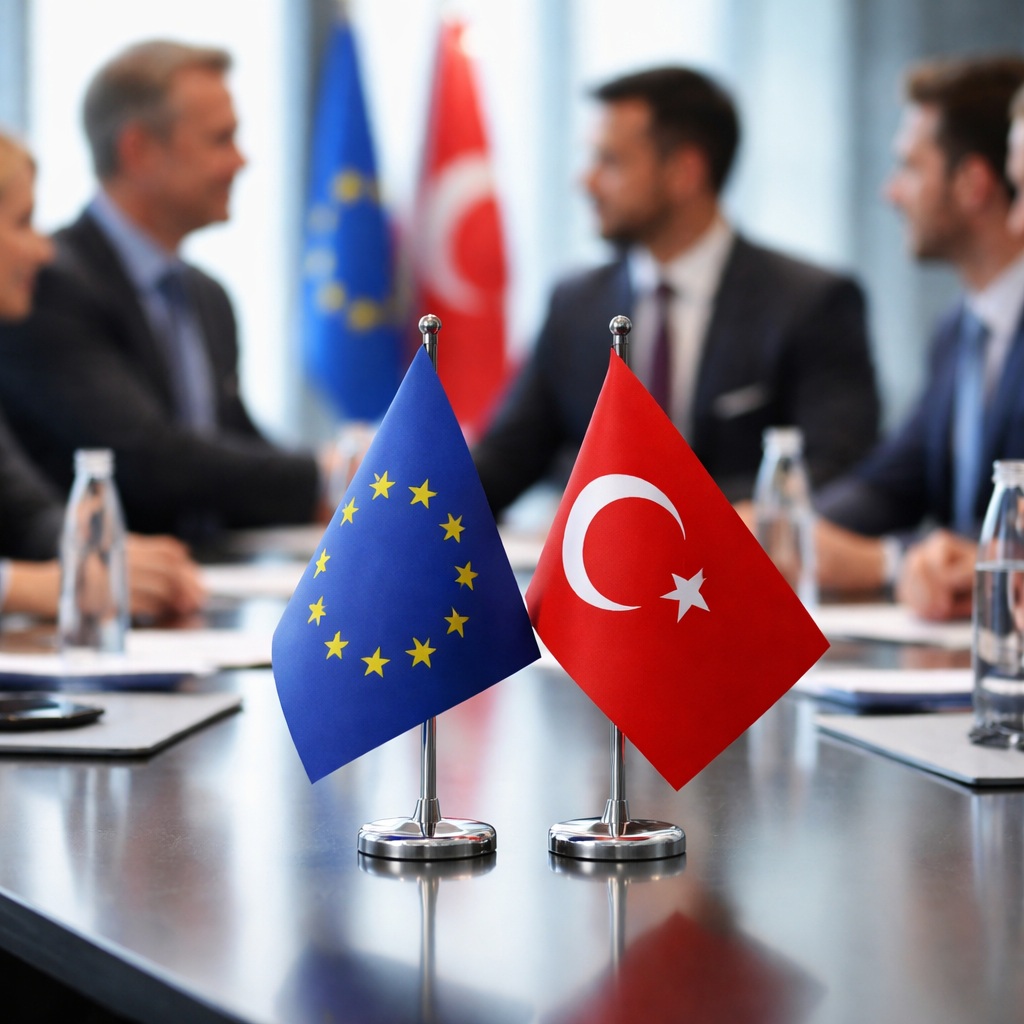
Calls grow for a modernised customs union as executives stress pragmatic cooperation to strengthen supply chains and competitiveness
As Europe enters a new year marked by economic uncertainty and geopolitical flux, business leaders from the European Union and Türkiye are renewing calls for a deeper, more pragmatic economic partnership. At a joint meeting bringing together senior executives, trade representatives and policy voices from both sides, participants stressed that closer cooperation is no longer a strategic option, but a practical necessity.
The central message from the discussions was clear: the EU–Türkiye economic relationship, already dense and mutually beneficial, needs an update to reflect current realities. Business leaders pointed in particular to the long-discussed modernisation of the EU–Türkiye customs union, arguing that its existing framework no longer matches the complexity of today’s trade, investment and supply-chain dynamics.
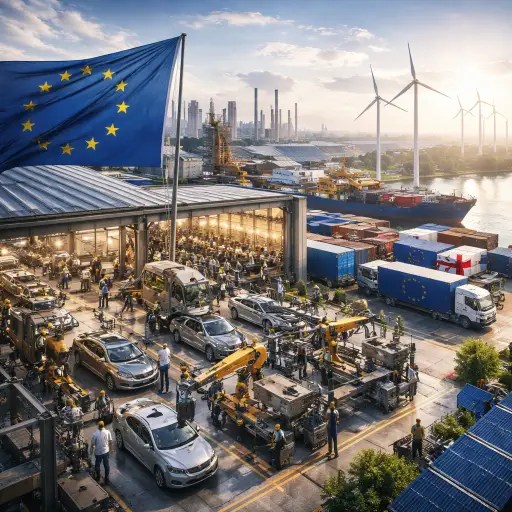
Türkiye remains one of the EU’s most significant economic partners, deeply integrated into European manufacturing networks, logistics routes and consumer markets. From automotive components and machinery to textiles and agri-food products, cross-border trade flows have become an essential pillar of industrial resilience. Executives on both sides noted that recent global shocks have only reinforced the value of geographically close, reliable partners.
Speakers at the meeting emphasised that pragmatic engagement should guide the next phase of relations. Rather than allowing political tensions or institutional inertia to stall progress, they argued for a focus on shared economic interests. Improving regulatory alignment, facilitating services trade and updating rules on digital commerce and sustainability were all cited as areas where cooperation could deliver rapid gains.
Supply chains featured prominently in the discussions. Business leaders highlighted how disruptions in recent years exposed vulnerabilities in overly distant or fragmented sourcing models. In this context, Türkiye’s role as a manufacturing and logistics hub linking Europe, Asia and the Middle East was described as a strategic asset. Strengthening economic ties, participants said, would help both sides build more resilient, diversified and competitive supply chains.
Competitiveness was another recurring theme. With global competition intensifying and industrial policies reshaping markets worldwide, EU and Turkish companies face similar pressures to innovate, decarbonise and adapt. A modernised economic framework, business leaders argued, could support joint investments, technology partnerships and skills development, enabling firms to compete more effectively on a global scale.
The customs union, in force for decades, was widely seen as the backbone of the relationship but also as its main bottleneck. Executives noted that while it successfully boosted trade in goods, it does not adequately cover services, public procurement or modern trade disciplines. Updating the agreement, they said, would not only expand trade volumes but also improve predictability and confidence for investors.
Participants were careful to frame their calls in realistic terms. Rather than sweeping political declarations, they advocated incremental, results-driven steps that deliver tangible benefits for businesses and consumers. Enhanced dialogue between institutions, structured engagement with the private sector and clearer roadmaps for reform were all highlighted as practical tools to move forward.
The tone of the meeting reflected a broader shift toward economic realism. In an environment shaped by strategic rivalry and economic fragmentation, business leaders argued that cooperation between the EU and Türkiye can act as a stabilising force. Deeper ties, they said, would strengthen economic resilience on both sides while reinforcing Europe’s wider neighbourhood connectivity.
As the year unfolds, expectations remain cautious but focused. Business representatives made clear that momentum exists, but it will require political will and sustained engagement to translate shared interests into concrete outcomes. For companies operating across EU–Türkiye value chains, the stakes are high, and the call for a renewed economic partnership is growing louder.
 The Tower Post