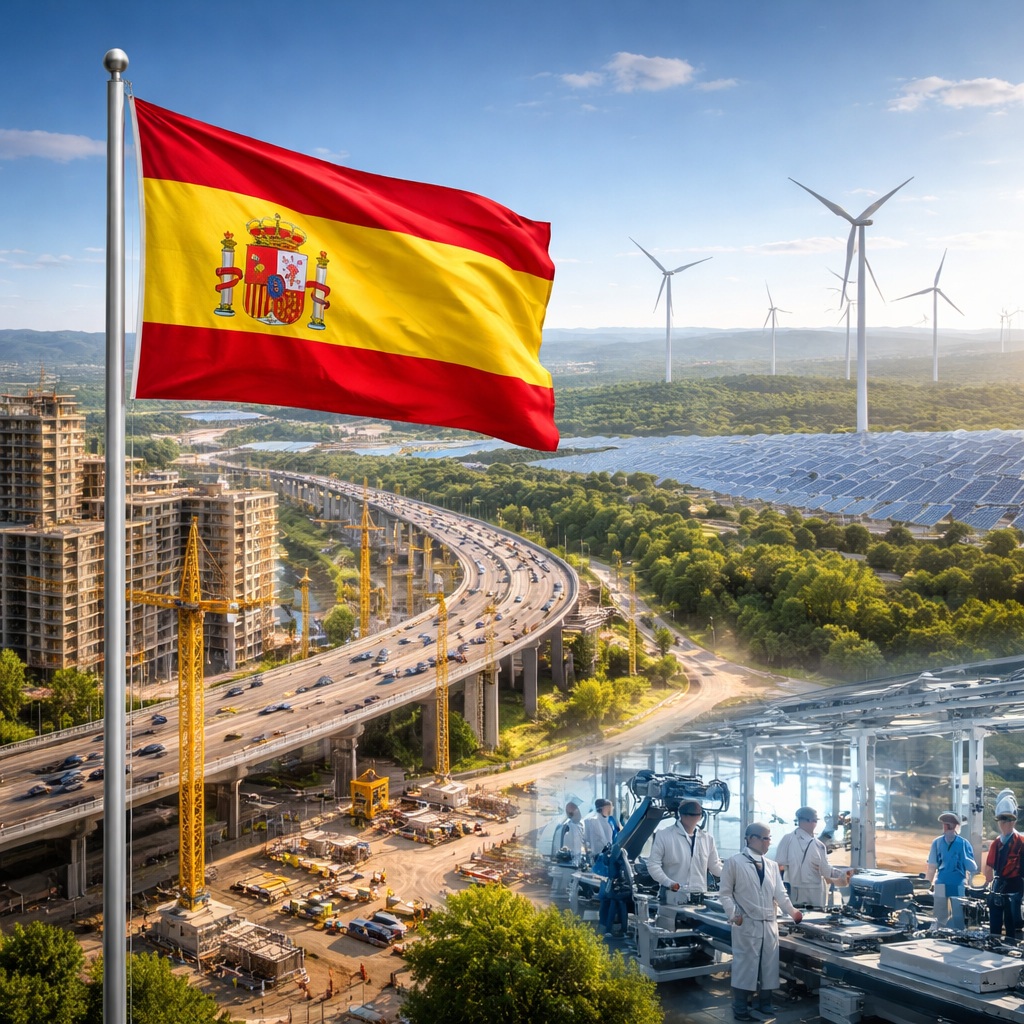
Madrid prepares a state-backed investment vehicle to sustain economic momentum as pandemic-era European funds wind down, targeting housing, defence and infrastructure.
Spain’s government is preparing to launch a sovereign wealth fund designed to extend economic stimulus beyond the lifespan of the European Union’s post-pandemic recovery programmes, marking a strategic shift in how the country plans to support long-term growth.
As EU recovery funding gradually expires, Spanish officials argue that the country cannot rely indefinitely on external stimulus. The proposed state-owned investment vehicle aims to channel public capital into strategic sectors that are considered critical for economic resilience, social cohesion and competitiveness in an increasingly uncertain global environment.
Government sources describe the fund as a tool to smooth the transition from short-term recovery support to a more permanent development strategy. Rather than replacing EU funds outright, the new vehicle is intended to complement them, ensuring continuity in investment once European disbursements fade.
At the heart of the plan is the idea that Spain must take a more active role in shaping its economic future. The sovereign wealth fund would allow the state to invest directly in projects aligned with national priorities, while also attracting private capital through co-investment structures. Officials involved in the design say this approach could multiply the impact of public money without placing excessive strain on public finances.
Housing has emerged as one of the fund’s central pillars. Spain continues to face structural shortages of affordable housing, particularly in major cities and high-demand regions. By investing in housing development, urban regeneration and related infrastructure, the government hopes to ease social pressures while stimulating employment and productivity across the construction and services sectors.
Defence is another strategic area identified for support. In the context of heightened geopolitical uncertainty and renewed emphasis on European security, Spain is seeking to strengthen its domestic defence industry. Investments through the sovereign wealth fund could help modernise production, support technological innovation and reduce dependence on external suppliers, while aligning with broader European defence initiatives.
Infrastructure remains a third cornerstone of the proposed strategy. Despite significant progress over recent decades, officials argue that further investment is needed to modernise transport networks, energy systems and digital connectivity. Priority is expected to be given to projects that enhance sustainability and regional cohesion, reinforcing Spain’s role as a logistical and energy hub within Europe.
Economists note that the proposal reflects a broader international trend. Sovereign wealth funds, traditionally associated with resource-rich countries, are increasingly being adopted by advanced economies as instruments of industrial policy. By taking equity stakes rather than relying solely on subsidies or grants, governments can potentially achieve longer-lasting economic returns.
Supporters of the Spanish initiative say the timing is deliberate. With economic growth expected to moderate as exceptional post-pandemic measures fade, the fund is seen as a stabilising force that can maintain investment levels through economic cycles. This, officials argue, could help reduce Spain’s historical vulnerability to boom-and-bust dynamics.
The government insists that governance and transparency will be central to the fund’s credibility. Plans include professional management structures, clear investment mandates and oversight mechanisms designed to shield decisions from short-term political pressures. Lessons are being drawn from established European investment institutions to ensure compliance with EU competition and state aid rules.
Critics, however, warn of potential risks. Some economists caution that poorly targeted investments could distort markets or crowd out private initiative. Others raise concerns about the state assuming excessive financial risk, particularly if investments underperform during an economic downturn. The government counters that careful project selection and diversified portfolios will mitigate these dangers.
Business groups have reacted cautiously but constructively. While welcoming the prospect of stable, long-term investment, they stress the importance of regulatory certainty and collaboration with the private sector. Industry representatives argue that the fund’s success will depend on its ability to operate with commercial discipline while pursuing public objectives.
For Spain, the initiative also carries symbolic weight. After years of relying heavily on European support mechanisms during crises, the creation of a sovereign wealth fund signals a desire for greater economic autonomy. Officials say it reflects confidence in the country’s capacity to manage complex investment strategies and generate sustainable returns.
As the EU recovery era gradually draws to a close, Spain’s proposed sovereign wealth fund represents an attempt to redefine the role of the state in economic development. Whether it succeeds will depend not only on capital and governance, but on the government’s ability to balance ambition with prudence in an evolving global economy.




 The Tower Post