
NATO allies caution that threats of U.S. tariffs tied to Greenland could trigger lasting damage to transatlantic relations
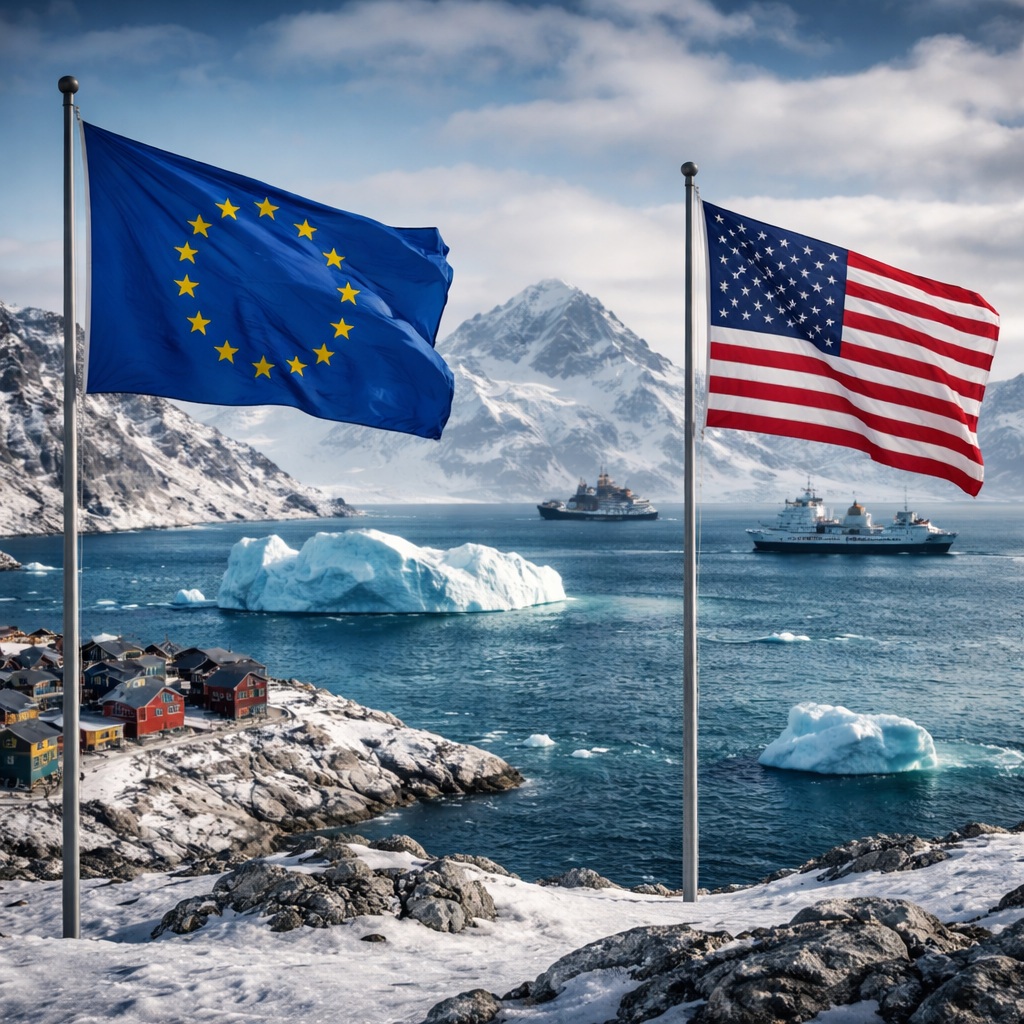
European Union leaders are warning that the growing dispute over Greenland risks opening a new and dangerous chapter in transatlantic trade tensions, as talk of punitive tariffs and strategic pressure unsettles NATO allies and rattles financial markets. The controversy, sparked by renewed signals from Washington linking trade measures against the EU to Denmark’s control over Greenland, has prompted unusually blunt reactions from European capitals, which fear a rapid downward spiral in relations with the United States.
At the heart of the dispute lies Greenland’s strategic importance. The vast Arctic territory, an autonomous region within the Kingdom of Denmark, has gained renewed prominence as climate change opens new shipping routes and exposes mineral resources critical to advanced technologies. Its location also carries major military significance for missile defense and Arctic security, making it a focal point of great-power competition.
European officials say that framing Greenland as a transactional asset, tied to tariff threats against the EU, undermines both international law and the spirit of alliance cooperation. Diplomats in Brussels describe the approach as a “red line” that risks turning strategic dialogue into economic coercion.
Senior EU figures have cautioned that retaliatory tariffs could follow quickly if U.S. measures are imposed, reviving memories of previous trade disputes that hurt industries on both sides of the Atlantic. “Once tariffs start flying, they rarely stop with a single exchange,” said one EU official involved in trade policy discussions. “The danger is a spiral that becomes politically impossible to reverse.”
The concern is shared among NATO members, many of whom see the Greenland issue as a test of alliance cohesion at a time when security challenges are multiplying. Officials from several European capitals stress that pressure on Denmark would inevitably be perceived as pressure on the entire EU, triggering collective responses that go well beyond trade.
Denmark, for its part, has sought to strike a careful balance. Copenhagen has reaffirmed Greenland’s autonomy and rejected any suggestion that the territory could be sold or transferred, while emphasizing its willingness to deepen cooperation with allies on Arctic security and investment. Greenlandic leaders have echoed that stance, insisting that the island’s future must be decided by its own people, not negotiated in trade disputes between major powers.
Behind closed doors, European diplomats worry that escalating rhetoric could harden positions on all sides. Businesses are already warning of renewed uncertainty for exporters, particularly in sectors previously targeted by transatlantic tariffs. Analysts note that even the threat of new duties can disrupt supply chains, raise costs, and weaken confidence at a fragile moment for the global economy.
In Washington, supporters of a tougher stance argue that Greenland’s strategic value justifies extraordinary measures and accuse European partners of underestimating U.S. security concerns in the Arctic. Critics counter that linking security issues to tariffs risks blurring lines between defense cooperation and economic leverage, setting a precedent that could haunt future alliances.
EU leaders have responded by calling for dialogue rather than confrontation. Several have urged a return to structured talks on Arctic strategy, trade, and security within established NATO and EU-U.S. frameworks. The message, according to officials, is that disagreements over strategic assets should be resolved through diplomacy, not economic threats.
Still, few in Brussels are under any illusion about the stakes. If the tariff threats materialize, the EU is expected to respond swiftly and proportionately, a move that could entrench divisions just as unity is most needed. “This is not only about Greenland,” said a senior European diplomat. “It is about whether alliances are governed by shared rules or by pressure.”
As tensions simmer, the Greenland dispute has become a symbol of a broader challenge facing the transatlantic relationship: how to manage strategic competition and national interests without unraveling decades of economic and security cooperation. European leaders hope cooler heads will prevail, but they are preparing for the possibility that the next phase could test the resilience of the alliance in unprecedented ways.
 The Tower Post