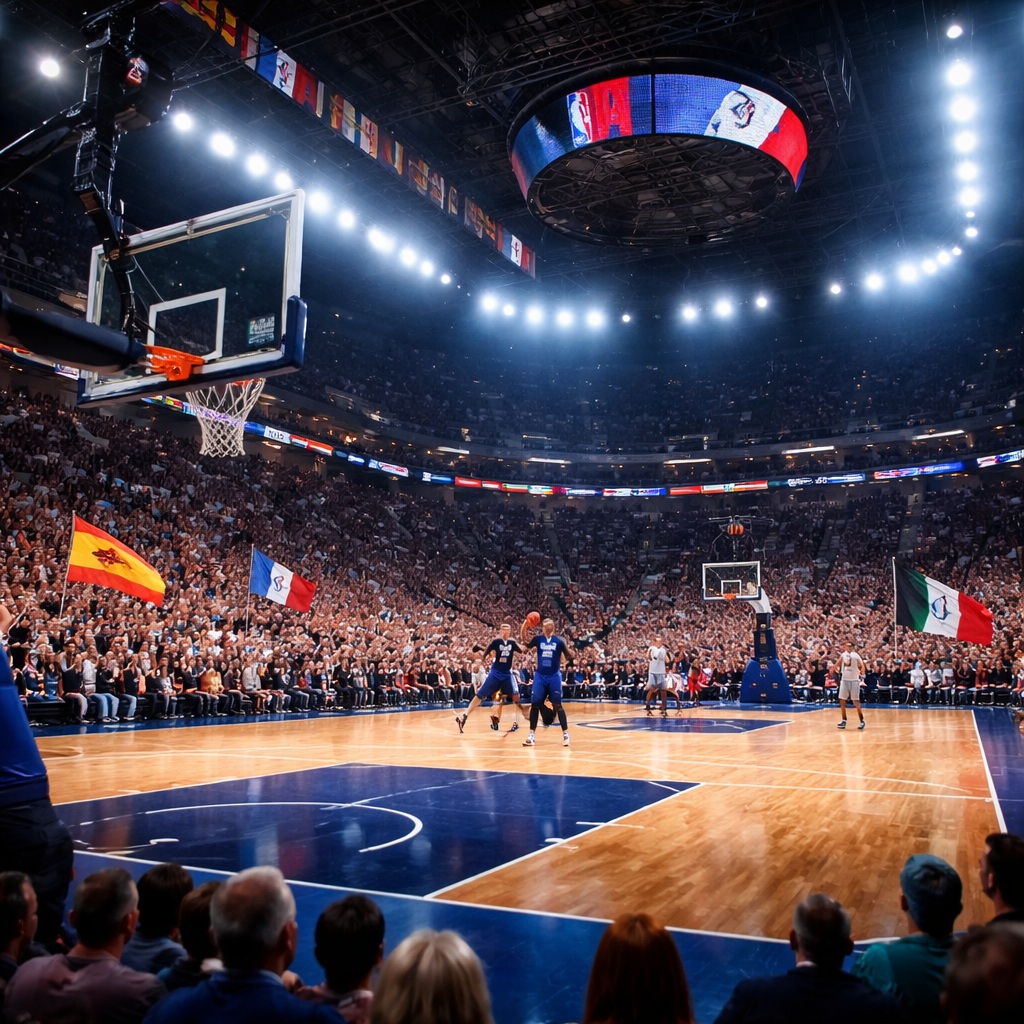
Adam Silver’s vision for a Europe-based competition signals a strategic push to blend NBA scale with European basketball culture.
As winter settles across Europe, conversations inside the global basketball community are warming to a bold idea: the NBA is actively exploring the creation of a new, Europe-based basketball competition, an initiative championed by NBA Commissioner Adam Silver that reflects a growing conviction that the league’s next phase of international growth will not come solely from broadcasting deals or preseason games abroad, but from a permanent presence rooted in Europe’s distinctive sporting culture.
The concept under discussion would see the NBA help launch or co-create a league operating on European soil, designed to coexist with rather than simply displace the continent’s established basketball ecosystem, with Silver repeatedly emphasizing admiration for Europe’s fan culture, where packed arenas, organized supporter groups, and intense local rivalries shape an atmosphere very different from that of North American professional sports.
At the heart of the project is collaboration, as the NBA has made clear that it is not seeking to act unilaterally, and discussions with the International Basketball Federation (FIBA) are central to the plan given FIBA’s regulatory role and deep connections with national federations, a cooperative approach intended to avoid the pitfalls that have plagued past attempts to reshape European club basketball.
Interest from major football-branded sports organizations has further fueled speculation, with clubs such as FC Barcelona and Paris Saint-Germain frequently mentioned in industry conversations, as their involvement would offer instant brand recognition, modern arenas, and access to large and diverse fan bases, assets the NBA views as essential for a successful European venture.
Unlike the franchise model that defines the NBA in North America, the European competition under consideration would likely adopt a hybrid structure, and while promotion and relegation remain sensitive topics, league officials acknowledge that respecting local traditions will be key to winning over fans who value sporting merit as much as star power.
From a commercial perspective, the logic is compelling, as Europe represents one of the NBA’s largest and most engaged international audiences, with millions of fans following games late into the night and a steady pipeline of elite European players starring in the league, and by establishing a competition closer to home, the NBA aims to convert that passion into sustained local engagement, sponsorship opportunities, and youth development pathways.
Significant challenges remain, however, because Europe’s basketball calendar is crowded and existing leagues command deep loyalty, meaning any new competition will need to balance innovation with integration, offering something genuinely additive rather than merely disruptive while questions around scheduling, player movement, and revenue sharing remain unresolved.
For now the initiative remains exploratory, but its symbolism is hard to ignore, as the NBA’s willingness to consider a Europe-based league underscores how global the sport has become and how seriously the league views Europe not just as a market but as a partner in shaping basketball’s future, with discussions continuing and the center of gravity in the basketball world no longer confined to one continent.




 The Tower Post