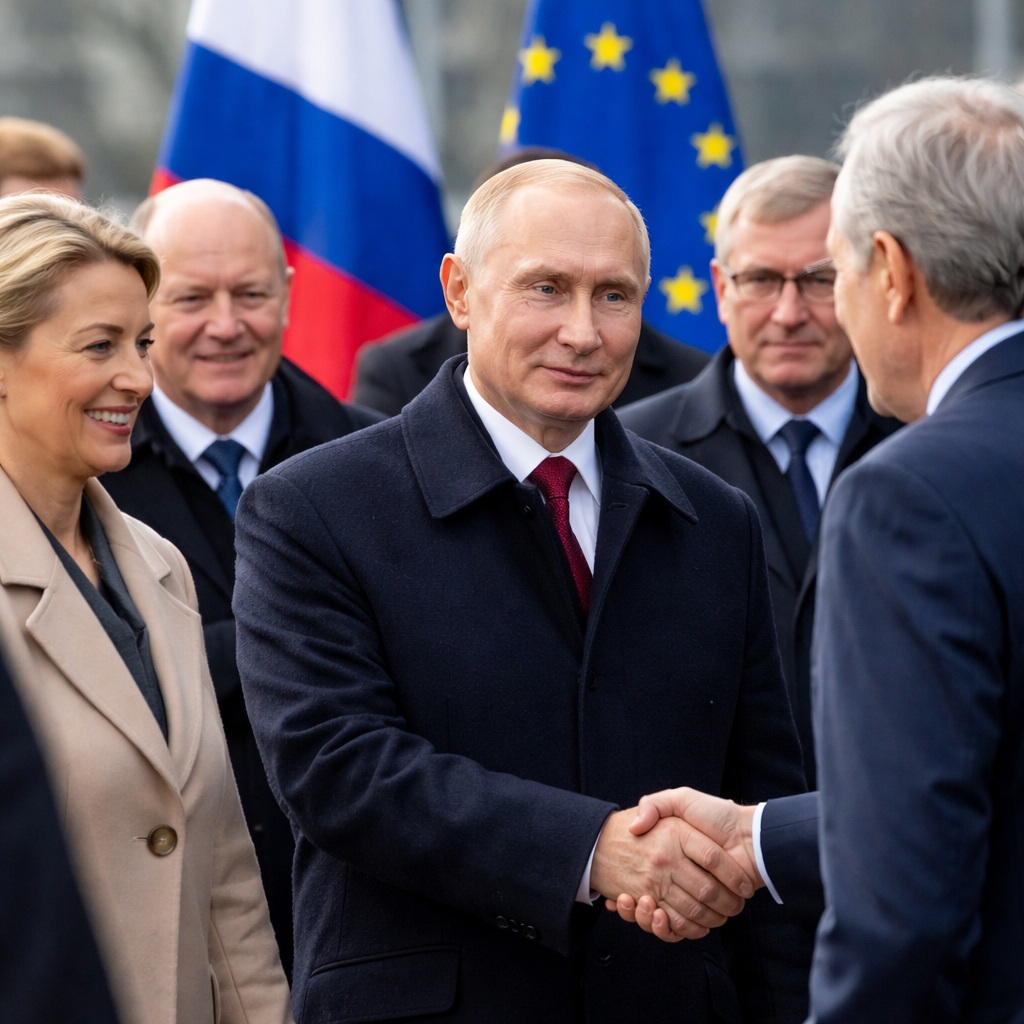
The Kremlin says it wants diplomatic relations returned to pre-war levels, marking a shift in tone amid enduring mistrust and unresolved conflict.
Russia’s leadership is once again adjusting its language toward Europe. In a series of carefully calibrated statements, President Vladimir Putin and senior Kremlin officials have signaled a readiness to “restore” relations with European capitals to what they describe as pre-war levels. The message, delivered through state media and diplomatic channels, stops short of acknowledging responsibility for the conflict in Ukraine but suggests an effort to test whether fatigue, political change, and economic pressure inside the European Union have opened space for renewed dialogue.
The Kremlin’s position is framed as conditional rather than conciliatory. Officials insist that Russia has never closed the door to diplomacy and argue that it was Europe that “froze” relations through sanctions, diplomatic expulsions, and military support for Kyiv. By calling for a return to pre-war diplomatic norms, Moscow appears to be seeking a partial reset: embassies functioning at full capacity, routine political contacts resumed, and economic communication channels cautiously reopened.
European governments, for their part, have responded with restraint. Publicly, EU leaders reiterate that any normalization of relations depends on concrete changes in Russian behavior, particularly with regard to Ukraine’s sovereignty and security. Privately, diplomats acknowledge that the Kremlin’s rhetoric represents a noticeable shift from the confrontational language that dominated earlier phases of the war, when Russia portrayed Europe as an outright adversary aligned with Washington.
The timing of Moscow’s message is widely interpreted as strategic. Europe continues to grapple with energy costs, industrial competitiveness, and internal political divisions, while several governments face pressure from voters skeptical of prolonged confrontation. By softening its tone, the Kremlin may be attempting to exploit these vulnerabilities, presenting itself as a rational actor willing to talk while portraying European leaders as inflexible.
Yet there is little indication that the substance of Russian policy has changed. Military operations continue, and the core demands articulated by Moscow remain largely intact. Analysts note that the call to “restore” ties carefully avoids any reference to withdrawal, accountability, or concessions. Instead, it frames the conflict as an unfortunate rupture in otherwise normal relations, a narrative that many European officials reject outright.
From Brussels, the response has been cautious but unified. EU institutions emphasize that diplomacy cannot be separated from facts on the ground. Restoring relations, they argue, is not a technical exercise but a political one, tied to trust, security guarantees, and respect for international law. Several capitals have also warned against mistaking rhetorical shifts for genuine policy change.
At the same time, some European diplomats quietly acknowledge the need to keep channels open. History, they argue, shows that even during periods of high tension, limited engagement can reduce the risk of miscalculation. This pragmatic view does not imply acceptance of Russia’s position but reflects concern about long-term stability on the continent.
Inside Russia, the messaging serves a domestic purpose as well. By presenting Europe as a potential partner rather than a permanent enemy, the Kremlin can signal resilience and normalcy to its own population, suggesting that isolation is neither total nor irreversible. It also reinforces the narrative that Russia is ready for dialogue, even if others are not.
For now, the gap between words and reality remains wide. Europe’s sanctions regime stays in place, military support for Ukraine continues, and political trust is scarce. The Kremlin’s latest statements may indicate a tactical adjustment rather than a strategic turn, aimed at probing Europe’s resolve rather than transforming relations.
Whether this signals the beginning of a slow diplomatic thaw or merely another phase of rhetorical maneuvering will depend less on language and more on actions. Until those actions change, Europe is likely to listen carefully, respond cautiously, and keep its expectations firmly in check.

 The Tower Post