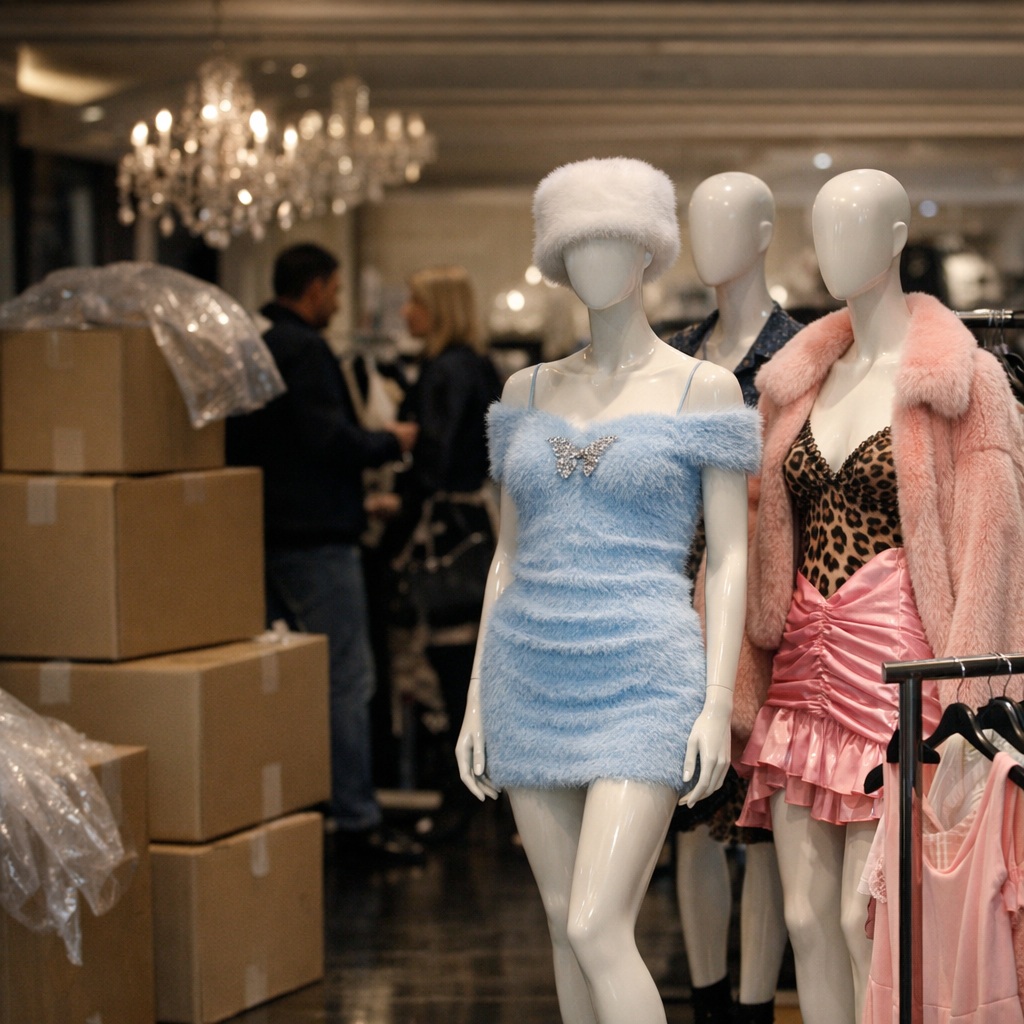
The Italian fashion group behind the iconic Blumarine label confirms it will cease production in 2026, reshaping jobs, supply chains and the balance of Italy’s contemporary fashion scene.
The announcement arrived quietly but landed heavily across Italy’s fashion corridors. Blufin, the privately held group that owns Blumarine, has confirmed it will wind down its production activities over the course of 2026, effectively closing a chapter that has spanned decades of Italian fashion history. For employees, suppliers and an industry already grappling with structural change, the decision marks another signal that the old certainties of the luxury system are under strain.
Founded on a vision of sensuality and romantic glamour, Blumarine became internationally known for its unapologetically feminine aesthetic—sheer fabrics, pastel tones and embellishment that stood apart from the minimalism dominating much of late twentieth-century fashion. Under the Blufin umbrella, the brand grew from a niche Italian label into a recognizable global name, stocked in department stores and boutiques across Europe, the United States and Asia.
Yet in recent years, maintaining that position has become increasingly difficult. According to company representatives, the decision to cease production follows a prolonged period of financial pressure, rising operating costs and a wholesale market that has become less forgiving to mid-sized luxury brands. While Blufin stopped short of detailing precise figures, it acknowledged that the current business model was no longer sustainable in its existing form.
For workers, the implications are immediate and personal. Blufin’s operations support not only in-house staff but also a network of external manufacturers, artisans and logistics partners, many of them located in Italy’s historic fashion districts. Trade unions have already raised concerns about job security and are calling for structured discussions to manage the transition and explore possible protections or redeployment options.
“This is not just one company closing,” said one industry union representative. “It is part of a wider contraction that affects skilled labor, know-how and local economies built around fashion.”
The announcement comes at a time when Italy’s fashion sector is undergoing a profound transformation. While global luxury groups continue to report solid performances at the very top end of the market, smaller and mid-sized brands are being squeezed between soaring production costs and consumers who are increasingly selective in their spending. Inflationary pressures, tighter wholesale buying and shifting tastes toward either ultra-luxury or accessible fashion have left less room for labels positioned in the middle.
Blumarine’s journey in the past decade reflects these tensions. The brand experimented with creative direction and attempted to reconnect with younger audiences through refreshed imagery and runway presence. While these efforts generated visibility, they did not translate into the scale of commercial recovery required to offset structural challenges, according to analysts familiar with the company.
“The problem is not creativity,” said a Milan-based fashion consultant. “It’s scale, capital and timing. Brands like Blumarine carry strong identities, but the market today rewards either massive global reach or very agile, niche operations. The space in between is increasingly fragile.”
Blufin’s decision also highlights the changing dynamics of ownership in fashion. Over the past years, many Italian brands have been absorbed by multinational luxury groups or investment funds seeking to consolidate production, distribution and branding. Blufin, which remained independent, faced the full weight of market volatility without the buffer of a larger corporate structure.
While the company has confirmed the cessation of production, questions remain about the future of the Blumarine name itself. Industry observers note that intellectual property, archives and brand equity could still attract interest from investors or licensing partners, potentially opening the door to a revival under different ownership. Blufin has not commented on whether it is exploring such options.
For now, the focus is on managing an orderly wind-down. Sources close to the company say discussions are ongoing with suppliers and retail partners to fulfill existing commitments and limit disruption. Retailers, particularly those in Europe, are already reassessing their assortments as they prepare for the brand’s gradual exit from the market.
Beyond the immediate business impact, Blumarine’s slowdown carries symbolic weight. The label represented a distinctly Italian approach to femininity and glamour, one that resisted the cycles of trend-driven minimalism. Its potential disappearance underscores how vulnerable even well-established identities have become in an era defined by speed, scale and relentless competition.
As the Italian fashion industry looks ahead, Blufin’s announcement adds urgency to debates about support for independent brands, protection of artisanal skills and the long-term sustainability of the country’s fashion ecosystem. Policymakers and industry bodies have repeatedly emphasized the cultural and economic value of fashion, but translating that recognition into effective support remains an open challenge.
For employees and collaborators, the coming months will be marked by uncertainty. For the wider industry, the news serves as a reminder that heritage alone is no guarantee of survival. As one buyer put it, “Fashion today rewards clarity, capital and consistency. Without all three, even beautiful brands can struggle to stay alive.”
Blufin’s decision may not be the last of its kind. But as production winds down and ateliers fall silent, the story of Blumarine will stand as both a testament to Italian creativity and a cautionary tale about the pressures reshaping global fashion.




 The Tower Post