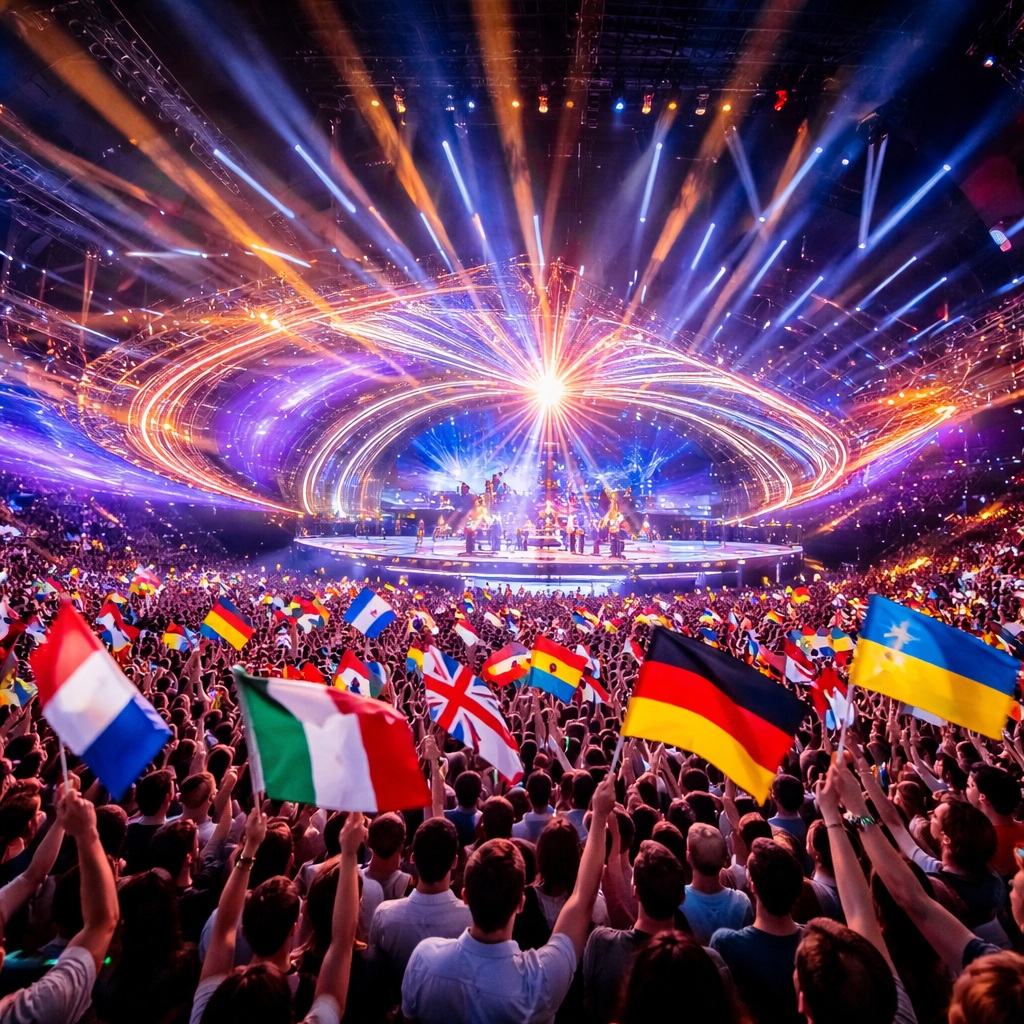
Spain’s absence reshapes automatic qualification, stirring debate over tradition, diversity, and the future balance of Europe’s biggest music spectacle.
This January, as Europe turns its attention once again to the world’s most-watched live music event, the Eurovision Song Contest finds itself navigating one of the most significant structural shifts in its modern history, as for the first time since the “Big Five” system was formalized the group of countries automatically qualified for the Grand Final has been reduced.
Spain, a cornerstone of that alliance for decades, is absent from the automatic qualifiers in the upcoming edition, prompting fresh debate about power, participation, and the evolving identity of Eurovision at a moment when the contest is reassessing its relationship with tradition.
The Big Five — traditionally France, Germany, Italy, Spain, and the United Kingdom — have long enjoyed guaranteed places in the final as the contest’s largest financial contributors, an arrangement defended as a safeguard for economic stability but criticized by fans who see it as contradicting Eurovision’s competitive ethos.
Spain’s absence has therefore landed as both a shock and a provocation, with organizers stressing that the change reflects a broader recalibration of participation rather than a sanction, and framing it as part of Eurovision’s long-standing pattern of adaptation to shifting cultural and media realities.
Across Europe, public broadcasters are adjusting strategies in response, as semifinals regain prominence and countries accustomed to automatic qualification face renewed pressure to invest in stronger national selections, staging innovation, and international outreach.
Fan reactions have been swift and polarized, with some celebrating the perceived return to a more level playing field while others warn that weakening the Big Five framework could undermine the contest’s financial resilience and marginalize musical traditions that have historically shaped Eurovision’s sound.
Industry analysts note that Spain’s situation highlights a deeper tension between legacy and reinvention, as recent editions increasingly reward genre-blending performances, digital-native artists, and experimental staging, sometimes leaving conventional pop approaches at a disadvantage.
The European Broadcasting Union has emphasized that no country is being sidelined, pointing instead to the need for flexibility in a fragmented media environment marked by rising production costs, changing viewing habits, and the challenge of engaging multiple generations simultaneously.
Beyond logistics, the change carries symbolic weight, as Eurovision has always functioned as a cultural mirror of Europe itself, and the reduction of automatic qualifiers challenges assumptions about permanence, privilege, and hierarchy within that shared space.
Artists preparing to compete have responded with cautious optimism, particularly those from smaller countries who see increased opportunity for visibility, while performers from traditionally dominant broadcasters acknowledge that expectations are higher and safety nets fewer.
Economically, the implications remain complex, with Eurovision now supported by diversified revenue streams including digital platforms, international broadcasting agreements, and live-event tourism, giving organizers greater room to test structural adjustments.
Whether Spain’s absence proves to be a temporary measure or the start of a deeper rethink remains uncertain, but the contest clearly enters this season in a moment of transition where fairness, representation, and evolution dominate discussion.
As winter rehearsals begin and national selections conclude, the spotlight rests not only on the songs but on whether audiences are ready for a Eurovision defined less by fixed hierarchies and more by fluid participation.
For organizers, the message is one of cautious confidence, as Eurovision once again leans on its history of reinvention, presenting the current shift not as a rupture but as another verse in a competition that continues to evolve alongside its audience.


 The Tower Post