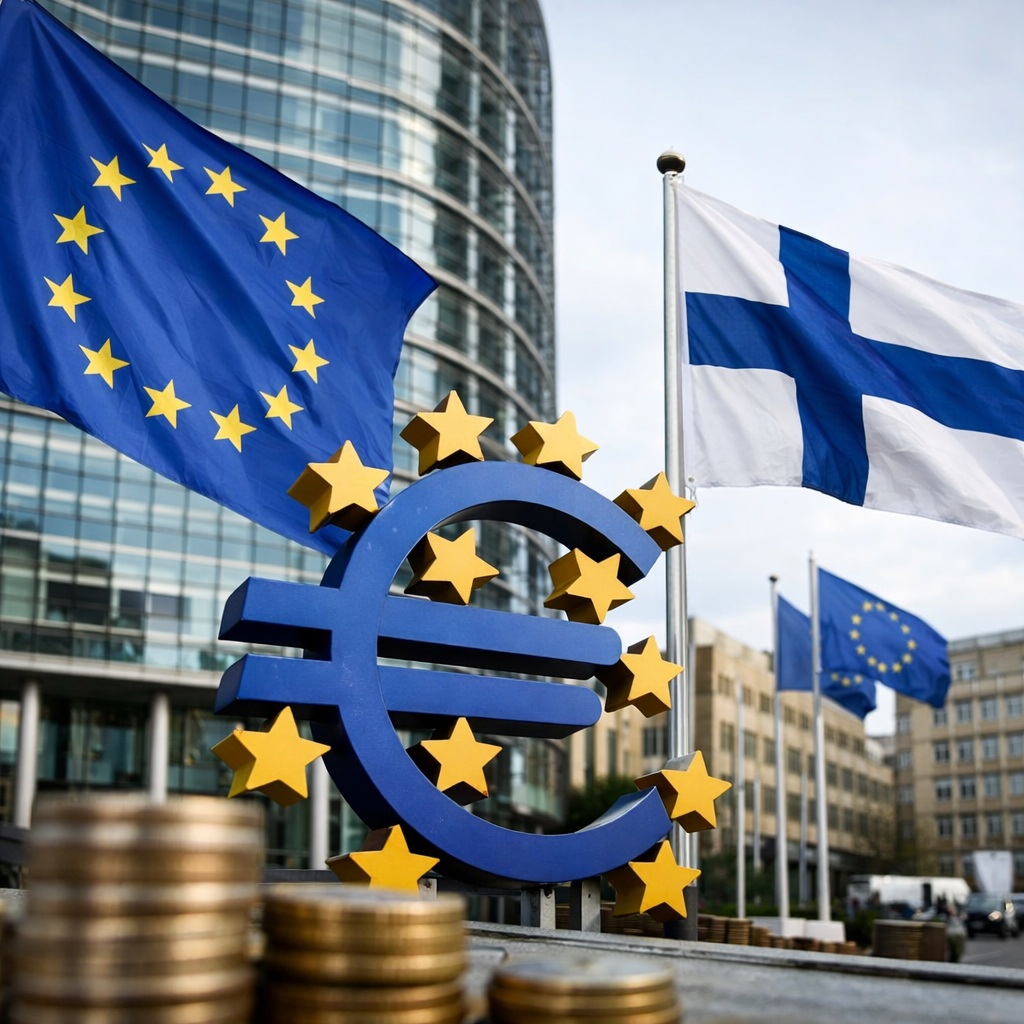
Brussels’ decision places Helsinki under closer budget scrutiny, highlighting renewed pressure on Europe’s fiscal governance framework.
Finland has formally entered the European Union’s Excessive Deficit Procedure, a step that brings the Nordic country under enhanced fiscal surveillance and obliges its government to chart a credible path back to budgetary compliance. The move, endorsed by the EU Council, follows the assessment that Finland’s public deficit has moved beyond the limits set out in the Union’s fiscal rulebook.
While the procedure does not carry the drama associated with sovereign debt emergencies of the past, it is a reminder that fiscal discipline has returned to the centre of Europe’s economic debate. For Finland, long regarded as a model of prudence and institutional stability, the decision marks an uncomfortable moment and underscores how even traditionally cautious economies are struggling with the post-crisis fiscal environment.
Under the Excessive Deficit Procedure, Helsinki is required to present a package of corrective measures outlining how it intends to rein in the deficit and ensure the sustainability of public finances. EU finance ministers expect the plan to combine realistic budget assumptions with concrete policy actions, rather than rely solely on optimistic growth projections. The Finnish government must now balance domestic political constraints with the expectations of Brussels and its European partners.
The roots of Finland’s fiscal slippage are both cyclical and structural. Slower economic momentum across Europe has weighed on tax revenues, while higher spending linked to defence, social protection, and the green transition has placed sustained pressure on public accounts. Demographic trends, including an ageing population, have further complicated the picture by increasing long-term expenditure commitments.
European officials have been careful to stress that the procedure is not punitive in nature. Instead, it is designed to support member states in correcting imbalances before they become destabilising. Still, entering the Excessive Deficit Procedure carries reputational weight. It signals to markets, investors, and rating agencies that fiscal policy is under strain, even if immediate financial penalties are unlikely.
For the European Union, the decision reflects a broader effort to reassert the credibility of its fiscal framework. After years of emergency flexibility during successive crises, EU institutions are gradually restoring the application of budgetary rules, albeit with more emphasis on country-specific circumstances. Finland’s case illustrates this recalibrated approach: firm oversight combined with room for national discretion on how targets are met.
Domestically, the political implications are significant. Finnish leaders must now justify potentially unpopular measures, such as spending restraint or tax adjustments, in the context of external obligations. Opposition parties are likely to frame the EU decision as evidence of policy mismanagement, while the government will argue that corrective action is necessary to safeguard long-term economic stability.
Beyond Finland, the episode adds to a growing list of member states facing fiscal scrutiny. It reinforces the message that no country, regardless of past reputation, is immune from the constraints of the EU’s shared economic framework. As Europe navigates an uncertain global outlook, the challenge for policymakers will be to restore fiscal buffers without undermining growth or social cohesion.
For now, Finland’s entry into the Excessive Deficit Procedure stands as a measured but telling development. It may not dominate headlines across the continent, but it speaks to the quiet return of fiscal governance as a defining issue in Europe’s economic landscape, with Brussels once again asserting its role as guardian of budgetary discipline.




 The Tower Post