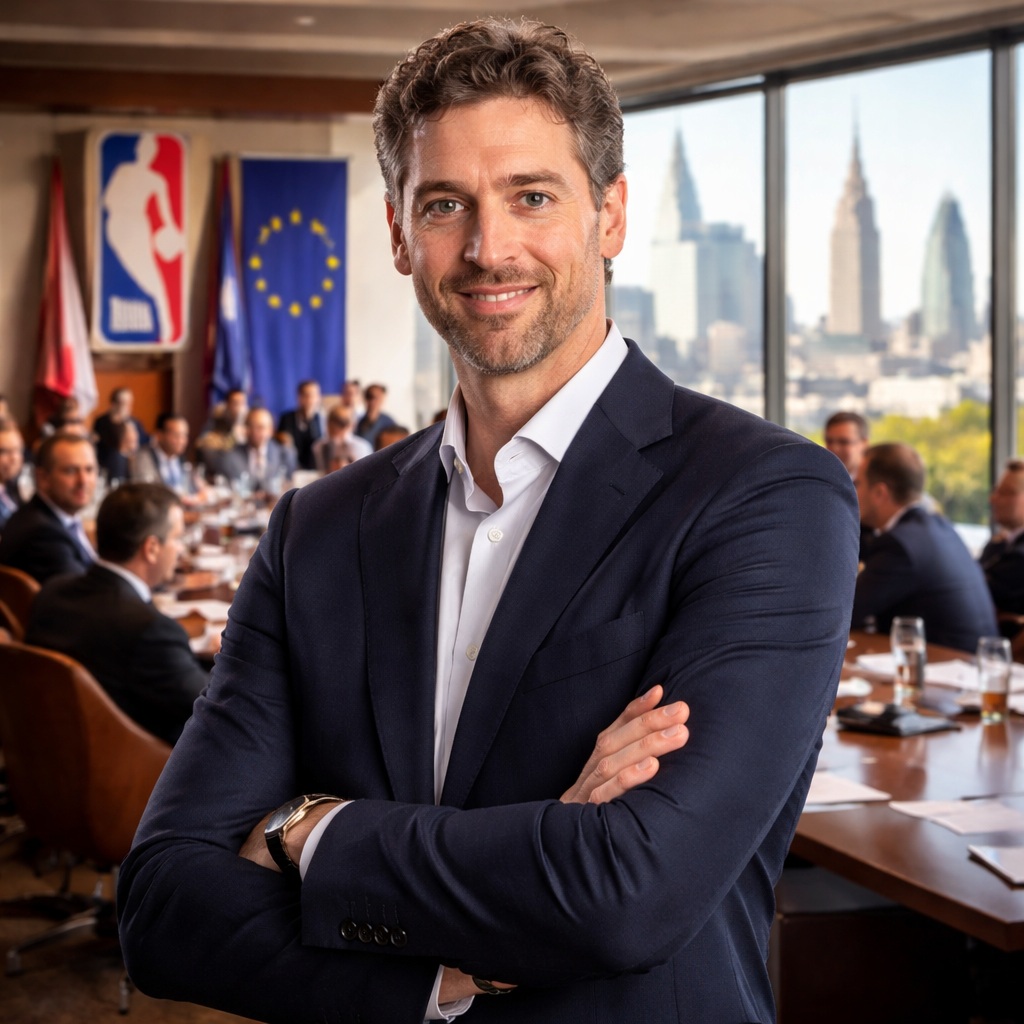
The Hall of Famer’s global credibility and boardroom experience place him at the center of conversations shaping the league’s proposed European expansion.
By early 2026, the NBA’s long-rumored European ambitions have shifted from speculative boardroom chatter to something far more tangible. At the heart of those conversations stands Pau Gasol, the former Los Angeles Lakers star and newly inducted Hall of Famer, whose name is increasingly linked to a senior leadership role in the proposed NBA Europe league.
Multiple industry sources describe Gasol as a natural bridge between the NBA’s North American power structure and Europe’s complex basketball ecosystem. His potential involvement is not about a ceremonial title or ambassadorial duties. Rather, executives and investors see Gasol as a strategic figure capable of uniting stakeholders, attracting capital, and lending credibility to what would be the most ambitious international expansion in the league’s history.
The NBA has spent years studying the European market, balancing opportunity against risk. Europe boasts deeply rooted domestic leagues, iconic football clubs with basketball divisions, and a passionate fan base that has produced generations of elite players. Yet fragmentation, competing interests, and governance issues have long complicated the idea of a unified, NBA-backed competition. Gasol’s emergence in the discussions suggests the league is now prioritizing trust and cultural fluency as much as financial muscle.
Gasol’s résumé extends well beyond his decorated playing career. A two-time NBA champion, six-time All-Star, and cornerstone of Spain’s golden generation, he has long been respected for his intellect and leadership. Since retiring, Gasol has quietly built a second career that blends sports governance, philanthropy, and business. He has served on international sports committees, advised player associations, and maintained close relationships with NBA leadership, European club owners, and global sponsors.
Those connections are proving invaluable as talks increasingly center on London as a potential operational hub for NBA Europe. The city’s financial infrastructure, global media reach, and established sports investment community make it a logical gathering point for major investors and influential sports figures. Sources familiar with the process say Gasol has already participated in high-level meetings in the British capital, helping frame discussions around governance models, competitive formats, and long-term commercial strategy.
The proposed league, still in its formative stages, is expected to feature a limited number of franchises strategically placed in major European markets. Rather than replacing domestic competitions, the concept under consideration would coexist with national leagues, potentially offering shared ownership structures or partnership models. Gasol’s role, should it materialize, would involve aligning these interests and ensuring that European basketball identities are not diluted in pursuit of a global brand.
For the NBA, credibility in Europe is inseparable from player development and grassroots investment. Gasol has been vocal about this throughout his post-playing career, emphasizing education, youth programs, and health initiatives. His advocacy resonates with European federations wary of a purely commercial incursion. By positioning Gasol as a leading voice, the NBA signals an understanding that sustainable growth requires local legitimacy.
Investors, too, appear reassured by Gasol’s presence. The European sports investment landscape has evolved rapidly, with private equity firms, sovereign wealth funds, and family offices increasingly active in basketball. Gasol’s reputation as a principled leader with a long-term vision is seen as a stabilizing factor, particularly in a project that will demand patience before profitability.
The timing of these discussions is notable. The NBA continues to post strong global viewership numbers, driven in part by European stars who have become household names. At the same time, traditional European competitions face financial pressures and shifting audience habits. NBA Europe is being framed not as a takeover, but as an evolution—one that could elevate standards, increase revenues, and provide clearer pathways for talent.
Still, challenges remain. Aligning calendars, managing player workloads, and navigating regulatory frameworks across multiple countries will test even the most seasoned executives. Gasol’s understanding of both NBA and FIBA environments could prove critical here, offering pragmatic solutions rather than ideological standoffs.
Publicly, Gasol has remained measured, neither confirming nor denying specific responsibilities. Privately, those close to the process describe him as deeply engaged and motivated by the prospect of leaving a structural legacy for the sport he helped globalize. For Gasol, the opportunity represents a continuation of his lifelong mission: to connect cultures through basketball.
As January unfolds, momentum appears to be building. No formal announcements have been made, but the alignment of interests is clearer than ever. Whether or not Gasol ultimately assumes an official leadership title, his influence on the shape of NBA Europe is already evident.
In an era when leagues chase expansion at breakneck speed, the NBA’s European project is taking a more deliberate path. By leaning on figures like Pau Gasol, the league acknowledges that history, identity, and human relationships still matter. If NBA Europe succeeds, it may owe as much to Gasol’s quiet diplomacy as to the league’s global brand power.
 The Tower Post