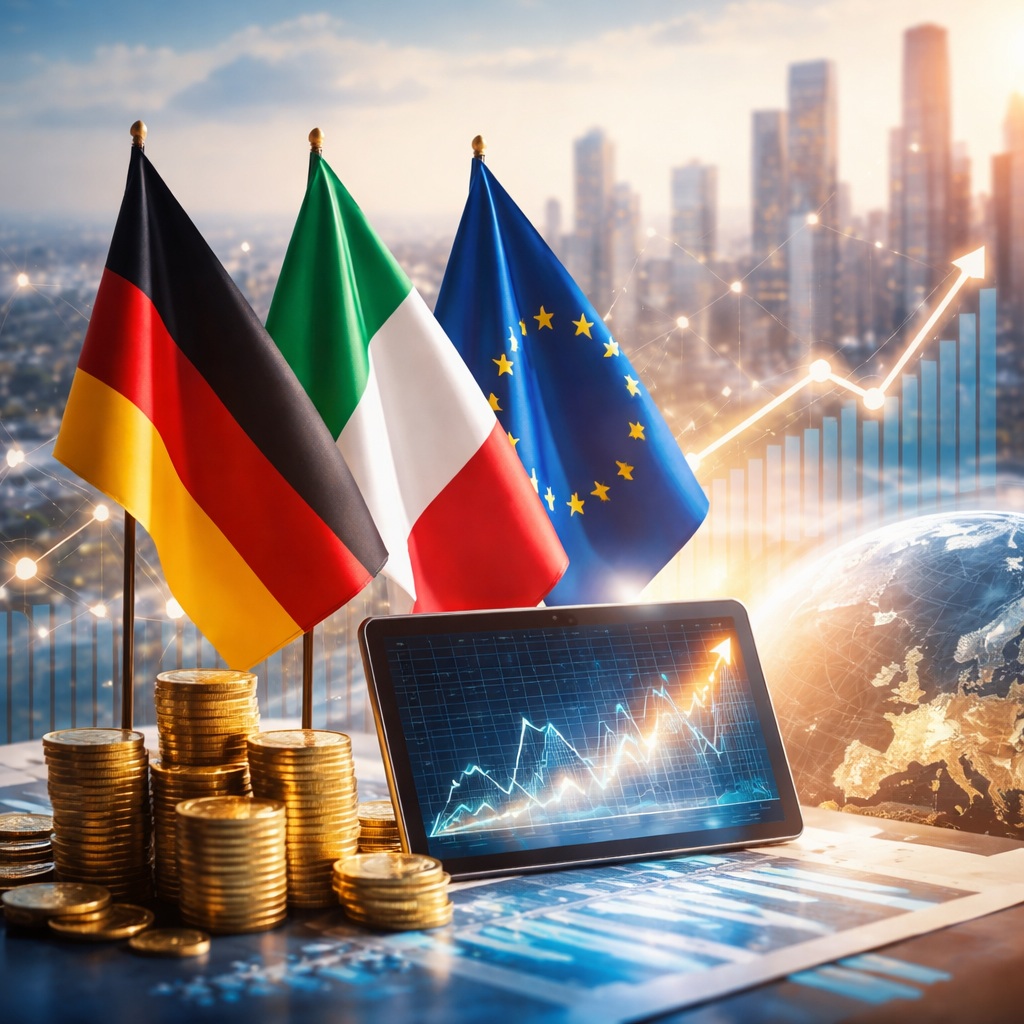
Joint push urges EU leaders to slash red tape, deepen the single market, and move faster on trade as global rivals surge ahead.
Germany and Italy have issued a joint warning to their European partners: without rapid and decisive reforms, the European Union risks losing ground in the intensifying global competition with the United States and China. The message, delivered through a coordinated policy paper circulated ahead of a key EU summit in February, reflects growing frustration among Europe’s largest manufacturing economies over sluggish growth, regulatory bottlenecks, and fragmented markets.
The two governments argue that Europe’s economic model, long built on stability and high standards, is being weighed down by excessive bureaucracy and slow decision-making. While the U.S. has leaned on aggressive industrial policy and China continues to scale up state-backed innovation, Europe, they say, is stuck navigating layers of approvals that deter investment and delay expansion.
At the heart of the proposal is a call to simplify and accelerate regulatory procedures across the bloc. Germany and Italy want faster approvals for industrial projects, particularly in strategic sectors such as energy infrastructure, advanced manufacturing, and digital services. They contend that long and unpredictable permitting processes have become a competitive disadvantage, pushing companies to invest elsewhere.
The paper also highlights the need to strengthen the EU’s single market, which remains fragmented despite decades of integration. Barriers in services, digital platforms, and capital markets continue to limit cross-border activity. According to the two governments, deeper integration would allow European firms to scale up more easily, compete globally, and innovate at speed.
Digital services receive special attention. Germany and Italy argue that Europe has strong talent and research capabilities but lacks the unified market conditions needed to turn innovation into global champions. They call for harmonized rules on data, clearer frameworks for artificial intelligence, and smoother cross-border provision of digital services.
Trade policy is another pillar of the joint push. With global supply chains under strain and geopolitical competition reshaping commerce, the two countries urge the EU to accelerate free trade negotiations with like-minded partners. They see trade agreements not only as tools for market access but also as strategic instruments to secure raw materials, diversify supply chains, and reinforce Europe’s economic resilience.
The timing of the initiative is no coincidence. As EU leaders prepare to meet in February, competitiveness has climbed to the top of the agenda. Weak growth, rising energy costs, and concerns over deindustrialization have fueled calls for a rethink of Europe’s regulatory and industrial framework. Germany and Italy are positioning themselves as catalysts for that debate, seeking to build momentum among member states that share similar concerns.
Not all capitals agree on the pace or scope of reform. Some fear that cutting red tape could weaken environmental or social protections. Others worry about shifting too much power to Brussels in the name of market integration. Germany and Italy respond that competitiveness and standards are not mutually exclusive, arguing that clearer, faster rules can uphold high standards while reducing uncertainty.
Business groups have largely welcomed the initiative, echoing long-standing complaints about administrative complexity. Industry leaders say that predictability and speed are as important as subsidies in determining where investment flows. For them, the joint paper reflects a more pragmatic tone emerging in European policymaking.
Whether the proposal translates into concrete action will depend on the political will of EU leaders in the coming weeks. But the signal from Berlin and Rome is clear: in a world of accelerating technological change and geopolitical rivalry, Europe can no longer afford incrementalism. The choice, they suggest, is between adapting now or watching others set the pace.




 The Tower Post