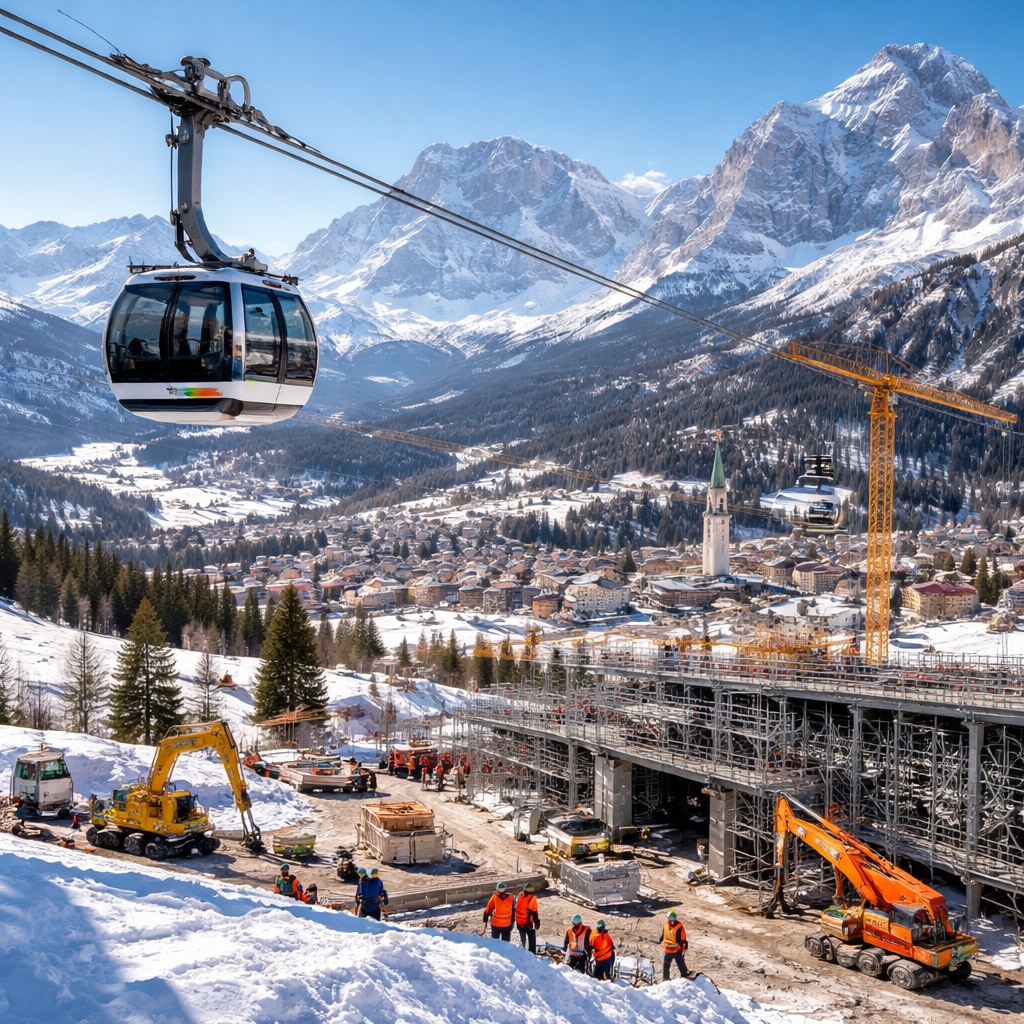
Milano-Cortina projects are reshaping transport and tourism as Rome seeks long-term growth beyond the Games.
Italy is placing a sizeable wager on bricks, rails and ski lifts as it prepares to host the Milano-Cortina Winter Olympics. With national growth sluggish and public confidence fragile, the government has framed the Games not only as a sporting spectacle, but as a catalyst to modernise infrastructure that has long lagged behind the country’s ambitions.
From the Alpine valleys of Veneto and Lombardy to the urban arteries of Milan, construction sites linked to the Winter Olympics have become symbols of a broader economic strategy. Officials say investments tied to the event are designed to unlock bottlenecks that have constrained tourism and productivity for decades, while delivering a short-term stimulus to a slowing economy.
According to government estimates, total projects associated with the Games amount to roughly €5.2 billion. The figure includes new and upgraded rail connections, road safety improvements in mountainous areas, athlete villages destined to be converted into housing, and modernised sports facilities intended to remain in use long after the Olympic flame is extinguished.
Transport is at the heart of the plan. High-profile rail upgrades aim to cut travel times between Milan and Alpine destinations that are currently accessible mainly by car. In regions where winter tourism is a cornerstone of local economies, better connectivity is expected to extend the season and attract visitors year-round, supporting hotels, restaurants and small businesses.
The strategy reflects a wider shift in Rome’s approach to mega-events. Scarred by past experiences where grand projects failed to deliver lasting value, policymakers have repeatedly stressed that Olympic spending must serve existing communities. Oversight mechanisms have been tightened, and many projects were already part of long-term regional plans before being accelerated under the Olympic banner.
Economic returns, however, are expected to be gradual rather than spectacular. Official forecasts point to modest gains in national output during the build-up to the Games, with construction and related services providing a temporary lift. The more substantial payoff, the government argues, will come later through improved logistics, higher-quality tourist infrastructure and enhanced international visibility.
Tourism operators are cautiously optimistic. Italy remains one of the world’s most visited countries, but winter destinations have struggled to compete with better-connected Alpine rivals. Expanded rail capacity and upgraded resorts could help rebalance tourist flows, easing pressure on overcrowded cities while revitalising mountain communities facing depopulation.
Not everyone is convinced. Critics warn that cost overruns and delays could erode the economic case, particularly at a time when public finances remain under strain. Environmental groups have also raised concerns about construction in fragile Alpine ecosystems, urging authorities to ensure that sustainability pledges translate into concrete safeguards.
Government officials counter that the Games offer a rare opportunity to align investment, reform and international attention. They argue that without the Olympic deadline, many projects would have remained stalled for years. By bundling them into a single narrative of national renewal, Italy hopes to overcome bureaucratic inertia that has long hampered infrastructure development.
As the countdown to Milano-Cortina continues, the Olympics have become a test of Italy’s ability to turn a global event into a durable economic asset. Success will not be measured solely by medals or television audiences, but by whether trains run faster, resorts stay busier and local economies emerge stronger in the years that follow.


 The Tower Post