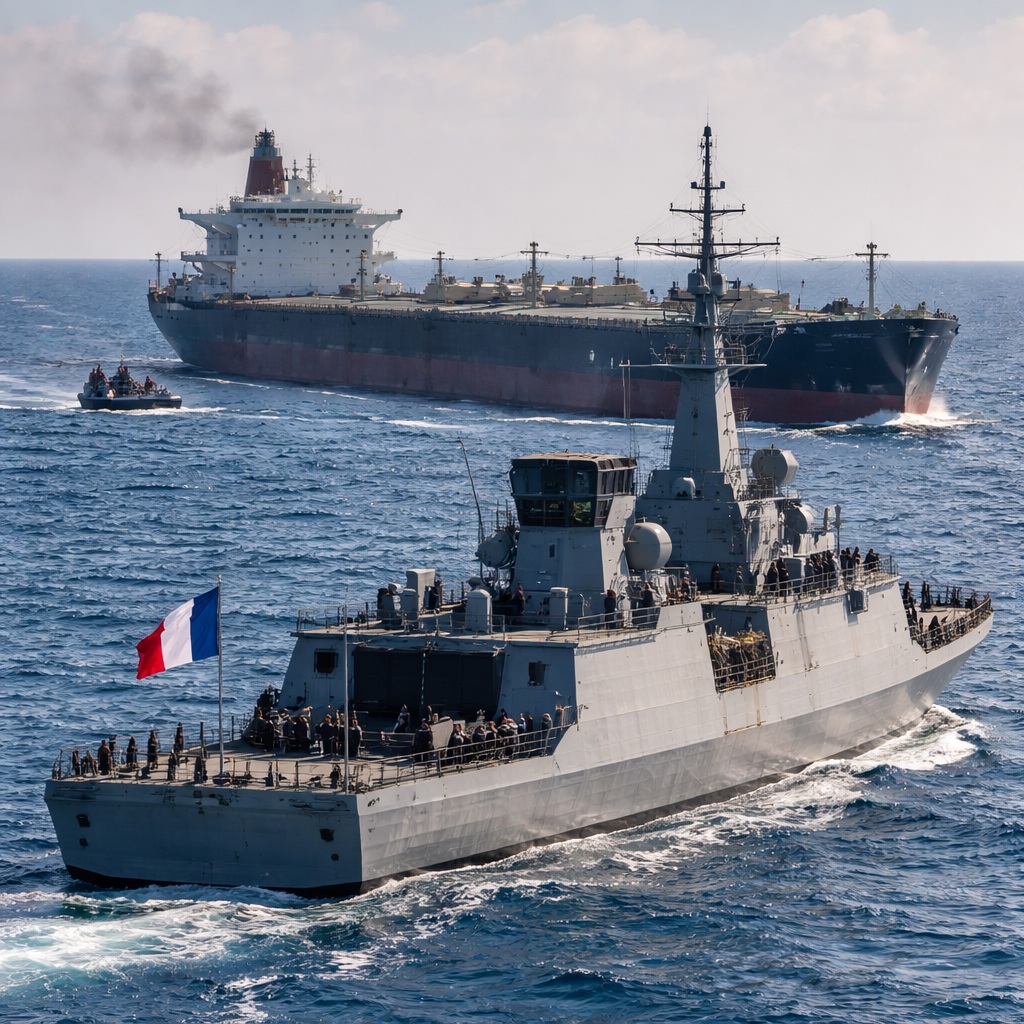
Enforcement operation underscores Europe’s resolve to curb Moscow’s oil exports as the Ukraine war reshapes maritime security
The French navy has intercepted a Russian oil tanker in the Mediterranean Sea suspected of playing a role in sanction-evasion networks, a move that highlights Europe’s increasingly muscular enforcement posture as the war in Ukraine continues to reverberate across the continent’s security landscape.
According to French defense officials, the tanker was flagged during routine maritime surveillance operations and identified as being linked to opaque ownership structures commonly associated with efforts to bypass international restrictions on Russian energy exports. The interception took place in international waters in the Mediterranean, a corridor that has become a focal point for monitoring illicit or gray-zone maritime activity since Western sanctions tightened on Moscow’s oil trade.
Naval units approached the vessel to conduct identification procedures, verify documentation, and assess compliance with European Union and allied sanctions regimes. While the ship was not seized, the operation sent a clear signal that European navies are prepared to act decisively when intelligence points to sanction circumvention.
A Mediterranean Under Scrutiny
Since the outbreak of the Ukraine war, the Mediterranean has emerged as a strategic theater far beyond its traditional role as a commercial shipping hub. With Russian crude and refined products facing export restrictions, a so‑called “shadow fleet” of tankers—often aging vessels with complex ownership, reflagging practices, and limited insurance coverage—has been increasingly active along southern European and North African routes.
French naval officers involved in maritime security operations say tracking such vessels requires constant coordination between military assets, intelligence services, and civilian maritime authorities. Automatic Identification System data, satellite imagery, and financial intelligence are combined to build a picture of which ships may be operating outside the bounds of international law.
The intercepted tanker was reportedly traveling under a flag of convenience and had changed ownership multiple times over a short period, patterns that analysts say are typical of ships seeking to obscure links to sanctioned entities. These methods allow Russian oil to reach global markets despite price caps and export bans imposed by the EU and its partners.
Political and Strategic Implications
The interception comes at a time when European governments are under pressure to demonstrate that sanctions are not merely symbolic. While restrictions on Russian energy exports were designed to limit the Kremlin’s ability to finance its war effort, enforcement has proven challenging, particularly at sea.
French officials emphasized that the operation was conducted in accordance with international maritime law and in coordination with allied partners. Paris has positioned itself as a leading maritime power within the EU, with a permanent naval presence in the Mediterranean and a mandate to protect freedom of navigation while upholding sanctions.
Security analysts note that such actions carry diplomatic risks. Intercepting vessels linked to Russia can heighten tensions, especially when ships operate in international waters. However, European policymakers appear increasingly willing to accept those risks as part of a broader strategy to maintain pressure on Moscow.
Energy Markets and Enforcement Challenges
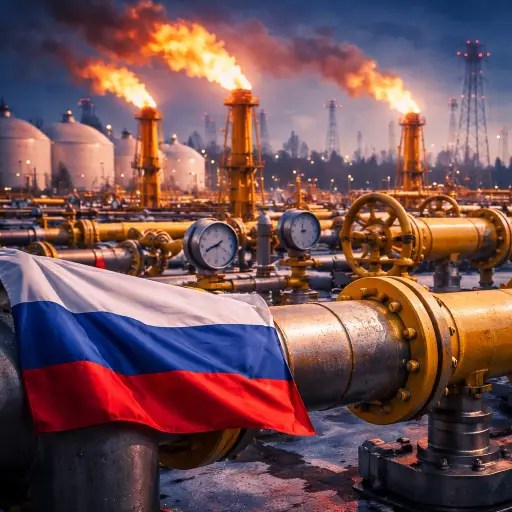
Despite sanctions, Russian oil continues to flow to parts of Asia, the Middle East, and Africa, often at discounted prices. The persistence of these exports has raised questions about the effectiveness of existing measures and the need for stronger enforcement mechanisms.
The French navy’s action illustrates how enforcement is shifting from policy declarations to tangible operations at sea. Naval patrols, port state controls, and cooperation with private insurers and shipping registries are becoming critical tools in closing loopholes.
Maritime experts caution that enforcement alone cannot fully eliminate sanction evasion. As long as there is demand for discounted oil, creative logistical solutions will emerge. Still, interceptions like this one increase operational costs and risks for those involved, gradually eroding the profitability of evasion networks.
A Broader Security Message
Beyond energy sanctions, the interception reflects a broader recalibration of Europe’s security posture. The Ukraine war has underscored vulnerabilities in supply chains, energy dependence, and maritime security. European navies are now expected not only to deter military threats but also to police economic measures that underpin foreign policy objectives.
For France, the operation reinforces its role as a key security actor in the Mediterranean, capable of projecting power and enforcing international norms. For Russia, it serves as a reminder that its maritime activities are under close scrutiny, even far from the Black Sea.
As the conflict in Ukraine grinds on, such encounters are likely to become more frequent. Each interception, inspection, or denial of port access adds another layer of pressure in a complex contest that extends well beyond the battlefield—into shipping lanes, energy markets, and the legal gray zones of the global maritime system.

 The Tower Post