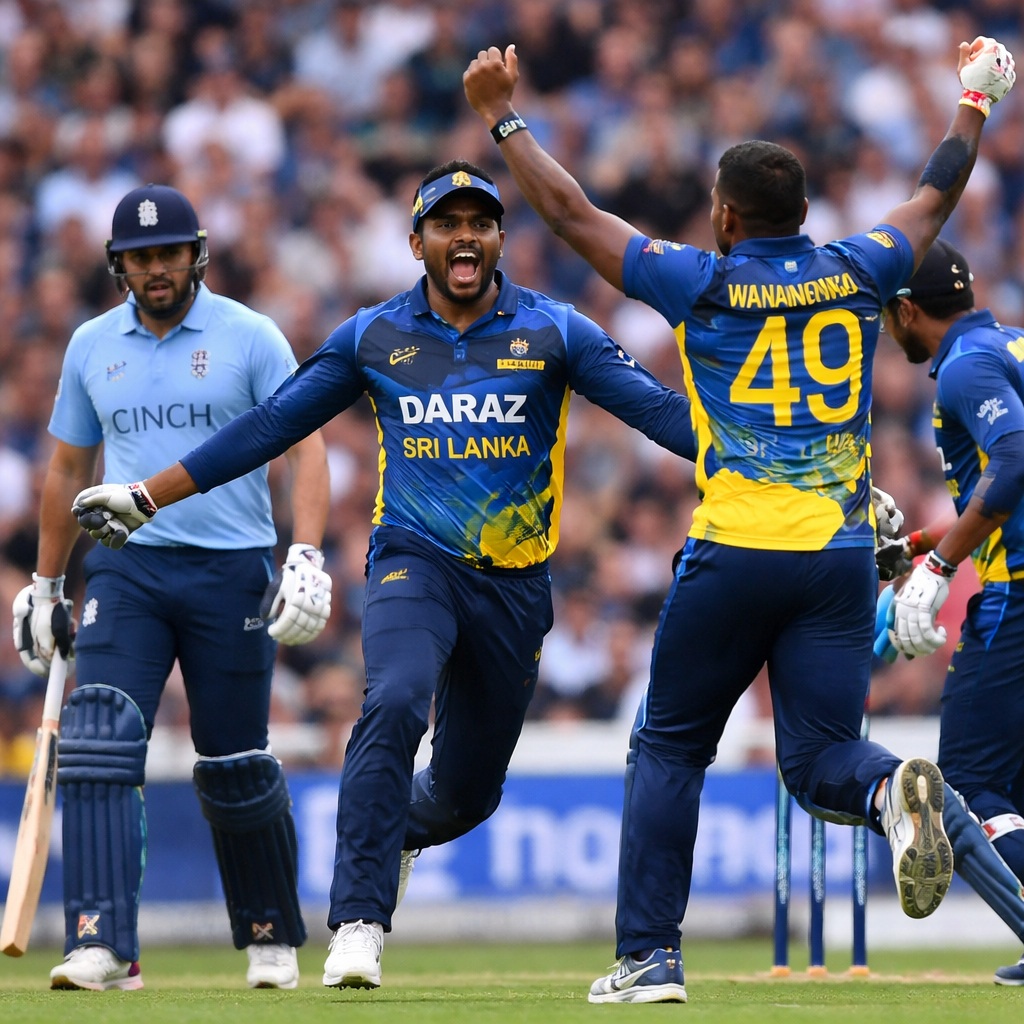
Hosts Take Early Lead in Colombo as England Collapse Under Pressure, Raising Questions Ahead of T20 World Cup
In a compelling start to the three-match One-Day International (ODI) series, Sri Lanka seized control against England with a hard-fought 19-run victory at Colombo’s R. Premadasa Stadium. The hosts’ well-timed spin assault and resolute middle-order batting handed them a valuable first win, setting the tone for the rest of the tour just weeks before the ICC Men’s T20 World Cup.
Electing to bat first on a slow track that promised assistance for spin, Sri Lanka posted a competitive total of 271 for 6. The backbone of their innings was a composed and determined 93 not out from Kusal Mendis, who shepherded the innings through the middle overs and punished loose deliveries late. His partnership with Janith Liyanage steadied the innings after an early wobble, ensuring Sri Lanka remained ahead of the required run rate throughout.
Mendis’ innings was complemented by a blistering end from Dunith Wellalage, whose 25 off just 12 balls—including three fours and a six—provided late impetus. This late flourish proved crucial in setting a target that ultimately proved too steep for the touring side.
Despite a promising start by England in the chase—reaching 129 for 1 through steady half-centuries from Ben Duckett (62) and Joe Root (61)—the visitors’ innings unraveled spectacularly under sustained spin pressure. Once Root fell, England slipped from control to a collapse that saw them bowled out for 252, as Sri Lanka’s quartet of spin bowlers shared six wickets among them.
England’s Struggles in the Middle Overs
The turning point came when both Duckett and Root were dismissed in quick succession, with Sri Lanka’s bowlers tightening the grip on proceedings. England’s middle order failed to build on the solid foundation, with key batters succumbing to slow bowling that consistently tied down scoring options. Despite a late cameo from Jamie Overton (34 off 17), England ran out of partners and momentum.
Fielding excellence complemented the bowling effort for Sri Lanka, with Dhananjaya de Silva and Wellalage both taking high-impact catches to stem England’s flow of runs at crucial moments.
Sri Lanka captain Charith Asalanka lauded his team’s performance post-match, highlighting the effectiveness of the spin unit in conditions that rewarded accuracy and guile. “It was a good game of cricket, but we knew batting would become tougher after the 30th over. Our spinners did a terrific job,” Asalanka noted.
In contrast, England’s captain Harry Brook acknowledged that his side had been outplayed, especially in the latter half of the run chase. “We thought we could chase it, but once the asking rate climbed it became difficult,” Brook said, emphasising the challenge posed by Sri Lanka’s bowling attack.
Wider Implications and What’s Next
The defeat continues England’s troubling run away from home in ODI cricket, extending a challenging stretch that has seen inconsistent batting and tactical issues exposed. Analysts and commentators alike have pointed to England’s ongoing difficulties against spin and the lack of one-day match practice for several key players as contributing factors.
For Sri Lanka, the victory is a confidence booster under home conditions. With the T20 World Cup co-hosted by India and Sri Lanka on the horizon in early February, this performance will hearten local fans and selectors alike. Sri Lanka now leads the series 1–0, with the second ODI scheduled for Saturday in Colombo.
As the teams regroup, England will be looking to shore up its batting and strategy, while Sri Lanka aims to capitalize on home advantage to secure a series win. The coming matches promise to be closely contested, with both sides emphasizing the importance of momentum and adaptability ahead of the world stage.




 The Tower Post