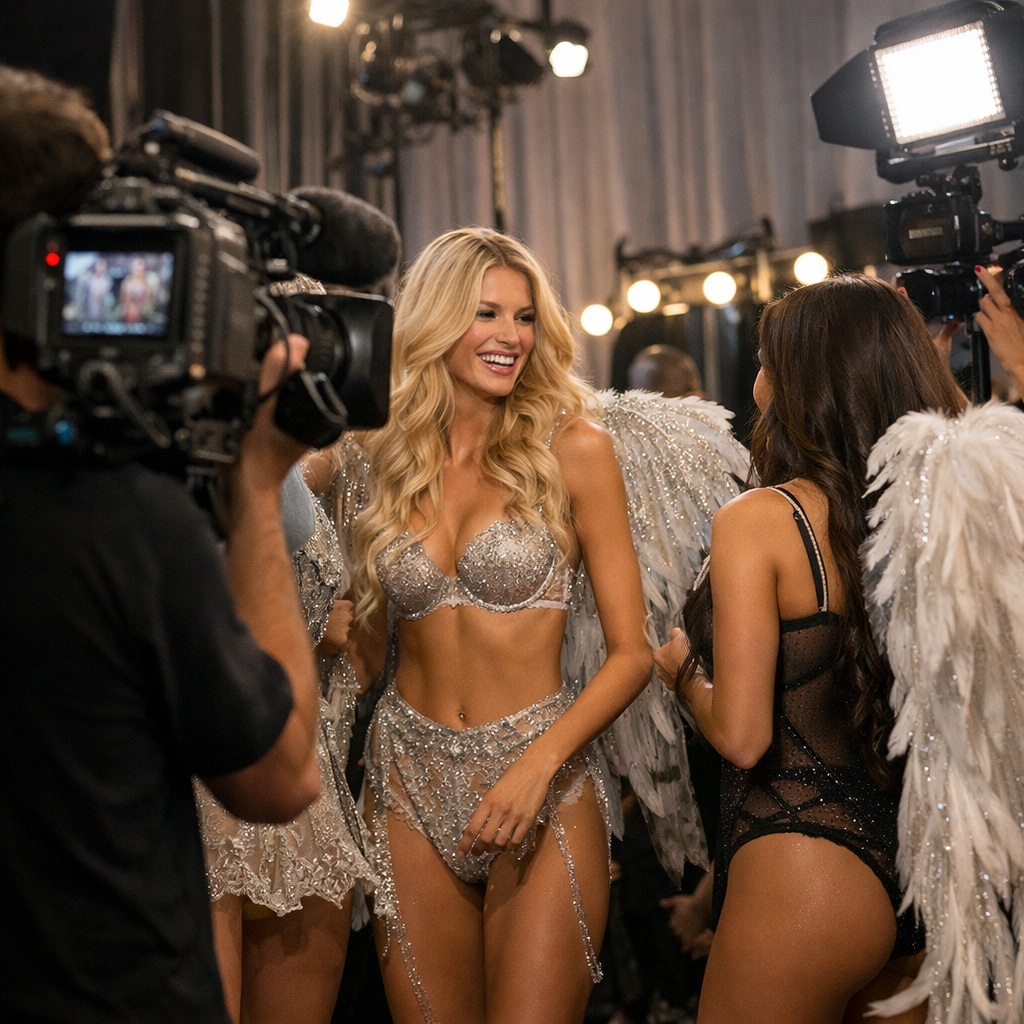
“Lights, Camera, Angels” revisits the brand’s most-watched runway event, signaling renewed cultural ambition and a shifting conversation around fashion spectacle.
Victoria’s Secret is once again stepping into the spotlight—this time behind the camera. As anticipation builds across the fashion and media industries, the lingerie giant is preparing to release “Lights, Camera, Angels,” a documentary centered on its most recent fashion show. The project arrives at a moment when the brand is carefully redefining its public image and reclaiming relevance in an industry that has grown increasingly critical of spectacle-driven luxury.
The documentary offers a behind-the-scenes look at the creative, logistical, and cultural machinery powering Victoria’s Secret’s return to the runway. Long known for transforming its annual show into a global television event, the company now appears intent on reframing that legacy for a new era—one shaped by streaming platforms, digital audiences, and heightened scrutiny of fashion’s values.
Rather than focusing solely on glamour, “Lights, Camera, Angels” positions the fashion show as a cultural artifact. Cameras follow designers, models, choreographers, and production teams as they navigate months of preparation, creative tension, and public expectation. The result is a narrative that treats the runway not as a fleeting performance, but as a collaborative process reflecting broader shifts in fashion culture.
Industry observers see the documentary as a strategic move. Fashion films and behind-the-scenes storytelling have become powerful tools for brands seeking authenticity and emotional connection. By opening its doors, Victoria’s Secret is signaling confidence—and an understanding that modern audiences want more than polished fantasy. They want context, conversation, and transparency.
The timing is significant. The brand’s latest fashion show marked a turning point after years of reassessment, responding to changing consumer attitudes around inclusivity, representation, and the portrayal of femininity. While the runway spectacle remained central, the tone was notably more restrained, with greater emphasis on individuality and creative expression. The documentary expands on that shift, giving voice to the people shaping the show from within.
Executives involved in the project describe it as an exploration of fashion as both art and industry. Viewers are invited into fittings, rehearsals, and creative debates, revealing how aesthetic decisions intersect with commercial realities. In doing so, the film acknowledges the complexity of staging a global fashion event in a media environment that is no longer forgiving of excess without purpose.
Models featured in the documentary speak candidly about visibility and responsibility. For many, participating in the show represented more than a career milestone; it was an opportunity to redefine what it means to be seen on one of fashion’s most recognizable stages. Their reflections underscore a broader industry conversation about who fashion is for—and who gets to define beauty.
From a media perspective, “Lights, Camera, Angels” reflects the growing appetite for fashion storytelling that lives beyond the runway. Streaming audiences have embraced documentaries that peel back the curtain on creative industries, from haute couture ateliers to mass-market brands. Victoria’s Secret’s entry into this space suggests an ambition to compete not only in retail, but in cultural relevance.
The documentary also highlights the evolving role of the fashion show itself. Once designed primarily for buyers and press, runway events are now content engines, feeding social media, streaming platforms, and global news cycles. By dedicating a full-length documentary to the process, Victoria’s Secret is acknowledging that the show’s afterlife may matter as much as the live event.
Critics will inevitably debate whether the film succeeds in balancing honesty with brand messaging. Yet even skeptics concede that the decision to document the process marks a departure from the tightly controlled narratives of the past. The willingness to show uncertainty, creative disagreement, and behind-the-scenes labor suggests a more mature approach to brand storytelling.
As the release approaches, interest from fashion insiders, media analysts, and longtime viewers continues to build. For Victoria’s Secret, the documentary is more than a companion piece—it is a statement of intent. By inviting audiences into the making of its most iconic event, the brand is testing whether transparency and storytelling can restore the cultural impact it once commanded.
In an industry grappling with rapid change, “Lights, Camera, Angels” arrives as both reflection and experiment. It captures a brand in transition, a fashion show reimagined, and a broader shift in how fashion tells its own story. Whether embraced as reinvention or revisionism, the documentary ensures that Victoria’s Secret remains part of the conversation—on its own terms, and in its own frame.

 The Tower Post