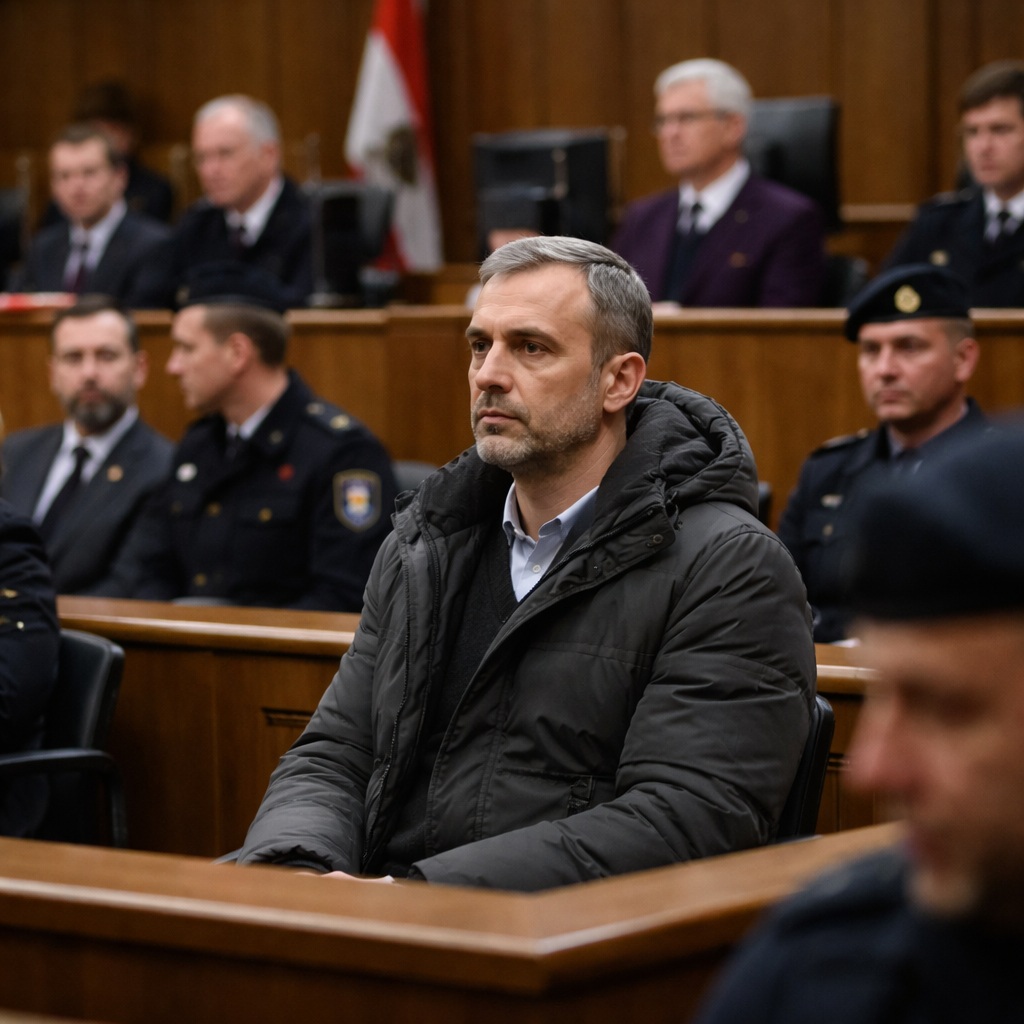
The prosecution of former Austrian intelligence officer Egisto Ott places Vienna at the center of one of Europe’s most sensitive espionage cases, exposing alleged Russian networks, institutional blind spots, and the quiet mechanics of modern intelligence warfare.
In a secure courtroom in Vienna, the trial of former Austrian intelligence officer Egisto Ott has begun, drawing intense scrutiny from European security circles and diplomatic observers alike. The case, built around allegations that Ott aided Russian intelligence operations while serving inside Austria’s security apparatus, is widely regarded as one of the most consequential espionage proceedings in Europe in recent years.
Prosecutors argue that Ott abused his position to assist Moscow’s intelligence services, allegedly providing secure government communication devices, facilitating access to sensitive information, and helping monitor individuals critical of the Kremlin. Ott denies the accusations. Yet the trial arrives at a moment of heightened anxiety across the continent, as European governments reassess their exposure to Russian intelligence penetration and the resilience of their own institutions.
Austria’s long-standing image as a neutral crossroads between East and West gives the case particular weight. Vienna hosts major international organizations and has historically maintained open channels with Russia, even as tensions between Moscow and the European Union have deepened. Critics say that this openness, combined with political fragmentation and institutional complacency, created fertile ground for foreign intelligence services to operate.
At the heart of the prosecution’s case is the claim that Ott acted as a key enabler for Russian operatives seeking to exploit Austria’s strategic position. According to court filings, he is accused of supplying encrypted devices intended for secure communication, allegedly allowing Russian handlers and their local contacts to evade surveillance. Investigators also allege that Ott helped gather information on dissidents and opposition figures, some of whom had sought refuge in Austria after fleeing repression elsewhere.
The charges have sent shockwaves through Austria’s intelligence community, already weakened by years of controversy and reform. The country’s domestic intelligence service has faced repeated criticism for political interference, poor oversight, and vulnerability to foreign influence. For many analysts, the Ott case is not an isolated scandal but a symptom of deeper structural problems.
“This trial is about more than one man,” said a former European intelligence official familiar with counterintelligence cooperation. “It raises uncomfortable questions about how Russian intelligence was able to operate with such confidence in the heart of Europe, and why warning signs were missed or ignored.”
Prosecutors describe a pattern of behavior suggesting a sustained relationship with Russian intelligence networks. They allege that Ott leveraged personal connections and professional access to benefit foreign interests, blurring the line between official duties and clandestine collaboration. The defense, however, has argued that the case relies heavily on circumstantial evidence and intelligence assessments that are difficult to verify in open court.
Much of the evidence is necessarily opaque. Espionage trials rarely offer dramatic revelations; instead, they unfold through fragments of intercepted communications, testimony from intelligence officials, and classified assessments summarized for judicial review. This inherent secrecy complicates public understanding and fuels political debate over transparency versus national security.
Beyond Austria, the trial is being closely watched by European partners. Intelligence cooperation depends on trust, and several countries have quietly expressed concern over Vienna’s reliability as a counterintelligence partner in recent years. Some cooperation channels were reportedly scaled back after earlier scandals, reflecting fears that sensitive information could be compromised.
The alleged Russian focus on dissidents underscores another dimension of the case. European capitals have increasingly accused Moscow of extending repression beyond its borders, targeting journalists, activists, and political opponents abroad. If proven, the allegations against Ott would suggest that parts of this effort were facilitated from within a European intelligence service itself — a deeply troubling prospect for democracies that pride themselves on protecting political asylum and free expression.
For Russia, the trial is unfolding against a backdrop of sustained confrontation with the West. Moscow has consistently denied accusations of widespread espionage and has accused European governments of politicizing intelligence matters. Russian officials have dismissed similar cases elsewhere as manifestations of anti-Russian hysteria, though they have so far avoided detailed public comment on the proceedings in Vienna.
Inside Austria, the political repercussions are still unfolding. Opposition parties have seized on the case to demand stronger oversight, deeper reforms, and a reckoning with past failures. The government has emphasized that the trial demonstrates the independence of the judiciary and the country’s commitment to the rule of law, even when uncomfortable truths emerge.
Legal experts caution that convictions in espionage cases are far from guaranteed. The burden of proof is high, and courts must balance state secrecy with the rights of the accused. Regardless of the verdict, however, the trial has already achieved something rare in intelligence affairs: sustained public attention.
For ordinary Austrians, the proceedings challenge assumptions about neutrality and security. The idea that a senior intelligence figure could allegedly work on behalf of a foreign power has shaken public confidence and prompted renewed debate about Austria’s role in a divided Europe.
As the trial continues, it is unlikely to provide simple answers. Instead, it offers a stark reminder that espionage in the modern era is less about cinematic intrigue and more about access, trust, and institutional weakness. In that sense, the Ott case is not just Austria’s problem. It is a warning to Europe that intelligence battles are often fought quietly, from within.
Whether the court ultimately finds Egisto Ott guilty or not, the impact of the case will endure. It has already exposed the vulnerabilities of democratic systems under pressure and highlighted the persistent reach of Russian intelligence networks. In Vienna, a city long accustomed to secrets, the spotlight is now firmly on those tasked with guarding them.




 The Tower Post