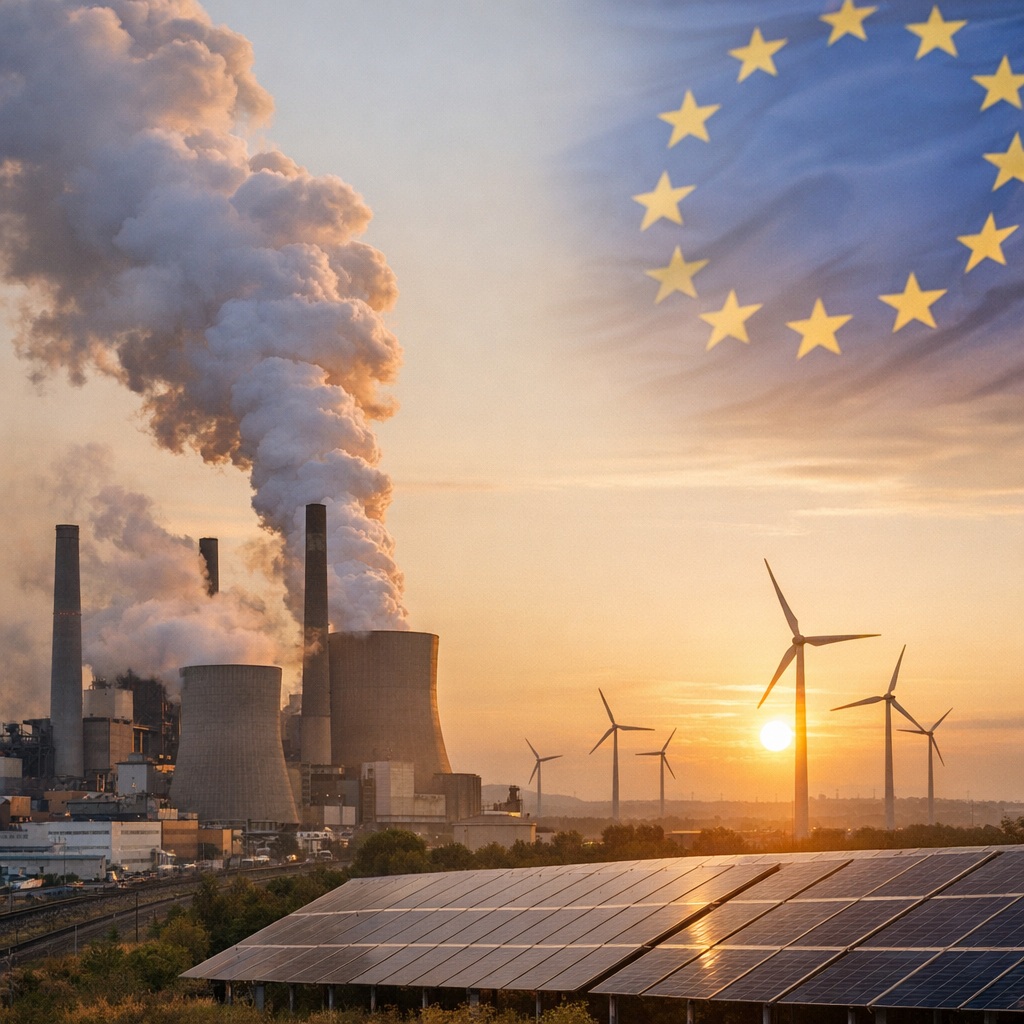
A sustained 20 percent reduction since the early 2010s underscores how energy transition, industrial transformation, and shifting consumption patterns are reshaping Europe’s economy.
By late January 2026, new data confirmed that greenhouse gas emissions across the eurozone declined again during the previous year, reinforcing a longer-term trend that has quietly transformed the European economy. Emissions in the currency bloc are now roughly one-fifth lower than they were just over a decade ago, a milestone that reflects deep structural shifts rather than short-term economic disruption.
The latest figures show that the drop in emissions during 2024 was not driven by recession or temporary slowdowns. Instead, it followed years of investment in renewable energy, efficiency gains in industry, and changes in how Europeans produce and consume goods. Policymakers and analysts say the pattern suggests the eurozone has entered a new phase of decoupling economic activity from carbon output.
Energy transition at the core
The power sector remains the single largest contributor to the emissions decline. Coal-fired generation continues to retreat across most member states, replaced by a growing mix of wind, solar, hydro, and nuclear power. Gas consumption, which surged earlier in the decade during periods of energy market stress, has since moderated as efficiency measures and electrification have taken hold.
Renewables now account for a historically high share of electricity production in the eurozone. Large-scale offshore wind projects in northern Europe, combined with rapid deployment of solar capacity in southern countries, have reshaped the continent’s energy landscape. Grid investments and cross-border interconnections have helped absorb this new capacity, reducing reliance on fossil fuel imports.
Industry adapts under pressure
Heavy industry, long considered one of the hardest sectors to decarbonize, has also contributed to the emissions drop. Steel, cement, chemicals, and refining have all reduced their carbon intensity through a mix of modernization, fuel switching, and in some cases lower output of the most energy-intensive processes.
Carbon pricing under the EU emissions trading system has played a central role. By steadily raising the cost of pollution, it has pushed companies to invest in cleaner technologies and rethink production models. Electrification of processes, increased use of recycled materials, and early adoption of hydrogen-based solutions have all helped reduce emissions without dismantling Europe’s industrial base.
At the same time, some carbon-intensive activities have declined structurally as global demand shifts and European firms move up the value chain. Economists note that while concerns about industrial competitiveness remain, the data suggest that emissions reductions have largely come from efficiency and innovation rather than simple deindustrialization.
Transport and buildings lag but improve
Progress has been slower in transport and buildings, sectors that together account for a large share of remaining emissions. Road transport still depends heavily on fossil fuels, and the pace of electric vehicle adoption varies widely across countries. However, the overall trend is moving in the right direction, supported by stricter emissions standards and expanding charging infrastructure.
In buildings, renovation programs and efficiency standards have begun to reduce energy demand for heating, particularly as heat pumps replace older gas and oil systems. While these changes unfold gradually, their cumulative impact is becoming visible in eurozone-wide emissions data.
Economic growth with lower emissions
One of the most striking aspects of the eurozone’s emissions record is that it coincides with modest but positive economic growth. Output has expanded unevenly across member states, yet emissions have continued to fall. This challenges the long-standing assumption that economic prosperity must come at the cost of higher carbon output.
Analysts caution that external factors, including weather patterns and global energy prices, still influence year-to-year figures. Nevertheless, the underlying trajectory points to structural change. Energy efficiency improvements, digitalization, and a growing services sector have all contributed to lowering the carbon intensity of the economy.
Political and global implications
The sustained emissions decline strengthens the European Union’s credibility in international climate negotiations. As other major economies struggle to reconcile growth with emissions cuts, the eurozone’s experience offers a partial blueprint, though one shaped by Europe’s specific regulatory framework and social model.
Domestically, the figures arrive at a sensitive political moment. Rising living costs and concerns about industrial jobs have fueled debates over the pace and cost of the green transition. Supporters argue that the emissions data prove climate policy can coexist with economic stability, while critics warn that future reductions will be harder and more expensive.
Looking ahead
With emissions already significantly below early-decade levels, future gains are expected to be more incremental. The easiest reductions have largely been achieved, and deeper cuts will require faster deployment of clean technologies, stronger grids, and sustained public investment.
Still, the latest data suggest that the eurozone is no longer merely experimenting with decarbonization. Instead, it is gradually embedding lower emissions into the fabric of its economy. As January draws to a close, the numbers from 2024 stand as evidence that structural change, once set in motion, can deliver lasting results.




 The Tower Post