A fragile victory in parliament underscores deep budget tensions and the uneasy balance of power in Paris
The French government has emerged bruised but standing after surviving two no-confidence votes triggered by its handling of the national budget, a political showdown that laid bare the country’s deep divisions over fiscal priorities, social spending, and democratic process. The votes, closely watched at home and abroad, spared the executive from immediate collapse but confirmed that its parliamentary footing remains precarious.
The twin motions of censure were tabled by opposition parties accusing the government of forcing through key budgetary measures without sufficient debate. Critics argued that the executive’s approach, while technically lawful, reflected a growing reliance on procedural tools that sidestep a fragmented National Assembly. Supporters countered that the measures were necessary to ensure continuity of the state and prevent financial paralysis at a time of economic uncertainty.
In the end, neither motion gathered enough support to topple the government. Lawmakers from the presidential camp closed ranks, while parts of the center-right declined to join the far-left and far-right in voting against the cabinet. The result was a narrow but decisive reprieve, allowing the prime minister and ministers to claim renewed legitimacy — at least for now.
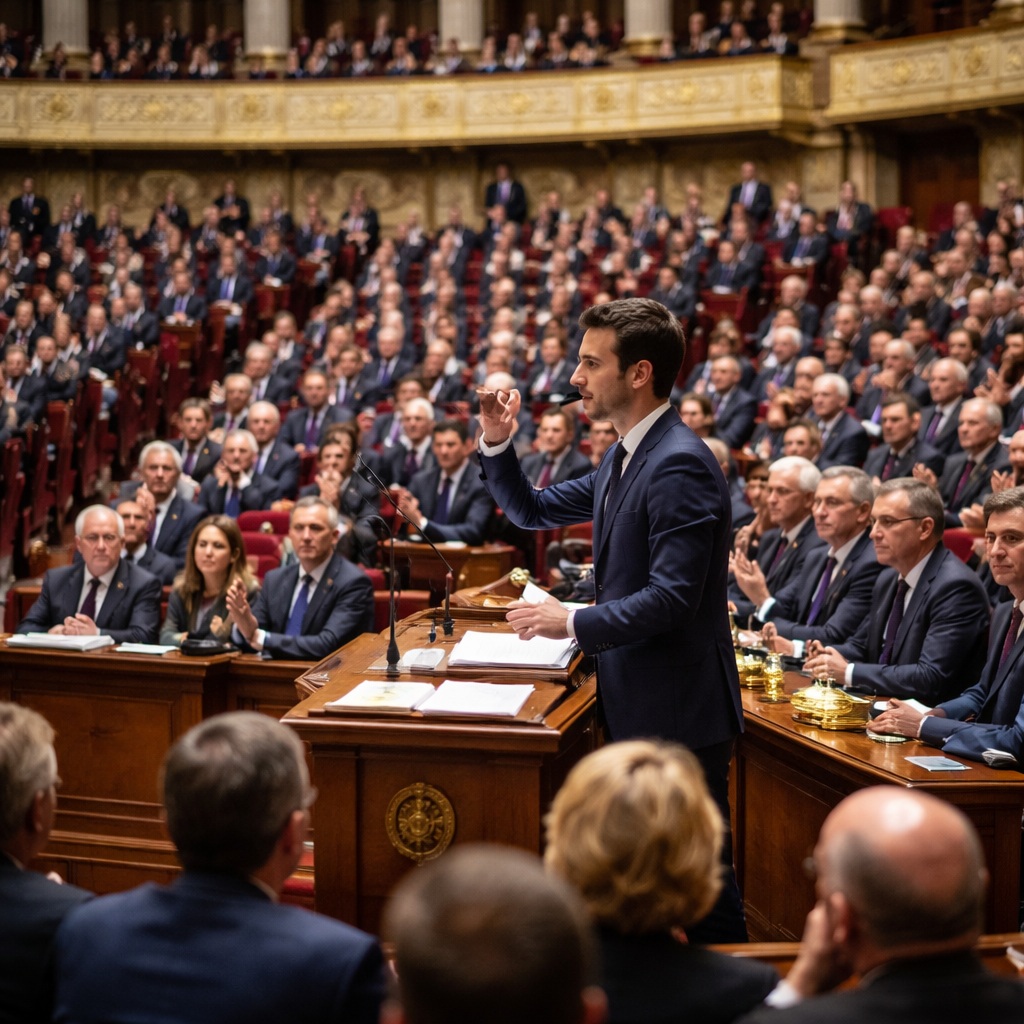
Yet the atmosphere inside the Palais Bourbon during the debates was anything but triumphant. Speeches were sharp, interruptions frequent, and the tone often reflected broader public frustration with rising living costs and contested reform priorities. Outside parliament, small demonstrations and union statements echoed a familiar complaint: that budget discipline is being pursued at the expense of social protections.
At the heart of the confrontation lies the budget itself, an exercise in balancing strained public finances with political promises made to voters. The government has defended its plans as responsible and unavoidable, pointing to debt levels and the need to reassure markets. Opposition leaders, however, see a pattern of governance that concentrates power in the executive while marginalizing the legislature.
The survival of the no-confidence votes does not resolve this tension. Instead, it postpones a reckoning that many observers believe is inevitable in a parliament elected without a clear majority. Each major bill now risks becoming a confidence test, and each procedural shortcut fuels further resentment among opposition benches.
For the prime minister, the immediate task is to translate this narrow victory into working stability. That means negotiating issue by issue, courting wavering allies, and avoiding the impression of governing by decree. Senior government figures have signaled a willingness to engage more openly with lawmakers, though skeptics note that similar promises have followed past crises.
The president, while constitutionally insulated from the votes, remains a central figure in the background. His reform agenda depends on a government capable of surviving parliamentary ambushes, and the latest episode highlights the limits of presidential authority in a divided assembly. Analysts suggest that the Élysée will now push for a period of calm, emphasizing economic competence and international credibility.
Opposition parties, for their part, have framed the failed no-confidence motions not as defeat but as a warning shot. Leaders on the left argue that the votes exposed cracks in the governing coalition, while the far right claims to be positioning itself as the only true alternative to what it calls an exhausted political center. Both camps are already preparing for the next confrontation.
Public opinion remains volatile. Surveys conducted in recent weeks suggest widespread dissatisfaction with the political class as a whole, even as voters disagree sharply on solutions. The budget battle has become a symbol of this malaise, combining technical fiscal debates with a broader sense that decisions are being made far from everyday concerns.
As winter advances, the government’s survival offers temporary reassurance to partners and investors who feared abrupt instability. But the message from parliament is unmistakable: authority is conditional, and compromise unavoidable. France is entering a phase of governance defined less by sweeping reforms than by tactical endurance.
The no-confidence votes may have failed, but they have altered the political landscape. The government lives on, yet under constant scrutiny, navigating a narrow path between fiscal restraint and social pressure. In that sense, the crisis is less an ending than a prologue to a year in which every budget line — and every vote — will carry heightened political weight.




 The Tower Post