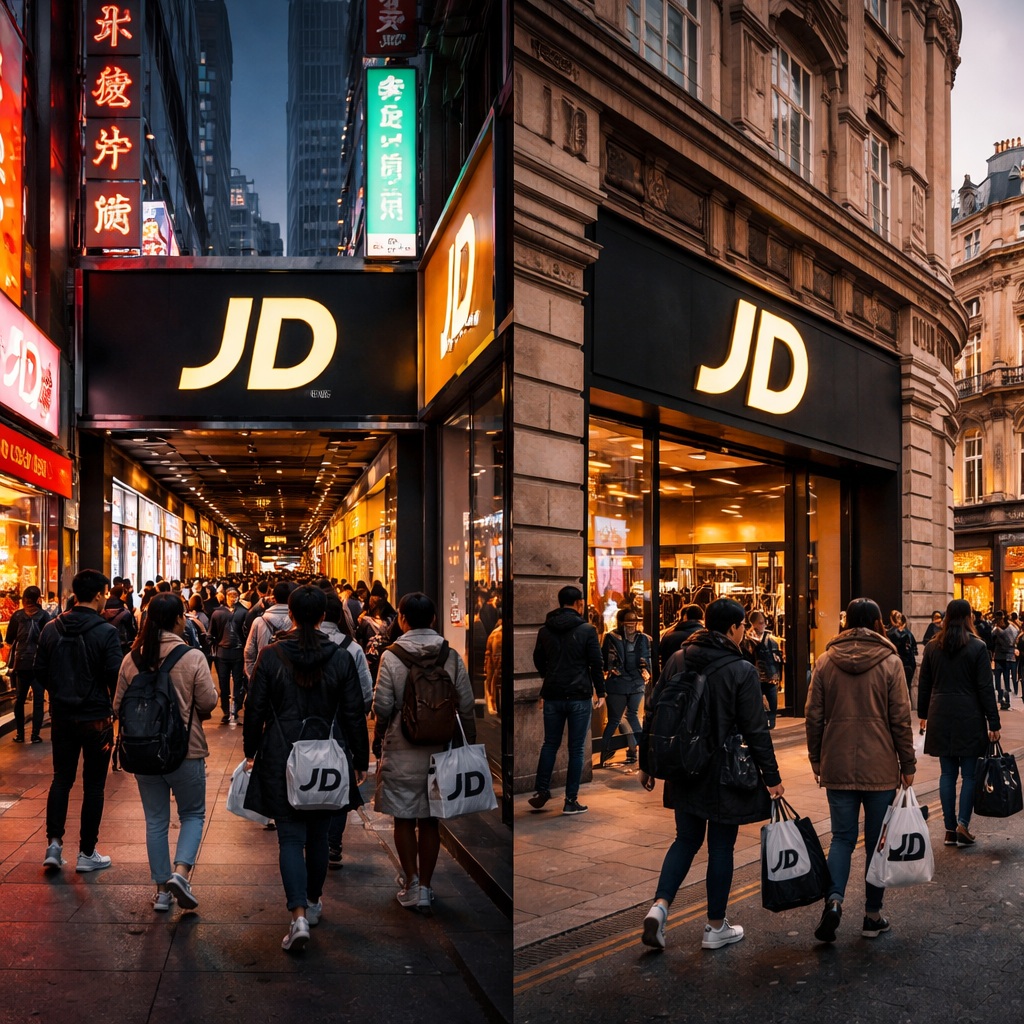
Strong momentum across Asia Pacific contrasts with a cautious European consumer as the sportswear retailer closes the quarter under uneven global conditions.
By late January, JD Sports Fashion finds itself navigating two very different realities. In its latest quarterly update, the British sportswear retailer points to robust momentum across Asia Pacific, while Europe continues to weigh on group performance. The contrast underscores how geography, consumer confidence, and brand positioning are shaping the post-pandemic retail landscape—and how JD Sports’ international strategy is increasingly defined by where growth is accelerating, and where it is stalling.
Asia Pacific has emerged as the clear bright spot. Management describes sustained demand across key urban markets, supported by strong brand heat in sneakers and athleisure and a growing appetite for premium sports fashion. Flagship stores in major cities continue to attract high footfall, while digital channels complement physical expansion rather than cannibalize it. The region’s younger demographics, rising disposable incomes, and enduring interest in Western sportswear brands have combined to create a favorable backdrop for JD’s curated, brand-led model.
JD’s approach in Asia has been deliberate. Rather than pursuing rapid, indiscriminate store rollouts, the group has focused on selective expansion, high-impact locations, and tight partnerships with global brands. Limited-edition releases and localized assortments have resonated with consumers who are increasingly brand-aware and trend-driven. Executives highlight that inventory discipline and faster product cycles have helped maintain full-price sell-through, insulating margins even as logistics and sourcing costs remain volatile.
The performance in Asia Pacific also reflects a broader shift in global sportswear consumption. Streetwear and performance-inspired fashion have become cultural staples in markets such as Southeast Asia, Greater China, and parts of Oceania. JD Sports has benefited from this shift by positioning itself not merely as a retailer, but as a tastemaker—an approach that translates well in regions where social media, influencer culture, and in-store experience play a decisive role in purchasing decisions.
Europe tells a different story. Across several core markets, JD reports a more hesitant consumer, pressured by persistent cost-of-living concerns and uneven economic signals. While demand has not collapsed, it has become more value-driven and less predictable. Shoppers are taking longer to commit, favoring promotions and postponing discretionary purchases, particularly outside peak seasonal moments.
This environment has weighed on like-for-like momentum across parts of continental Europe and, to a lesser extent, the UK. Promotional intensity remains elevated, squeezing margins and complicating inventory planning. JD’s leadership notes that while brand demand remains intact, timing and ticket sizes have softened, requiring a more cautious trading stance. Store traffic has been uneven, and online growth has moderated as consumers become more selective.
The divergence between Asia and Europe highlights the limits of a one-size-fits-all retail strategy. In Europe, JD has leaned into cost control, supply chain flexibility, and a tighter focus on core franchises. Store openings have been more measured, with an emphasis on optimizing existing estates rather than aggressive expansion. Management has also pointed to ongoing investments in store refurbishments and omnichannel capabilities, aimed at improving conversion rather than chasing volume.
Despite the near-term headwinds, JD remains confident in its long-term European positioning. The group’s scale, brand access, and operational discipline are seen as competitive advantages in a market that may ultimately consolidate. As weaker players struggle with rising costs and margin pressure, JD expects opportunities to strengthen market share once consumer confidence stabilizes.
At group level, the quarter reinforces the strategic importance of international diversification. Asia Pacific’s outperformance is helping to offset European softness, smoothing overall trading and validating years of investment beyond JD’s home markets. The company continues to describe North America as a market of steady progress, while Asia is increasingly framed as a structural growth engine rather than a peripheral opportunity.
Looking ahead, JD Sports enters the new year with cautious optimism. Management signals confidence in its brand relationships and product pipeline, while acknowledging that macroeconomic uncertainty—particularly in Europe—will continue to shape consumer behavior. The focus, executives say, is on agility: reading demand accurately, protecting margins, and deploying capital where returns are most compelling.
For investors and industry watchers, the message from the quarter is clear. JD Sports is no longer a story driven primarily by the UK or even Europe. Its future trajectory is increasingly tied to the energy of Asia Pacific markets, where sportswear remains aspirational and growth-oriented. As the retailer balances expansion with restraint, the contrasting performances across regions serve as both a challenge and a roadmap—highlighting where JD’s model is thriving, and where patience will be required.




 The Tower Post