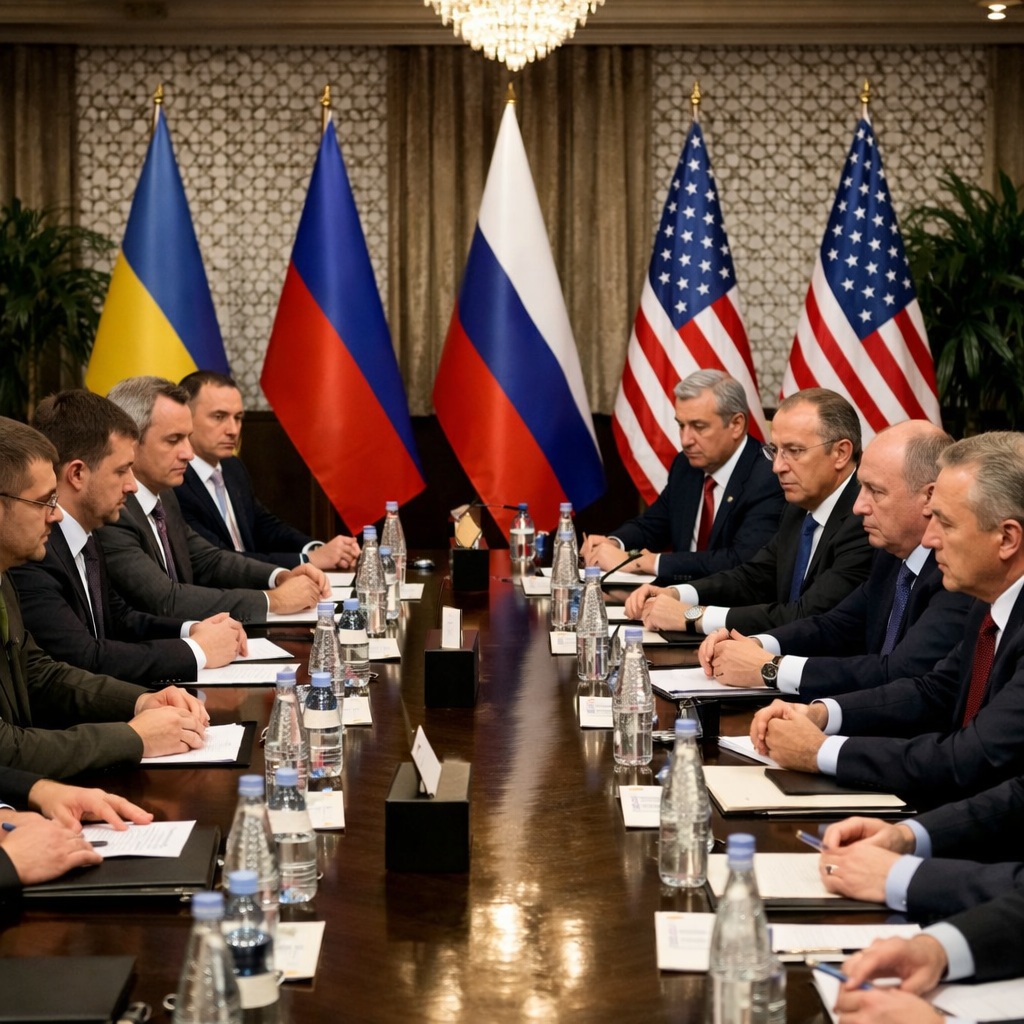
Rare face-to-face negotiations open a narrow diplomatic window as fighting continues and energy shortages deepen across Ukraine and parts of Europe.
Ukraine, Russia and the United States have begun rare direct peace talks in Abu Dhabi, marking the most ambitious diplomatic effort in months to halt a war that has reshaped Europe’s security landscape and strained global energy markets. The talks bring together senior envoys from Kyiv and Moscow at the same table, with Washington acting as a facilitator, in a format that many diplomats once considered politically impossible.
The setting is deliberately neutral. Abu Dhabi, which has quietly positioned itself as a venue for back-channel diplomacy, offers distance from the front lines and from the entrenched rhetoric of European capitals. Delegations arrived with modest public expectations, emphasizing that the opening round is designed to test intentions rather than produce a comprehensive settlement.
Despite the talks, the war has not paused. Russian missile and drone attacks have continued across several regions of Ukraine, targeting infrastructure and compounding an already severe energy crisis. Rolling blackouts have become more frequent in major cities, forcing households and hospitals to ration electricity during the coldest weeks of winter. Ukrainian officials say the strikes underscore the urgency of diplomacy, while also highlighting the risks of negotiating under fire.
For Kyiv, the talks represent a difficult balancing act. Ukrainian negotiators are under pressure to explore any credible path to peace while avoiding concessions that could legitimize territorial losses or undermine sovereignty. Officials close to the delegation describe their priority as securing an immediate reduction in attacks on civilian infrastructure, particularly energy facilities, alongside guarantees for humanitarian access.
Moscow, for its part, has framed the talks as evidence that its long-standing demands must now be addressed directly. Russian representatives have reiterated calls for security guarantees and recognition of what they describe as “new realities on the ground.” At the same time, the Kremlin has sought to project confidence, insisting that negotiations do not signal weakness but rather a willingness to engage on its own terms.
The United States enters the talks as both a mediator and a stakeholder. Washington has been Ukraine’s most important military and financial backer, and its presence in Abu Dhabi signals a renewed push to shape the diplomatic endgame. American officials have emphasized that they are not negotiating on Ukraine’s behalf, but are instead working to narrow gaps, clarify positions and explore confidence-building measures that could lead to a broader ceasefire.
Energy has emerged as one of the most immediate and contentious issues. Ukraine’s power grid has been battered by repeated strikes, leaving millions vulnerable. European governments, already grappling with tight energy supplies, are watching closely. Any agreement that reduces attacks on infrastructure could have ripple effects far beyond Ukraine’s borders, easing pressure on regional markets and reducing the risk of further economic shocks.
Diplomats caution, however, that expectations should remain restrained. Previous attempts at dialogue have collapsed amid mutual accusations and battlefield escalations. Trust is minimal, and the political costs of compromise are high on all sides. Analysts note that even a limited agreement, such as localized ceasefires or prisoner exchanges, would be considered a meaningful step forward in the current climate.
Inside Ukraine, public opinion remains wary. Years of war have hardened attitudes, and many Ukrainians fear that talks could freeze the conflict without delivering justice or security. Civil society groups have urged transparency, warning against secret deals that could mortgage the country’s future. At the same time, war fatigue is palpable, particularly as energy shortages disrupt daily life.
In Russia, state media coverage has been tightly controlled, portraying the talks as a pragmatic initiative forced by Western pressure and global instability. Independent voices, where they exist, have questioned whether negotiations can succeed without a fundamental shift in the Kremlin’s war aims.
The choice of a trilateral format reflects a recognition that bilateral talks alone have failed. By including Washington directly, the process acknowledges the broader geopolitical stakes of the conflict. It also raises questions about the role of Europe, whose leaders have largely been briefed rather than invited to participate at this stage.
Whether the Abu Dhabi talks can break the stalemate remains uncertain. What is clear is that they open a narrow diplomatic channel at a moment of deepening humanitarian and energy crises. As missiles continue to fall and power stations struggle to stay online, the contrast between the negotiating table and the battlefield could not be starker.
For now, the talks proceed with cautious language and guarded gestures. Even the act of meeting carries symbolic weight after years of hostility. In a conflict defined by escalation and mistrust, the Abu Dhabi dialogue offers a fragile reminder that diplomacy, however limited, has not been entirely abandoned.




 The Tower Post