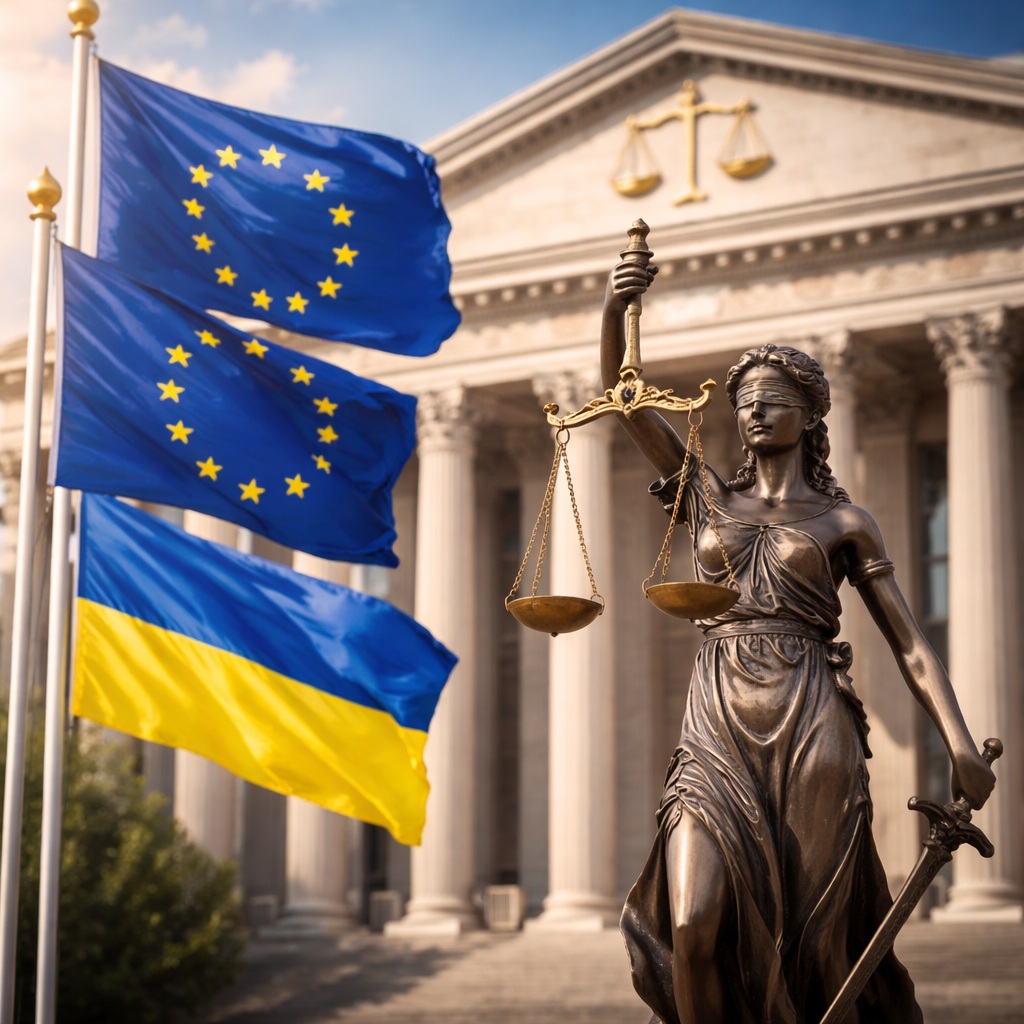
Brussels releases fresh funding to anchor accountability as Europe reinforces its legal response to the war
The European Union has taken a decisive step to reinforce international accountability for the war in Ukraine, releasing fresh funding to support the establishment of a special tribunal dedicated to prosecuting the crime of aggression, a move that underscores the bloc’s determination to ensure that political and military leaders responsible for launching the invasion are held legally answerable even as the conflict continues to reshape Europe’s security landscape.
European officials describe the initiative as both practical and symbolic, with the funding intended to help legal experts, investigators, and international partners build the institutional foundations of a tribunal capable of handling one of the most complex crimes under international law while also sending a clear message that aggression against a sovereign state will not dissolve into impunity with time or political fatigue.
Unlike war crimes or crimes against humanity, the crime of aggression targets the decision to wage war itself, an area where existing international mechanisms face jurisdictional limits when senior leaders of a state have not accepted the authority of certain international courts, prompting supporters of the initiative to pursue a tailored legal framework backed by Ukraine and a coalition of European and allied states.
EU representatives have emphasized that the tribunal would operate in full accordance with international legal standards, with guarantees of due process and judicial independence, and legal experts involved in the project argue that the objective is not speed but durability, aiming to construct cases and procedures robust enough to withstand scrutiny for decades.
For Ukraine, the tribunal represents a critical extension of its broader accountability campaign, with officials in Kyiv repeatedly stressing that justice remains incomplete without addressing the act of aggression itself and warning that failure to confront such crimes risks normalizing wars of conquest in the international system.
Within the European Union, the decision reflects a widening consensus that legal accountability must complement diplomatic, economic, and military support, as the tribunal project highlights the rule of law as a central pillar of European security at a moment when the continent continues to reassess its long-term strategic posture.
The initiative also reinforces Europe’s coordination with partners beyond the EU, as cooperation with international organizations and like-minded states is expected to shape the tribunal’s mandate and procedures, strengthening its legitimacy and limiting claims that it represents a purely political exercise.
Skeptics caution that major challenges remain, including questions of enforcement, arrests, and the real-world reach of future indictments, but supporters counter that international justice has historically advanced through incremental steps and that formally establishing the legal record itself carries enduring deterrent value.
As winter deepens and the war grinds on, the EU’s decision serves as a reminder that the conflict’s consequences extend far beyond the battlefield, signaling that accountability is not a distant postwar aspiration but an integral element of how the war will ultimately be judged by history.


 The Tower Post