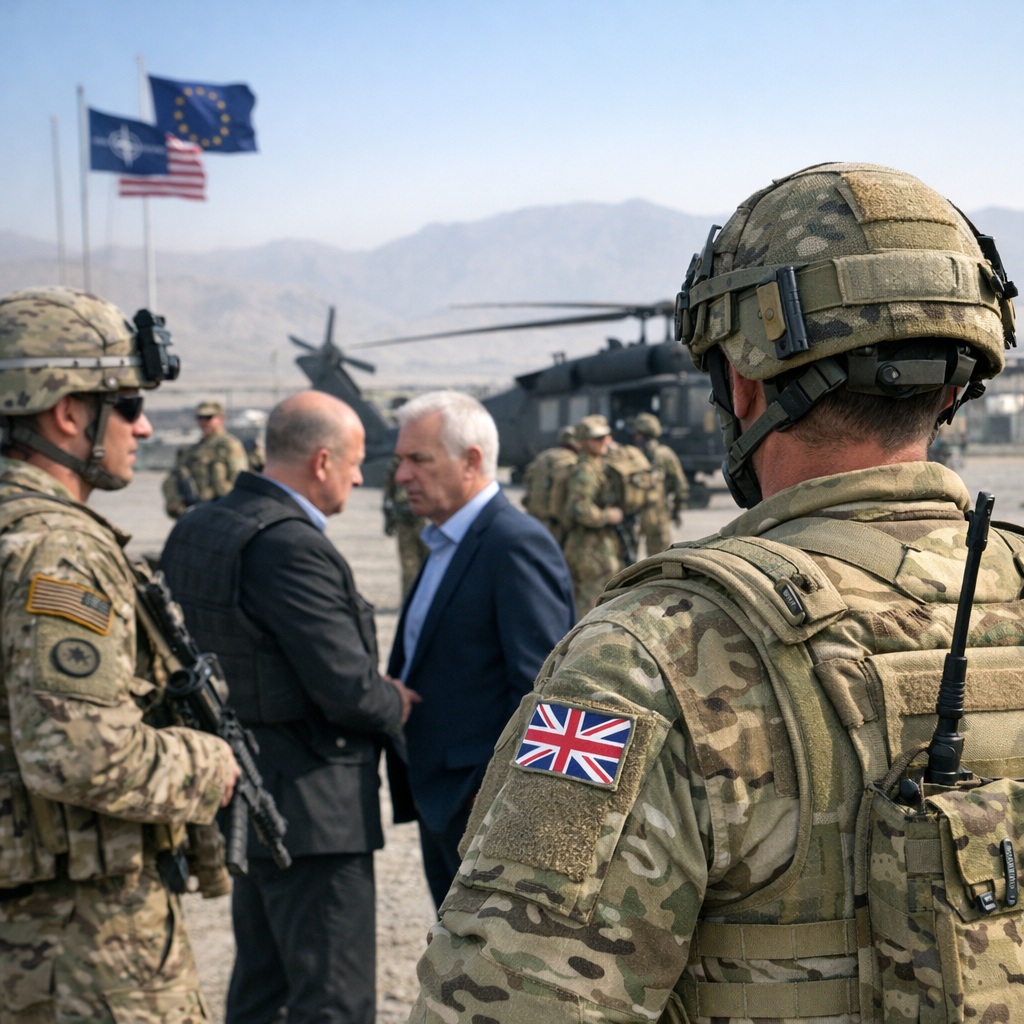
Allies Push Back Against Remarks Seen as Dismissing NATO Sacrifice
European capitals reacted with rare unanimity this week after former United States President Donald Trump made remarks that appeared to minimize the role and sacrifices of allied soldiers during the long and costly NATO mission in Afghanistan. From London to Berlin, Paris to Rome, political leaders, veterans’ associations, and defense officials expressed outrage, calling the comments historically inaccurate and deeply disrespectful to thousands of European service members who fought and died alongside American troops.
The controversy erupted after Trump, speaking at a campaign-style event, framed the Afghanistan war almost exclusively as an American endeavor, suggesting that U.S. forces “did all the real fighting” while allies played a marginal role. Though Trump did not name specific countries, the implication was immediately understood across Europe, where participation in the NATO-led mission shaped two decades of military, political, and social debate.
Within hours, the United Kingdom led the diplomatic backlash. Senior British officials publicly reminded Washington that British forces were among the largest and longest-serving contingents in Afghanistan, operating in some of the most dangerous regions and sustaining heavy casualties. Families of fallen soldiers joined veterans’ groups in condemning the remarks, saying they reopened wounds that had never fully healed.
“This was not America’s war alone,” said one senior European diplomat. “It was a collective NATO mission, carried out under shared command, shared risk, and shared loss.”
Across continental Europe, similar reactions followed. In Germany, where the Afghanistan mission profoundly influenced post–Cold War military policy, lawmakers described Trump’s comments as an affront to democratic accountability and historical truth. German forces had spent years engaged in stabilization and combat operations, particularly in the north of the country, while navigating intense domestic opposition at home.
French officials echoed that sentiment, stressing that France lost dozens of soldiers and committed elite units to some of the most complex operations of the war. Italy, Spain, the Netherlands, Denmark, and Poland also issued statements emphasizing their sacrifices, noting that smaller nations often bore disproportionate political costs for supporting the mission.
The anger was not confined to governments. NATO veterans’ organizations across Europe mobilized quickly, circulating open letters and organizing media appearances to counter what they described as a “dangerous revisionism” of the war. For many veterans, the remarks struck a deeply personal nerve.
“We buried our friends under NATO flags,” said a former European officer who served multiple tours. “To suggest we were somehow passengers in that war is an insult to their memory.”
European leaders are now openly demanding an apology. Several foreign ministries have signaled that, while Trump is no longer in office, his words carry weight as a dominant figure in American politics. The concern, diplomats say, is not only about the past but about the future of transatlantic trust.
At NATO headquarters, officials have responded cautiously, reaffirming the alliance’s collective record without directly naming Trump. Privately, however, alliance sources acknowledge anxiety that such rhetoric could weaken public support for NATO at a time of growing geopolitical instability, from Eastern Europe to the Middle East.
The episode has also reignited broader debates about burden-sharing and recognition within the alliance. European governments have long accepted criticism over defense spending, but many argue that financial metrics obscure the human cost paid by allied nations in Afghanistan. In several countries, the war reshaped civil-military relations and left lasting scars on public confidence in foreign interventions.
In London, opposition and government figures alike stressed that honoring allied service is not a partisan issue. “Whatever disagreements we have with Washington, we do not rewrite history,” said one senior parliamentarian. “Our soldiers stood shoulder to shoulder.”
As the transatlantic relationship enters a period of uncertainty, the fallout from Trump’s remarks underscores how sensitive the legacy of Afghanistan remains. For Europe, the war was not only a military campaign but a defining test of alliance solidarity in the post–9/11 world.
Whether an apology will come remains unclear. What is clear is that, in European eyes, the memory of Afghanistan is still raw—and the demand for respect, non-negotiable.

 The Tower Post