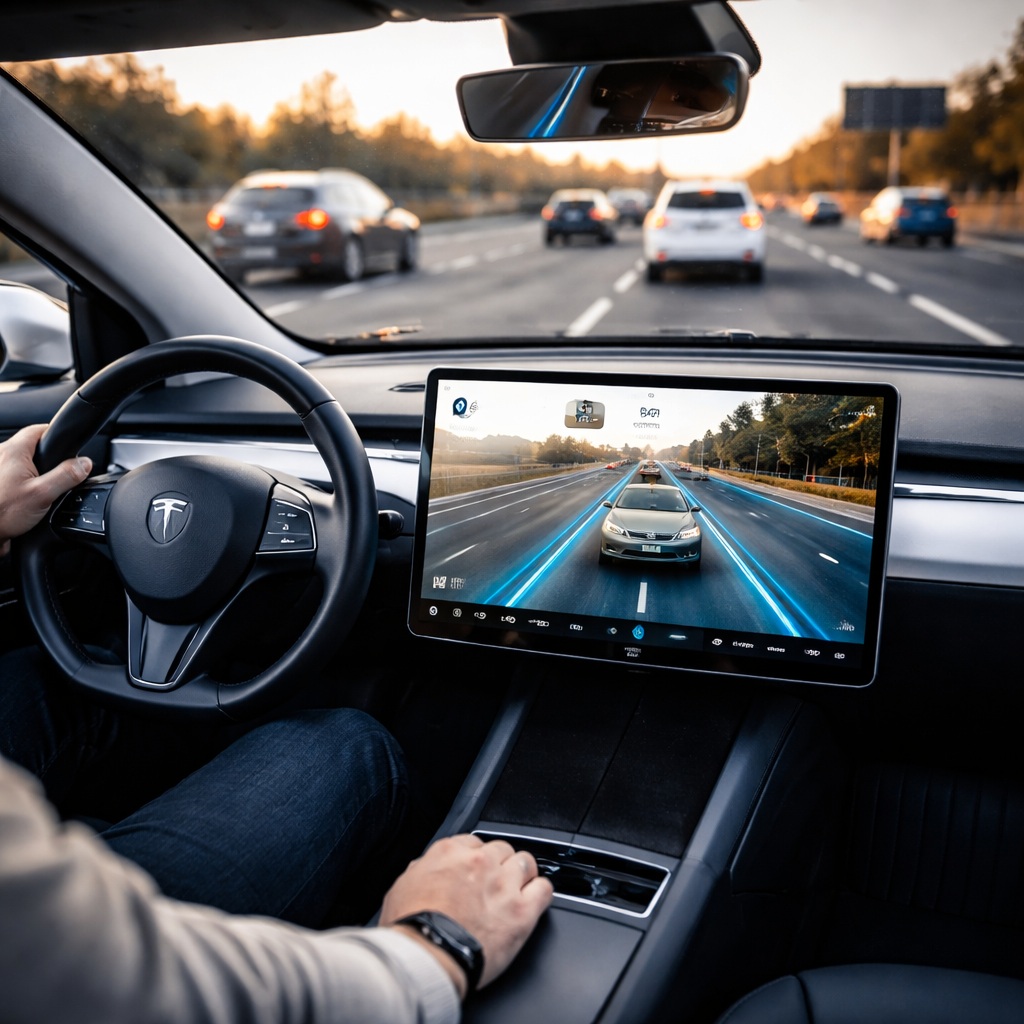
A new subscription model for advanced driving features signals a broader shift in how carmakers plan to profit from software-defined vehicles.
By late January 2026, Tesla once again finds itself at the center of a debate it helped ignite: whether the future of the automobile lies as much in monthly subscriptions as in metal, batteries, and horsepower. The company has begun charging recurring fees for a selection of driver-assistance features in the United States and Canada, marking a decisive step in its evolving strategy to monetize vehicle software long after the initial sale.
For years, Tesla marketed its vehicles as continually improving products, upgraded over the air with new capabilities. That promise has not changed. What has shifted is the business logic behind it. Certain advanced driver-assistance functions that were previously bundled into higher trim levels or one-time purchase packages are now being offered through monthly subscriptions, effectively turning features into services.
Industry analysts say the move reflects mounting pressure across the automotive sector. Electric vehicles remain expensive to develop, price competition is intensifying, and margins on hardware alone are thinning. Software, by contrast, offers recurring revenue with comparatively low incremental costs. Tesla’s decision underscores how central this calculus has become.
The features involved focus on enhanced driver assistance rather than fully autonomous driving. They include more sophisticated lane guidance, adaptive behaviors in complex traffic scenarios, and expanded automation on highways and urban roads. Tesla frames these tools as optional enhancements, arguing that core safety systems remain standard and unaffected.
Still, the change has sparked controversy among owners. Some drivers see subscriptions as a natural evolution, no different from paying for streaming services or smartphone apps. Others argue that once hardware is installed in a vehicle, charging ongoing fees to unlock its full potential feels like paying repeatedly for the same product.
“This is a philosophical shift,” said one auto industry consultant. “You’re no longer just buying a car. You’re entering into a long-term commercial relationship with the manufacturer, one that can change over time.”
Tesla is hardly alone. Traditional automakers and newer electric rivals alike are experimenting with paid software features, from heated seats to performance boosts and advanced infotainment. What sets Tesla apart is its scale and influence. As an early pioneer of over-the-air updates, its choices often serve as a template for the rest of the industry.
Regulators are also watching closely. Driver-assistance systems occupy a sensitive space between convenience and safety. While subscription pricing itself raises no direct legal issues, authorities are attentive to how features are marketed and whether consumers clearly understand what is included at purchase versus what requires ongoing payment.
From Tesla’s perspective, the subscription model offers flexibility. Customers who want the latest capabilities can opt in, while others can stick with basic functionality. The company can also fund continuous development, pushing updates more frequently and tailoring features to regional regulations.
Critics counter that this flexibility may come at the cost of transparency. As vehicles become increasingly software-defined, the line between standard equipment and optional upgrades can blur. For buyers, comparing prices across brands becomes more complex when long-term subscription costs enter the equation.
The timing of Tesla’s move is notable. The North American electric vehicle market is entering a more mature phase, with slower growth and fiercer competition. Price cuts on new vehicles have grabbed headlines, but they also squeeze profits. Subscriptions offer a way to balance lower upfront prices with steady income over a car’s lifespan.
For consumers, the shift raises practical questions. How much are they willing to pay each month for incremental improvements in driving assistance? Will subscriptions feel indispensable once drivers get used to them? And what happens to these features if a vehicle is resold?
As the automotive industry continues its transition from mechanical engineering to digital ecosystems, Tesla’s latest decision highlights a fundamental transformation. Cars are no longer static products; they are platforms. And in the platform economy, recurring fees are often the price of entry.
Whether drivers embrace this model or push back against it will help determine not just Tesla’s future, but the direction of the entire auto tech landscape.




 The Tower Post