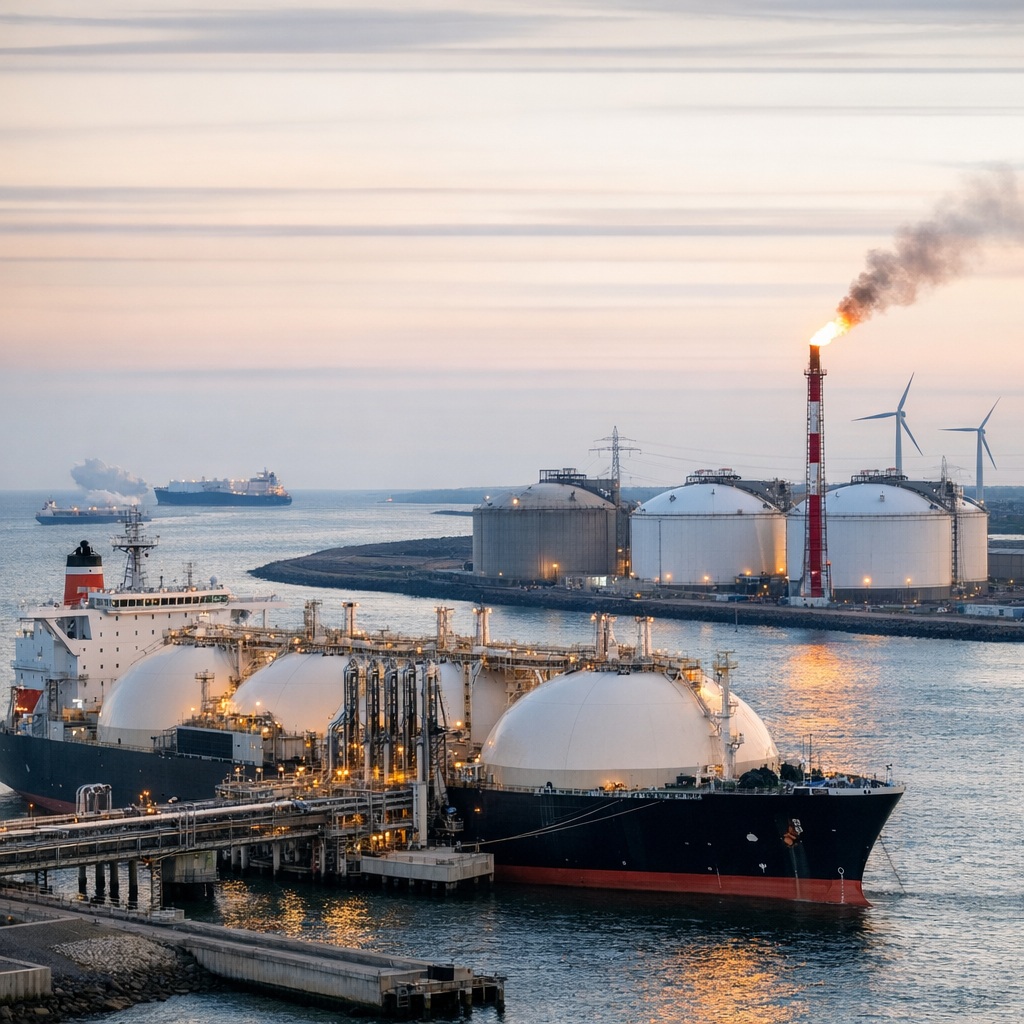
Expanding global supply and a continued pivot away from Russian gas are reshaping Europe’s energy security landscape.
Europe is poised to import an unprecedented volume of liquefied natural gas this year, marking another decisive step in the continent’s effort to redraw its energy map. According to the International Energy Agency, LNG has moved from being an emergency substitute to a structural pillar of Europe’s gas system, with imports set to reach new highs as policymakers, utilities, and traders consolidate a post-Russian supply strategy.
The shift is the latest chapter in a rapid transformation triggered by geopolitical rupture and sustained by market adaptation. European buyers, once heavily reliant on pipeline gas from the east, have spent recent years securing alternative supplies, expanding regasification capacity, and renegotiating long-term contracts. LNG now sits at the center of that strategy, providing both flexibility and diversification in an energy system still exposed to volatility.
At the global level, supply dynamics are reinforcing Europe’s position as a key destination for LNG cargoes. New export capacity is coming online at a steady pace, led by projects in North America. The United States and its neighbors have emerged as pivotal suppliers, reminding markets how decisively transatlantic gas flows have grown. This expansion is expected to ease competition among importing regions and apply downward pressure on prices, reducing the intensity of supply fears that once dominated European energy debates.
For Europe, the implications extend well beyond volumes alone. A deeper and more liquid LNG market is reshaping pricing mechanisms and contract structures. Spot trading has gained prominence, while traditional oil-linked contracts are increasingly complemented by flexible arrangements tied to gas hubs. Energy companies are recalibrating procurement strategies, weighing the need for long-term security against the advantages of market responsiveness.
Infrastructure has been central to this transition. Floating storage and regasification units have been deployed rapidly across multiple coastal states, allowing Europe to boost import capacity without waiting years for permanent terminals. Parallel investments in cross-border interconnections and underground storage have improved the continent’s ability to redistribute gas internally, easing bottlenecks and strengthening collective resilience.
The surge in LNG availability is already altering Europe’s internal energy markets. Greater supply flexibility has helped dampen extreme price swings, offering households and industry a measure of relief after prolonged volatility. While gas prices remain sensitive to global disruptions, the probability of sudden shortages has diminished, granting policymakers more room to steer energy policy and advance the transition toward cleaner sources.
Nonetheless, vulnerabilities persist. LNG is traded globally, and Europe continues to compete with Asia and other demand centers, particularly during periods of peak consumption. Shipping capacity, weather patterns, and geopolitical tensions can all disrupt flows. Moreover, the growing role of LNG raises questions about compatibility with long-term climate objectives, sharpening the focus on efficiency gains, renewables, hydrogen, and carbon management.
Even so, the broader trajectory is unmistakable. Record LNG imports underscore how swiftly Europe’s energy system has evolved. What began as a crisis-driven scramble has matured into a reconfigured market that is more global, more flexible, and arguably more robust than before.
As the year progresses, Europe’s experience will be closely watched by energy markets worldwide. The continent’s ability to absorb record LNG volumes while avoiding renewed price shocks may serve as a benchmark for how advanced economies navigate energy security in an increasingly fragmented and competitive global landscape.



 The Tower Post