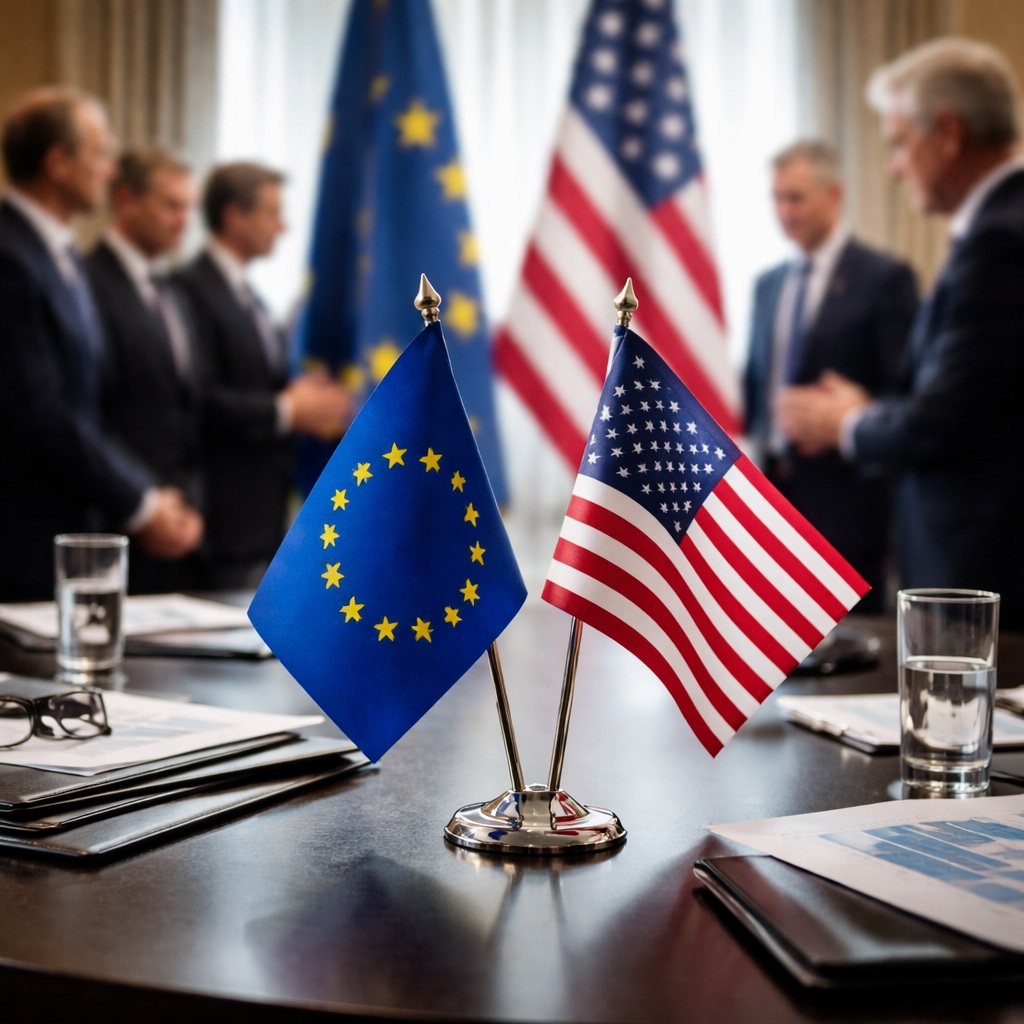
Relief in Brussels masks a deeper reassessment of trade, security, and strategic dependence on Washington
European leaders are breathing easier after Washington stepped back from its most provocative rhetoric over Greenland, but the episode has left a residue of doubt that is now shaping a broader reassessment of transatlantic relations. Behind closed doors in Brussels and other European capitals, officials are weighing how far they can still rely on the United States as both a security guarantor and a predictable economic partner.
The Greenland dispute, brief but jarring, acted as a stress test for the relationship. While U.S. officials ultimately reaffirmed respect for Danish sovereignty and alliance norms, the initial signals were enough to revive old European anxieties about unilateralism in Washington. For many leaders, the concern is not the territory itself but what the episode revealed about decision‑making instincts at the top of the American political system.
This unease comes at a moment when trade relations are already under strain. European policymakers note that even as tariffs and threats have been partially rolled back, the United States continues to frame economic ties in transactional terms. Industrial policy, subsidies, and security‑linked trade measures are seen in Europe as tools Washington is willing to wield with little warning.
In response, the European Union is quietly accelerating efforts to reduce exposure to sudden U.S. policy shifts. Discussions on supply‑chain resilience, strategic raw materials, and domestic industrial capacity have gained urgency. The aim is not decoupling, officials stress, but insurance: ensuring that European economies are less vulnerable to political turbulence across the Atlantic.
Security considerations are deeply intertwined with this debate. The Greenland episode rekindled fears that U.S. strategic priorities could pivot rapidly, leaving European interests as a secondary concern. While NATO remains the cornerstone of European defense, several member states are pushing harder for credible European military capabilities that can operate independently if required.
Trade officials, meanwhile, are reassessing negotiation strategies with Washington. There is a growing view that concessions must be balanced by enforceable commitments, rather than political assurances alone. Some diplomats argue that the EU should be more willing to leverage its market size to push back against measures it sees as discriminatory.
Publicly, European leaders continue to emphasize partnership and shared values. Privately, the tone is more cautious. The Greenland affair is frequently cited as an example of how quickly trust can be tested, even among allies with decades of cooperation behind them.
The recalibration does not signal a rupture. The United States remains Europe’s most important strategic ally and one of its largest trading partners. Yet the mood has shifted from confidence to conditionality. Future cooperation, many in Brussels say, will depend less on tradition and more on clear rules and mutual restraint.
As winter diplomacy gives way to a packed political season on both sides of the Atlantic, European leaders are intent on turning discomfort into leverage. The lesson drawn from Greenland is not that the alliance is broken, but that it can no longer be taken for granted.


 The Tower Post