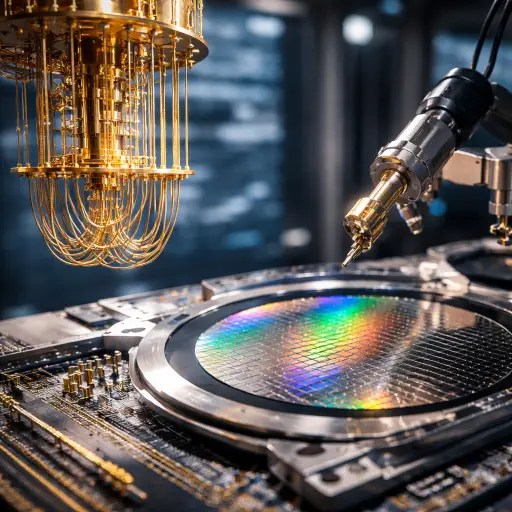
The quantum computing firm moves to vertically integrate chip manufacturing as competition intensifies
In a move that signals a strategic shift in the fast-evolving quantum computing industry, IonQ has agreed to acquire U.S.-based semiconductor manufacturer SkyWater in a deal valued at $1.8 billion. The transaction underscores a growing conviction among quantum technology leaders that control over hardware production is becoming as critical as breakthroughs in algorithms and software.
IonQ, long known for its trapped-ion approach to quantum computing, has historically relied on external partners for much of its hardware development. By bringing SkyWater into the fold, the company is aiming to secure direct access to advanced semiconductor fabrication capabilities, tightening its grip on the physical layer that underpins quantum performance.
Industry analysts see the acquisition as a response to intensifying global competition. As quantum computing edges closer to practical, commercial-scale applications, companies are racing not only to increase qubit counts and stability, but also to ensure reliable, scalable manufacturing. Vertical integration, once considered capital-intensive and risky, is increasingly viewed as a competitive necessity.
SkyWater brings with it deep expertise in specialized chip manufacturing, including secure and trusted fabrication processes that are difficult to replicate quickly. Its facilities and engineering teams are expected to bolster IonQ’s ability to prototype, customize, and eventually mass-produce quantum hardware components tailored specifically to its technology roadmap.
Executives familiar with the deal describe it as a long-term play rather than a short-term earnings boost. Integrating a semiconductor manufacturer into a quantum computing company presents cultural and operational challenges, from aligning research timelines to managing supply chains. Yet proponents argue that the payoff could be significant: faster innovation cycles, tighter quality control, and reduced dependence on third-party foundries.
The acquisition also reflects a broader trend blurring the lines between quantum startups and traditional chipmakers. As governments and enterprises pour funding into quantum research, the sector is attracting attention from defense, finance, and energy players who demand not only computational power but also security and reliability. Owning the manufacturing stack can be a powerful signal of maturity to such customers.
For IonQ, the SkyWater deal may mark a turning point in its evolution from a pure-play quantum innovator to a fully integrated technology provider. If successful, the strategy could position the company to better weather supply constraints and respond more nimbly to customer needs in a market that remains fluid and fiercely competitive.
Investors and competitors alike will be watching closely as the integration unfolds. While the promise of tighter hardware control is compelling, execution will be key. In the high-stakes race to make quantum computing commercially viable, IonQ has placed a bold bet that owning the factory floor is as important as owning the science.




 The Tower Post