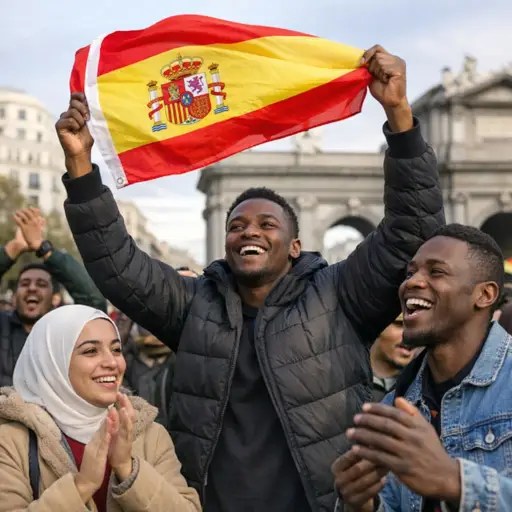
Madrid moves to regularize thousands of undocumented residents while the continent confronts the human cost of rail disasters and turns to culture as a mirror of social change.
Spain has taken a decisive step in reshaping its migration landscape, approving a plan to grant legal status to large numbers of migrants who have been living and working in the country without papers. The move places Madrid at the center of Europe’s ongoing debate over how to balance border control, labor needs, and human rights, at a moment when mobility, safety, and cultural identity are once again dominating the continental agenda.
The newly approved framework is designed to streamline pathways to residency for migrants who can demonstrate roots in Spanish society—through employment, family ties, or sustained presence. Officials describe the initiative as both pragmatic and humanitarian, arguing that bringing people out of the shadows will strengthen tax revenues, reduce exploitation, and acknowledge the reality of Spain’s labor market, where migrants already play a critical role in agriculture, construction, caregiving, and hospitality.
Supporters within the governing coalition say the policy reflects lessons learned from previous regularization efforts, which showed improvements in workplace standards and social cohesion. Regional leaders in areas with aging populations have welcomed the plan, noting that legalized status can help stabilize local economies and public services. Employers’ associations have also expressed cautious support, emphasizing the need for clear procedures and legal certainty.
Critics, however, warn that the measure could act as a pull factor, encouraging further irregular arrivals at a time when Europe’s external borders remain under strain. Opposition parties have called for tighter coordination with European partners and stronger enforcement alongside any legalization. The government counters that the plan is paired with administrative reforms and cooperation at the EU level, insisting that regularization is not an open-door policy but a recognition of long-term residents already embedded in Spanish society.
Spain’s decision resonates beyond its borders. Across Europe, migration policy remains fragmented, with countries oscillating between restrictive measures and targeted integration programs. Southern states, often the first point of arrival, continue to press for shared responsibility, while northern governments face domestic pressure over housing, jobs, and social services. Madrid’s approach adds a fresh data point to a debate that has long lacked durable consensus.
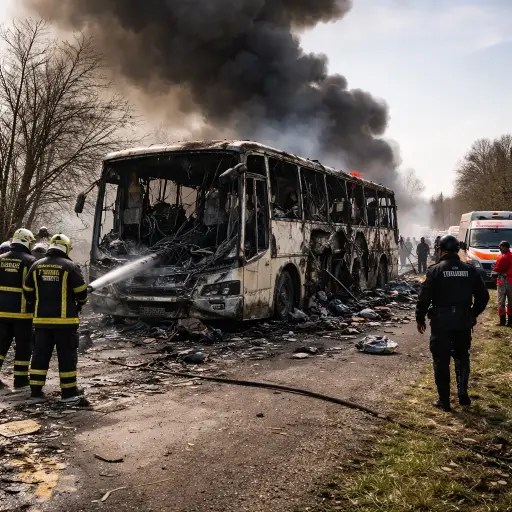
Elsewhere on the continent, questions of responsibility and accountability have come into sharp focus following renewed attention to compensation for victims of a major train crash—an accident that shocked the public and exposed weaknesses in rail safety oversight. Authorities have moved to finalize pay-outs for survivors and families, acknowledging delays that compounded grief and frustration. While the sums involved cannot undo the loss, officials say the process is intended to recognize institutional failures and reaffirm a commitment to passenger safety.
Rail unions and safety advocates argue that compensation must be accompanied by sustained investment in infrastructure and oversight. They point to aging networks, staffing shortages, and the pressures of high-speed expansion as systemic risks. The tragedy has become a reference point in broader discussions about public transport funding, with policymakers underlining that trust in rail travel depends as much on accountability as on efficiency.
At the same time, Europe’s cultural calendar is offering moments of reflection and relief amid political tension. Major cities are hosting festivals, exhibitions, and premieres that grapple with themes of migration, memory, and belonging. In Spain, theaters and museums have foregrounded stories of movement and identity, often created by artists with migrant backgrounds. Across borders, cultural institutions are collaborating on projects that explore shared histories and contemporary divides.
These events are not merely decorative. Cultural organizers argue that art provides a space to process complex realities that policy alone cannot resolve. Audiences are engaging with narratives that humanize statistics and invite empathy, whether through film, literature, or public installations. In a climate where political rhetoric can harden quickly, culture remains one of the few arenas capable of slowing the conversation and broadening perspective.
Taken together, the week’s developments sketch a portrait of a continent in motion. Spain’s migrant status plan underscores a willingness to confront demographic and economic realities with administrative tools, even at political risk. The rail compensation process reflects an insistence on institutional accountability after collective trauma. And Europe’s cultural life continues to probe the meaning of community in an era defined by movement and uncertainty.
As January draws to a close, Europe is not settling into easy answers. Instead, it is navigating overlapping debates about who belongs, how systems fail, and where societies find common ground. Spain’s latest decision will be tested in implementation and emulated or resisted elsewhere. What is clear is that migration, safety, and culture are no longer separate stories—they are threads of a single, evolving European narrative.



 The Tower Post