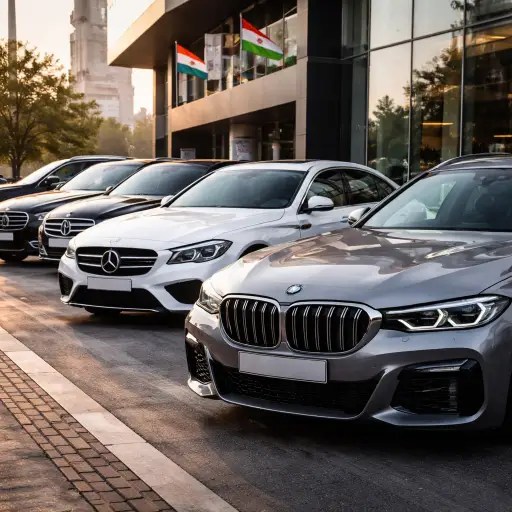
New Delhi’s tariff cuts signal a deeper India–EU commercial tie that could reshape the luxury automotive landscape at home and abroad
In a decisive shift in trade policy, India has sharply cut import tariffs on high-end European cars from historically steep levels — some exceeding 100 percent — to a maximum of 30 percent for select models, immediately opening doors in one of the world’s most protected auto markets. The move, part of a landmark trade deal with the European Union, marks a major win for luxury automakers including BMW and Mercedes-Benz and carries important implications for bilateral automotive trade.
The sweeping agreement, concluded after nearly two decades of negotiations, cuts or reduces tariffs on most EU exports to India while expanding Indian access to the vast European market. Cars are among the most symbolic beneficiaries — and flashpoints — of this pact. The immediate duty cut is designed to grant European brands significantly better access to India’s rapidly growing car market, where premium imports until now faced prohibitive tariffs as high as 110 percent.
Luxury Market Access Gets a Boost
Under the new tariff regime, duties on high-end European cars — particularly those above a certain price threshold — have been slashed to 30 percent, a fraction of the previous tax burden. These cuts are paired with annual quotas for imported vehicles, structured to keep the opening measured while still boosting supply and competition.
European SUVs and sedans prized by affluent Indian buyers are now cheaper to bring into the country. In coming years, tariffs could fall further for a broader set of vehicles as the phased trade commitments unfold, potentially driving greater diversification within India’s luxury car segment.
Industry executives say the reforms could eventually lead to improved model variety, expanded dealership footprints, and enhanced technology flows between Indian and European producers — particularly in high-performance internal combustion and hybrid vehicles. Automakers such as Mercedes-Benz and BMW are expected to assess how best to leverage the new tariff environment to introduce niche models previously uneconomic to import.
Domestic Stakes and Export Prospects
For Indian consumers, the new tariff structure promises, over time, more competitive pricing and greater availability of European prestige vehicles. But analysts caution that price drops may be gradual, as currency fluctuations and production cost pressures can dilute the immediate impact of duty savings at the showroom level.
Beyond imports, the trade agreement is being watched in New Delhi and Brussels for its potential to spur Indian automotive exports to Europe, particularly in auto components and finished vehicles assembled to European standards. The pact’s broader framework eliminates or slashes tariffs on a significant portion of bilateral trade, which could bolster Indian engineering exports and integrate Indian suppliers more deeply into European supply chains.
Market Reactions and Future Outlook
The pact’s announcement triggered mixed reactions in financial and automotive circles. Shares of some domestic automakers dipped on investor concerns about heightened foreign competition, even as parts suppliers and engineering exporters rallied on prospects of easier access to EU markets.
Trade experts describe the deal as one of India’s most consequential in years, aligning New Delhi’s export-oriented ambitions with a more open import stance that breaks with decades of protectionist automotive policy. By fostering closer commercial ties with the EU, India not only strengthens its position in global trade but also opens a new chapter in how luxury and performance vehicles move across international borders.




 The Tower Post