Winter assaults on energy lifelines deepen civilian hardship as conflict grinds on ahead of renewed diplomacy
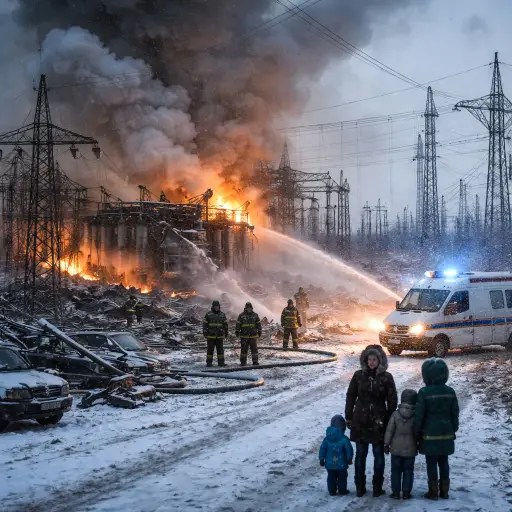
A brutal winter spell has tightened its grip on Ukraine just as renewed strikes on critical infrastructure have plunged parts of the country back into darkness. Russian attacks over recent days have targeted power generation and transmission facilities, officials and emergency services say, underscoring the vulnerability of Ukraine’s energy system as the war drags through another cold season with no decisive breakthrough on the battlefield.
Air raid sirens echoed across multiple regions as temperatures hovered well below seasonal norms, forcing millions to rely on backup generators, wood stoves, and emergency heating centers. In the outskirts of Kyiv, debris from a downed missile struck a residential area, killing two civilians and injuring several others, including children, according to local authorities. The blast shattered windows across nearby apartment blocks, sending residents scrambling into basements and shelters before dawn.
Energy facilities again in the crosshairs
Ukraine’s power sector has been a recurring target since the early phases of the full-scale invasion, but the latest wave of attacks appears calibrated to coincide with a deep freeze that magnifies civilian suffering. Grid operators reported emergency shutdowns at several substations after strikes caused fires and equipment damage, triggering rolling blackouts in urban centers and prolonged outages in rural areas.
Engineers worked through the night in subzero conditions to reroute electricity and prevent cascading failures. “Every winter attack is designed to test the limits of the system and the endurance of the population,” said a senior energy official, speaking on condition of anonymity due to security concerns. “We have learned to adapt, but the pressure is relentless.”
Hospitals and water utilities switched to backup power as a precaution, while mobile phone networks warned of intermittent service disruptions. In some towns, public transport was suspended when traction power failed, leaving commuters to walk through icy streets.
Children and families bear the brunt
The human cost of the strikes is most visible among families with young children and elderly relatives. In the Kyiv region, medics treated minors for shock and exposure after homes lost heating overnight. Schools in affected districts shifted temporarily to remote learning or closed altogether, citing safety and power supply concerns.
At a community warming center set up in a sports hall, parents wrapped children in donated blankets as volunteers served hot soup. “You can hear the explosions, and then the lights go out,” said Olena, a mother of two who fled her damaged apartment. “The children ask when it will end. I don’t know what to tell them.”
Local officials said psychological support teams had been deployed alongside emergency responders, reflecting growing awareness of the mental toll of repeated attacks layered onto winter deprivation.
A strategic message
Military analysts say the timing and pattern of the strikes suggest a dual purpose: degrading Ukraine’s ability to sustain its economy and sending a signal ahead of anticipated diplomatic contacts. With front lines largely frozen by weather and entrenched defenses, long-range strikes allow Moscow to project force without major troop movements.
Ukraine’s air defenses intercepted many incoming missiles and drones, but saturation tactics and the sheer scale of attacks continue to inflict damage. Officials in Kyiv reiterated calls for additional air defense systems and spare parts from partners, arguing that protecting the grid is as critical as holding territory.
“The power sector is a battlefield,” said an analyst at a European security think tank. “Disrupting electricity weakens industry, strains public morale, and complicates military logistics, especially in winter.”
Resilience under strain
Despite repeated blows, Ukraine’s energy workers have become symbols of resilience. Crews often begin repairs within hours of an attack, sometimes finishing temporary fixes before sirens fall silent. International assistance has helped replace transformers and install modular power units, while decentralized generation has reduced reliance on single points of failure.
Still, the cumulative impact is evident. Economists warn that sustained outages could slow production and push up prices, even as households already devote a growing share of income to heating and fuel. Municipal budgets are stretched by the cost of emergency measures, from fuel purchases to shelter operations.
Hope and uncertainty before talks
As smoke cleared from damaged sites, attention turned once more to the diplomatic horizon. Officials in Kyiv confirmed preparations for another round of talks involving international mediators, though expectations remain cautious. Previous efforts have failed to halt the violence, and neither side has publicly signaled major concessions.
For civilians enduring another winter of war, the prospect of talks offers a fragile glimmer of hope. “We listen to the news by candlelight,” said Serhiy, an electrician helping restore a substation outside the capital. “Maybe someone, somewhere, will decide this has gone on long enough.”
Until then, Ukraine’s power sector remains on the front line of a conflict where cold, darkness, and uncertainty are weapons in their own right.



 The Tower Post