
MEPs halt momentum on a landmark EU–US deal after renewed pressure from Washington sharpens economic tensions
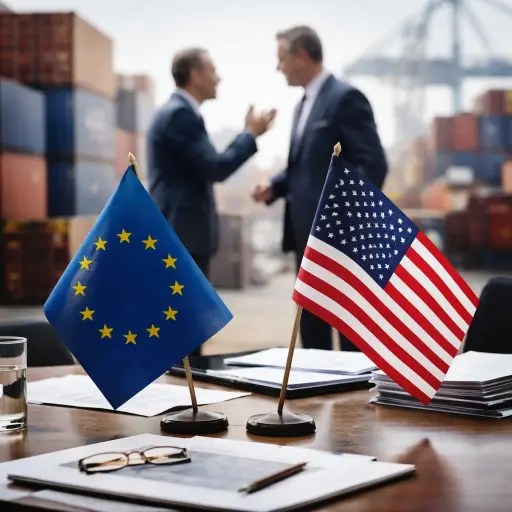
By late January 2026, the European Parliament had drawn a firm line in the sand. Lawmakers voted to pause key elements of trade negotiations with the United States, signaling mounting frustration over tariff threats emanating from Washington and underscoring how fragile the transatlantic economic relationship has become.
Members of the European Parliament (MEPs) framed the move as a defensive measure rather than an outright rupture. Yet the decision to freeze talks on a flagship EU–US trade framework sent a clear political message: progress on deeper market access and regulatory cooperation will not continue under pressure tactics. For European officials, the return of tariff brinkmanship has revived memories of earlier trade wars that disrupted supply chains and eroded trust between long‑standing allies.
At the heart of the dispute lies a series of threatened U.S. import duties targeting strategic European sectors, including automotive manufacturing, green technologies, and industrial components. While the measures have not all been implemented, their repeated use as leverage has alarmed European policymakers who argue that negotiations cannot proceed “with a gun on the table,” as one senior parliamentarian put it during the debate.
The paused negotiations were meant to update and expand cooperation beyond traditional tariff reduction, focusing on standards alignment, digital trade, and clean‑energy supply chains. Supporters had billed the talks as a way to anchor Western economic power amid intensifying competition from China and other emerging economies. The freeze now exposes the limits of that ambition when domestic political pressures collide on both sides of the Atlantic.
For the European Parliament, the move reflects a broader assertion of institutional power. Unlike the European Commission, which conducts trade talks, Parliament must ultimately approve any comprehensive agreement. In recent years, MEPs have demanded a stronger voice on labor protections, environmental safeguards, and the geopolitical implications of trade. The latest decision signals that lawmakers are prepared to use their veto power preemptively to shape the negotiating environment.
Washington’s reaction has been measured but firm. U.S. officials have defended the tariff threats as tools to protect domestic industries and address trade imbalances, arguing that they remain consistent with national economic priorities. Privately, however, diplomats acknowledge concern that the standoff could derail cooperation at a moment when transatlantic unity is seen as strategically vital.
Business groups on both sides of the Atlantic have been quick to warn of the costs. European exporters fear renewed uncertainty in their largest external market, while U.S. importers caution that higher duties would translate into higher prices for consumers already grappling with inflationary pressures. Industry associations have urged political leaders to de‑escalate and return to structured dialogue.
The pause also lands amid a complex global backdrop. Trade is increasingly entangled with security, climate policy, and technological rivalry. European lawmakers argue that unilateral tariffs undermine efforts to build resilient supply chains for semiconductors, critical minerals, and renewable energy equipment—areas where cooperation with the United States is seen as essential.
Inside Parliament, the vote revealed unusual cross‑party convergence. Lawmakers from across the political spectrum, from center‑right conservatives to greens and social democrats, expressed concern that yielding under tariff threats would set a dangerous precedent. While divisions remain over the ultimate shape of any EU–US deal, there was broad agreement that negotiations must be conducted on equal footing.
Not all voices were in favor of the freeze. Some centrist MEPs warned that halting talks risks ceding ground to global competitors and could weaken Europe’s influence over international trade norms. They argued that engagement, even under difficult circumstances, offers more leverage than disengagement. The counterargument—that Europe must defend its autonomy to negotiate free from coercion—ultimately carried the day.
The European Commission has sought to strike a careful tone, emphasizing that technical discussions can continue while political concerns are addressed. Officials stress that the pause is reversible if the tariff issue is resolved. Still, the episode highlights the increasingly politicized nature of trade policy in an era of economic nationalism.
For the United States, the confrontation with Brussels illustrates the challenge of balancing domestic industrial policy with alliance management. Tariffs may play well at home, but they risk alienating partners whose cooperation is critical on issues ranging from climate action to security.
As January draws to a close, the transatlantic relationship stands at a familiar crossroads. Economic interdependence remains deep, but trust has been tested once again. Whether the freeze becomes a brief pause or a longer‑term rupture will depend on the willingness of both sides to step back from escalation and recommit to negotiation without threats.
What is clear is that trade, once a technocratic domain, has become a frontline political issue. The European Parliament’s decision underscores a simple reality of the current moment: in a world of strategic competition and domestic pressure, even the closest economic partnerships are no longer immune to confrontation.




 The Tower Post