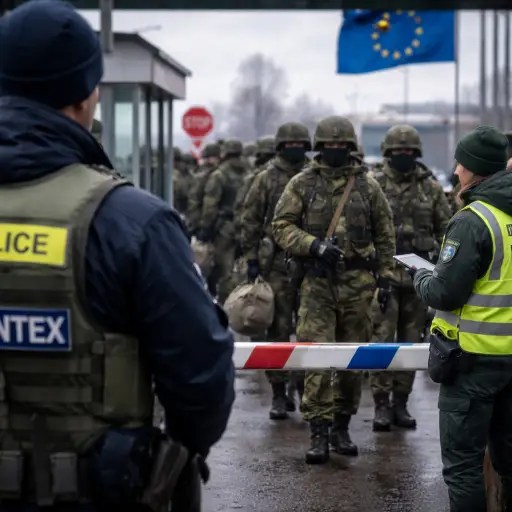
Proposed restrictions, led by Baltic states, would bar Russian soldiers who fought in Ukraine from entering the bloc, marking a new phase in Europe’s sanctions and accountability strategy.
The European Union is considering one of its most politically sensitive wartime measures yet: a coordinated ban on entry for Russian soldiers who took part in the war in Ukraine. The proposal, now under review in Brussels, reflects a growing conviction among several member states that the conflict’s consequences should extend beyond the battlefield and follow those who fought it.
At the center of the initiative is Estonia, backed by other countries along the EU’s eastern flank, which argue that allowing combat veterans of the invasion to travel freely within Europe undermines both security and moral accountability. Their position is straightforward: individuals who participated in a war widely condemned by the EU should not be able to enjoy the freedoms of the bloc while Ukraine continues to bear the cost of destruction.
The proposal would not amount to a blanket ban on all Russian citizens. Instead, it would target those identified as having served in combat roles in Ukraine, potentially including professional soldiers, contract fighters, and members of auxiliary units integrated into Russian forces. The distinction is politically crucial, as Brussels remains cautious about measures that could be interpreted as collective punishment.
EU officials familiar with the discussions describe the idea as part of a broader recalibration of sanctions policy. While earlier rounds focused heavily on economic pressure—energy, banking, trade, and technology—the emphasis is now shifting toward personal responsibility and long-term accountability. Travel restrictions, proponents say, are a visible and symbolic tool that reinforce the message that participation in the war carries lasting consequences.
Supporters of the ban also frame it as a security measure. Several member states have expressed concern that individuals with recent combat experience could pose intelligence, radicalization, or organized crime risks if allowed to enter the Schengen area. While no public evidence has been presented linking Russian veterans to specific incidents inside the EU, security services across the bloc have quietly warned about the challenges of monitoring large numbers of battle-hardened individuals moving across borders.
Critics of the proposal, however, urge caution. Some western and southern member states worry about legal complexity and enforceability. Identifying who fought in Ukraine is not straightforward, particularly given Russia’s opaque military structures and the use of irregular forces. There are also concerns about compliance with international law and the EU’s own legal standards, which require clear criteria and avenues for appeal.
Human rights organizations have echoed these concerns, warning that poorly defined restrictions could lead to arbitrary decisions at borders. They argue that responsibility for war crimes should be established through judicial processes, not administrative bans, and stress the importance of distinguishing between those who committed abuses and those who may have been conscripted or coerced.
Estonia and its allies counter that the proposal does not replace criminal расследations or international tribunals, but complements them. In their view, entry bans are preventive, not punitive. They are designed to protect the EU’s internal space while reinforcing diplomatic pressure on Moscow. The message, one Baltic diplomat said privately, is that neutrality is no longer possible for those who actively took part in the war.
The debate also reflects shifting public sentiment within the EU. As the war drags on, fatigue has not translated into indifference. On the contrary, polling in several countries shows sustained support for tough measures against Russia, particularly those that emphasize accountability rather than broad economic sacrifice. Limiting travel for combatants is seen by many voters as both fair and proportionate.
Implementation, if agreed, would likely rely on a mix of national intelligence, visa records, and international cooperation. Member states already share data on sanctioned individuals, and proponents argue that existing mechanisms could be adapted. Still, diplomats acknowledge that the system would not be airtight and that enforcement would vary across borders.
The European Commission has so far taken a cautious tone, emphasizing the need for unity and legal robustness. Any measure adopted at EU level would require consensus among member states, a threshold that remains uncertain. Behind closed doors, negotiations continue over definitions, exemptions, and safeguards, including possible humanitarian exceptions for family reunification or medical reasons.
For Ukraine, the proposal carries strong symbolic weight. Ukrainian officials have long argued that Russia’s war should isolate not only the state but also those who waged it. An EU-wide entry ban would, in their view, signal that Europe’s commitment extends beyond financial aid and weapons deliveries to shaping the post-war moral landscape.
Whether the proposal becomes law or stalls in negotiations, it marks a notable evolution in how the EU views the conflict. The focus is no longer solely on ending the war, but on defining its aftermath—who is welcomed, who is restricted, and how responsibility is remembered.
As Brussels weighs its options, the discussion itself underscores a broader reality: the war in Ukraine continues to reshape European policy in ways that reach deep into questions of identity, security, and justice. The debate over entry bans is less about borders alone than about the values the EU seeks to defend while the conflict remains unresolved.


 The Tower Post