
Tehran’s warning that any response will not be confined in scope intensifies a volatile standoff, forcing Europe to reassess its security posture amid widening regional risks.
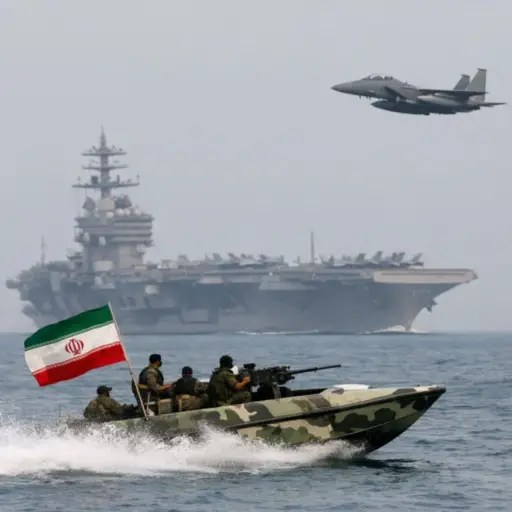
Iran has issued its starkest warning yet following a U.S. military attack in the Gulf, signaling that any retaliation would not be limited in geography, method, or target set. The statement, delivered through official channels and amplified by state media, marks a sharp escalation in a confrontation that is rapidly reshaping the regional and global security landscape.
Tehran’s message was deliberately broad. By declining to specify how or where it might respond, Iranian officials appeared intent on maximizing uncertainty for Washington and its allies. The warning comes amid heightened military activity in the Gulf and surrounding waterways, a region through which a significant share of the world’s energy supplies passes and where miscalculation has historically carried outsized consequences.
U.S. officials have framed the recent strike as a defensive action, aimed at deterring further threats to American personnel and interests. Iran, however, has described it as an act of aggression that violates international norms and sovereignty. The divergent narratives underscore the depth of mistrust that now defines relations between the two countries.
At the heart of Iran’s warning is a strategic doctrine refined over years of sanctions, covert conflict, and proxy warfare. Rather than relying solely on direct confrontation, Tehran has cultivated a network of allied militias and partners across the Middle East. These groups, operating in multiple theaters, give Iran the ability to apply pressure indirectly and asymmetrically. The assertion that retaliation would not be “limited” suggests that this network could again play a central role.
Security analysts note that Iran’s calculus is shaped by both deterrence and domestic signaling. By projecting resolve abroad, the leadership seeks to reassure a home audience that it will not appear weak in the face of U.S. military power. At the same time, it aims to deter further strikes by raising the potential costs for its adversaries.
The immediate concern for global markets and policymakers is the risk of escalation in the Gulf itself. Shipping lanes, energy infrastructure, and military installations are all potential flashpoints. Even a limited disruption could reverberate through global supply chains, driving up energy prices and exacerbating inflationary pressures already felt in many economies.
Europe, though geographically distant, finds itself unavoidably entangled in the unfolding crisis. European governments maintain naval deployments in the region to protect commercial shipping and have longstanding diplomatic investments in preventing a wider war. Iran’s warning complicates this balancing act. Any expansion of hostilities could threaten European forces, citizens, and economic interests.
For Brussels and key European capitals, the crisis revives unresolved questions about strategic autonomy and reliance on U.S. security guarantees. While European leaders have consistently called for de-escalation and a return to diplomacy, their ability to influence events remains limited. The collapse of earlier diplomatic frameworks has left few effective channels for mediation.
NATO officials have emphasized the alliance’s commitment to collective defense, while stopping short of endorsing further military action. Behind the scenes, European diplomats are reportedly engaged in urgent consultations with Washington, regional partners, and Tehran, seeking to contain the situation before it spirals beyond control.
The broader regional context adds layers of complexity. Ongoing conflicts and fragile ceasefires across the Middle East mean that a single incident can quickly cascade into multiple crises. Iran’s allies and adversaries alike are recalibrating their positions, wary of being drawn into a confrontation not of their choosing.
In Washington, the administration faces its own set of constraints. Domestic political pressures, concerns about force protection, and the desire to avoid a prolonged conflict all weigh heavily on decision-making. Officials have reiterated that they do not seek war, even as they vow to respond decisively to any attack on U.S. interests.
Tehran’s leadership, for its part, appears to be walking a narrow line between retaliation and restraint. An overly forceful response could invite devastating consequences, while a muted one risks undermining its deterrent credibility. By emphasizing that its options are unconstrained, Iran may be attempting to buy time and leverage without committing to a specific course of action.
The coming days will be critical. Military movements, diplomatic signals, and public rhetoric will be scrutinized for clues about intent and red lines. History offers sobering lessons about how quickly crises in the Gulf can escalate, often propelled by misunderstandings and rapid decision cycles.
For Europe, the stakes are clear. Energy security, regional stability, and the integrity of international norms are all on the line. As Iran warns that its response to U.S. action will know no bounds, the challenge for European leaders is to navigate a path that supports de-escalation while preparing for the possibility that the crisis may yet widen.
Whether restraint or escalation prevails will depend on choices made in capitals far from the Gulf but deeply affected by its fate. What is certain is that Iran’s warning has injected a new level of volatility into an already tense moment, reminding the world how interconnected and fragile the current security order has become.



 The Tower Post