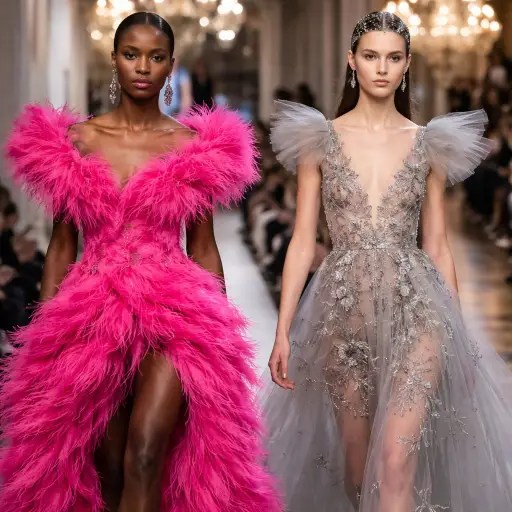
Bold silhouettes, poetic craft, and modern emotion define the season’s most talked-about collections
As the fashion world turned its attention to the ateliers of Paris, Spring 2026 couture arrived with a sense of renewed confidence. After seasons marked by introspection and recalibration, haute couture is once again asserting its role as fashion’s most imaginative laboratory. This season, two houses in particular emerged as clear protagonists: Valentino and Dior. Their shows delivered not only visual spectacle, but also sharply defined perspectives on where couture stands today—between heritage and experimentation, intimacy and grandeur.
Couture Week unfolded with an undercurrent of anticipation. Designers were expected to respond to a shifting cultural mood, one that favors authenticity, emotion, and craftsmanship over excess for its own sake. In this context, Valentino and Dior offered contrasting yet complementary visions, each reinforcing the relevance of couture in a contemporary landscape increasingly dominated by speed and digital imagery.
Valentino: A Study in Poetic Radicalism
Valentino’s Spring 2026 couture collection unfolded like a carefully composed poem. The house leaned into its reputation for romanticism, but reframed it through a more daring, avant-garde lens. From the opening look, it was clear that the collection was less about nostalgia and more about transformation. Voluminous silhouettes floated around the body, often appearing weightless despite the complexity of their construction.
Color played a central role. Valentino’s signature reds appeared alongside unexpected hues—muted celadon, inky violet, and soft mineral tones—that shifted subtly under the lights. These shades were not merely decorative; they underscored the emotional rhythm of the collection. Fabrics were layered, folded, and sculpted, revealing the meticulous handwork that remains the backbone of couture.
What distinguished the collection was its fearless approach to proportion. Oversized sleeves, elongated trains, and cocoon-like shapes challenged conventional ideas of elegance, yet never tipped into costume. Each piece felt deliberate, designed to provoke thought as much as admiration. Embroidery was used sparingly but with precision, often concentrated in areas that drew the eye inward rather than across the surface.
Valentino’s models moved with a calm assurance, reinforcing the idea that these garments were meant to be lived in, not simply displayed. The collection suggested a new kind of couture client—one who values individuality and emotional resonance over traditional markers of luxury. In doing so, Valentino reaffirmed couture’s capacity to evolve without losing its soul.
Dior: Modernity Through Discipline
If Valentino explored softness and fluidity, Dior countered with structure and clarity. The house’s Spring 2026 couture presentation was a masterclass in controlled modernism. Rooted in Dior’s historic codes, the collection revisited the architectural foundations of the brand while pushing them firmly into the present.
Sharp tailoring defined many of the looks, with cinched waists and sculpted shoulders creating a powerful silhouette. Yet this severity was balanced by moments of delicacy: sheer panels, fine pleating, and intricate lacework softened the lines and added depth. The interplay between strength and fragility became a recurring theme throughout the show.
The color palette was restrained but impactful. Shades of ivory, charcoal, and deep midnight were punctuated by flashes of metallic sheen and subtle iridescence. These elements caught the light with every movement, lending the collection a quiet drama. Unlike more overtly theatrical couture, Dior’s approach relied on precision and restraint to make its statement.
Craftsmanship was front and center. Close inspection revealed hours of labor embedded in each garment, from hand-stitched seams to complex textile treatments. Dior used these techniques not as embellishment, but as structural tools, reinforcing the idea that true luxury lies in execution. The result was a collection that felt both timeless and unmistakably current.
A Dialogue Between Two Visions
Together, Valentino and Dior encapsulated the dual nature of contemporary couture. Valentino’s collection spoke to emotion, intuition, and artistic freedom, while Dior emphasized discipline, form, and continuity. Rather than competing, the two houses appeared to be engaged in a dialogue—one that reflects the broader conversation happening within fashion today.
Couture, once perceived as distant from everyday life, is increasingly influencing the wider industry. Elements first seen on these runways are likely to inform ready-to-wear, red carpet dressing, and even the visual language of fashion imagery in the coming seasons. The Spring 2026 collections demonstrated that couture’s relevance lies not in its exclusivity, but in its ability to inspire.
As the final shows concluded, one message was clear: haute couture remains a vital space for innovation. In an era defined by rapid consumption, the slow, deliberate craft of couture offers a counterpoint—one that values time, skill, and creative risk. With their Spring 2026 collections, Valentino and Dior did more than deliver highlights. They reaffirmed couture’s power to shape fashion’s future while honoring its past.




 The Tower Post