Twin strikes in southern Ukraine hit energy workers and a maternity hospital, deepening civilian toll and dimming prospects for fragile diplomacy
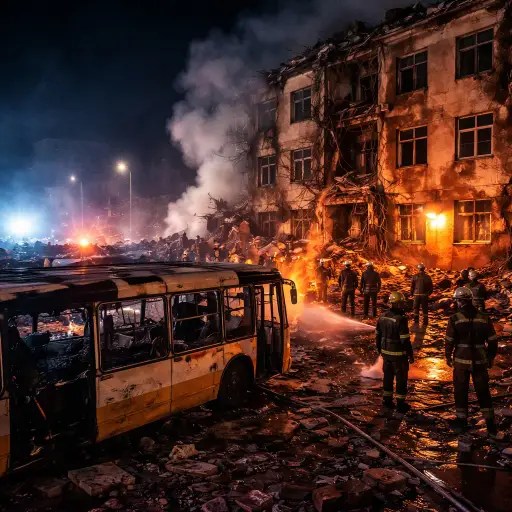
As dawn broke over the industrial south of Ukraine this week, the sounds that carried across the outskirts of Zaporizhzhia were not those of machinery restarting after the night shift, but the echo of explosions and the sirens that followed. In separate drone attacks hours apart, strikes landed near a bus carrying energy sector workers and at a maternity hospital, killing at least 15 civilians and wounding dozens more, according to local authorities and emergency responders.
The incidents, which officials described as deliberate and coordinated, sent shockwaves through a city already living with the daily strain of war. They also cast a long shadow over renewed diplomatic efforts aimed at freezing hostilities, underscoring the fragility of talks even as negotiators signal cautious engagement.
Local officials said the first strike occurred near an early-morning bus route used by miners and grid technicians commuting to facilities critical to regional power supply. The blast, they said, tore through the roadside just as the bus slowed to navigate a checkpoint. Survivors described a flash of light, a concussive force, and shattered glass raining down on passengers.
Emergency crews arriving on scene found multiple casualties and significant damage to nearby infrastructure. Several workers were pronounced dead at the site, while others were transported to hospitals across the city. Energy authorities warned that the attack could further disrupt repairs to power lines and substations damaged in previous strikes, compounding electricity shortages during winter conditions.
Hours later, a second drone struck a maternity hospital on the opposite side of the city. The impact damaged upper floors and sparked fires that filled corridors with smoke. Medical staff rushed newborns and their mothers to lower levels and neighboring facilities, carrying incubators by hand as alarms blared.
Hospital administrators said the maternity ward had been operating with reinforced windows and emergency protocols, but the force of the blast overwhelmed those measures. At least several patients and staff were killed, officials said, with others suffering burns and injuries from falling debris. The hospital has since been evacuated, and births are being redirected to facilities in nearby districts.
Ukrainian authorities condemned the strikes as violations of international humanitarian law, emphasizing the protected status of medical facilities and the civilian nature of the targeted sites. “These attacks were not accidents,” a regional official said in a televised address. “They were aimed at people who keep the lights on and at women giving life.”
Moscow has not publicly commented on the specific incidents. Russian officials have previously stated that their operations target military and energy-related objectives, a characterization Kyiv rejects, citing repeated hits on civilian infrastructure and neighborhoods.
The timing of the attacks has heightened concern among diplomats and analysts monitoring a tentative diplomatic opening. In recent days, intermediaries have suggested that exploratory discussions could resume, focusing on localized ceasefires and humanitarian corridors. The latest strikes, however, have fueled skepticism about whether meaningful de-escalation is possible.
“Every time there is a hint of progress, we see violence that erodes trust,” said a European diplomat familiar with the talks. “Targeting civilians and hospitals makes it far harder to build the confidence required for any agreement, even a limited one.”
Residents of Zaporizhzhia expressed a mix of grief and anger. Outside the damaged hospital, families gathered to light candles and leave flowers, while volunteers organized blood donation drives. “This was supposed to be a safe place,” said one woman whose sister had been admitted for childbirth. “Now nothing feels safe.”
Energy workers, meanwhile, returned to damaged sites under heightened security. Utility officials said crews were attempting to restore service while navigating the risk of renewed attacks. “Our people know the danger,” said a senior engineer. “They also know that without power, hospitals and shelters cannot function.”
Humanitarian organizations warned that the strikes could accelerate displacement from the region, already strained by intermittent outages and shortages. Aid groups called for renewed international pressure to protect civilian infrastructure and ensure accountability.
As night fell again over Zaporizhzhia, the city braced for uncertainty. Windows were boarded, generators hummed, and families slept in corridors away from glass. For many, the twin strikes were not only an immediate tragedy but a reminder that, despite diplomatic language and distant negotiations, the war’s most devastating consequences continue to be borne by civilians far from the negotiating table.



 The Tower Post