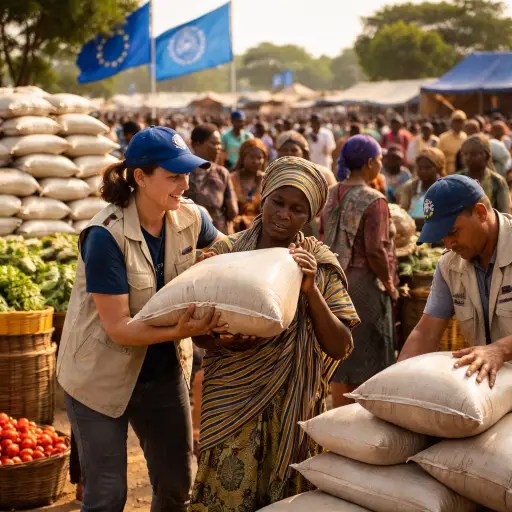
European nations rally behind multilateral action as food insecurity deepens amid climate stress, conflict, and fragile supply chains
European Union member states have thrown their collective weight behind a United Nations resolution aimed at confronting the accelerating crisis of global food insecurity, signaling renewed diplomatic emphasis on multilateral cooperation at a moment of mounting humanitarian risk.
The resolution, adopted with strong support from European countries at the UN General Assembly, responds to a convergence of pressures that have pushed food systems worldwide to the brink. From climate-driven crop failures to prolonged conflicts disrupting production and trade, the initiative seeks to strengthen international coordination in order to stabilize food availability, affordability, and access.
European diplomats described the vote as both a political statement and a practical commitment. According to EU officials, food security has become inseparable from global stability, with shortages increasingly acting as catalysts for displacement, social unrest, and regional insecurity. The resolution frames hunger not only as a humanitarian concern, but as a strategic challenge requiring collective governance.
At the heart of the UN initiative is a call to protect and diversify global supply chains. Recent years have exposed their vulnerability, as extreme weather events, logistical bottlenecks, and armed conflicts have repeatedly disrupted the flow of grain, fertilizer, and essential foodstuffs. European representatives argued that reducing overdependence on a limited number of suppliers is critical to preventing future shocks.
Climate change features prominently in the resolution’s language, reflecting growing concern in European capitals about its impact on agriculture. Erratic rainfall, heatwaves, and soil degradation are already undermining harvests across parts of Africa, the Middle East, and Asia. The EU-backed text encourages investment in climate-resilient farming practices, sustainable water management, and early-warning systems designed to anticipate food crises before they escalate.
Conflict-affected regions remain a central focus. European diplomats stressed that war continues to be one of the strongest drivers of hunger, destroying farmland, displacing farmers, and cutting off communities from markets. The resolution urges all parties to conflicts to respect international humanitarian law, particularly provisions protecting civilian infrastructure and food production.
Beyond emergency response, the initiative emphasizes long-term development. It highlights the need for stronger rural economies, improved access to financing for small-scale farmers, and fairer participation of developing countries in global agricultural trade. EU officials underscored that durable food security cannot be achieved through aid alone, but requires systemic reform.
The resolution also reflects European concern over the political fragmentation of global food governance. In recent years, unilateral export restrictions and competitive stockpiling have exacerbated volatility in international markets. By backing the UN framework, the EU is seeking to re-anchor food policy in rules-based cooperation rather than national reflexes.
Humanitarian organizations welcomed the European stance, noting that sustained political backing from major economic blocs is essential for translating UN commitments into action on the ground. They cautioned, however, that implementation will be the true test, particularly as donor fatigue and competing geopolitical priorities strain international attention.
For Brussels, the vote aligns with broader EU strategies linking food security, climate policy, and development assistance. Officials argue that Europe’s own experience with agricultural integration offers lessons for balancing productivity, sustainability, and social protection.
As global demand for food continues to rise, EU diplomats made clear that the resolution is intended as a foundation rather than a final answer. Preventing future humanitarian crises, they said, will depend on whether international partners can move beyond declarations toward coordinated, adequately funded action.
The UN resolution now sets the stage for follow-up discussions among member states, international financial institutions, and humanitarian agencies. With hunger once again climbing on the global agenda, Europe’s backing underscores a growing consensus that food security is no longer a peripheral issue, but a defining challenge of the current international order.



 The Tower Post