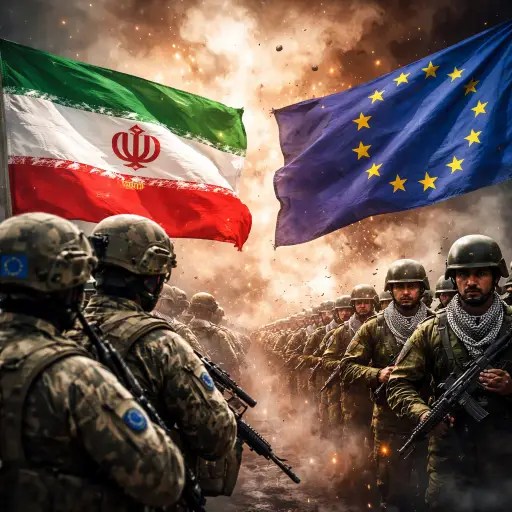
Parliamentary move in Tehran deepens rift with Brussels, prompting fears of a new diplomatic spiral
Tehran has sharply escalated its confrontation with Europe after Iran’s parliament declared the armed forces of several European countries to be “terrorist groups,” a move that diplomats say pushes already strained relations into uncharted territory. The decision follows a recent measure adopted by the European Union targeting Iranian institutions over human rights and security concerns, and has been framed by Iranian officials as a reciprocal act of political self‑defence.
The parliamentary declaration, approved after a heated debate broadcast on state media, portrays European militaries as complicit in what lawmakers described as “hostile actions” against Iran. Although largely symbolic in legal terms, the label carries heavy diplomatic weight. Analysts say it represents one of the most severe rhetorical escalations between Tehran and European capitals in years, blurring the line between political protest and direct confrontation.
European officials reacted with visible alarm. In private briefings, diplomats characterised the move as an unprecedented provocation that risks undermining the remaining channels of dialogue between the two sides. Several capitals summoned Iranian envoys to seek clarification, while Brussels issued a statement urging restraint and warning against steps that could endanger regional stability or the safety of personnel.
At the heart of the dispute lies a deepening disagreement over sanctions and human rights. European governments have increasingly aligned with a tougher stance on Tehran, citing concerns ranging from domestic repression to Iran’s regional activities. Iranian leaders, in turn, argue that Europe has abandoned its role as a potential mediator and has instead adopted what they see as a punitive and politically motivated approach.
Inside Iran, the parliamentary move was presented as a show of unity and resolve. Conservative lawmakers applauded the decision as a necessary response to what they called “European hypocrisy,” accusing the EU of double standards in its foreign policy. Reformist voices, while more cautious, warned that the declaration could further isolate Iran at a time of economic pressure and diplomatic fragility.
Security experts note that the designation is unlikely to have immediate operational consequences. Unlike formal terrorist listings under international law, the Iranian parliament’s declaration does not automatically trigger arrests or asset seizures abroad. Nevertheless, the language used is seen as deliberately incendiary, designed to signal that Tehran is prepared to escalate politically even if practical effects remain limited.
European military officials have so far refrained from public comment, leaving the response largely in the hands of diplomats and political leaders. Behind closed doors, however, there is concern that the move could complicate existing missions and cooperation frameworks, particularly in regions where European forces operate close to Iranian allies or interests.
The episode also highlights the fragile state of EU‑Iran relations more broadly. Efforts to preserve limited engagement on issues such as nuclear non‑proliferation and regional security have struggled amid mutual distrust. The latest exchange risks hardening positions on both sides, making compromise increasingly difficult.
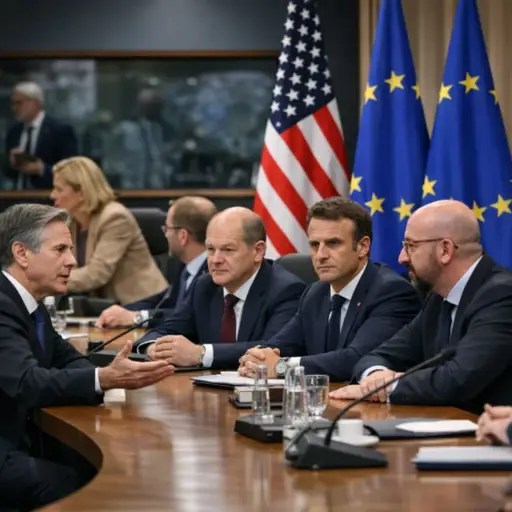
Observers in Brussels say the challenge now is to respond firmly without feeding a cycle of escalation. Options under discussion range from coordinated diplomatic protests to additional targeted measures, though there is little appetite for steps that could close the door entirely to dialogue. “This is a test of Europe’s ability to be united and measured at the same time,” one senior official said.
In Tehran, officials have hinted that further actions could follow if Europe proceeds with what Iran considers hostile policies. Such statements have heightened fears of a tit‑for‑tat dynamic, in which symbolic gestures accumulate into a broader breakdown of relations.
As tensions rise, both sides face a choice between rhetorical confrontation and cautious diplomacy. For now, the parliamentary declaration stands as a stark reminder of how quickly political disputes can escalate, even without concrete action on the ground. Whether cooler heads will prevail remains uncertain, but the episode has already reshaped the tone of the relationship between Iran and Europe.

 The Tower Post