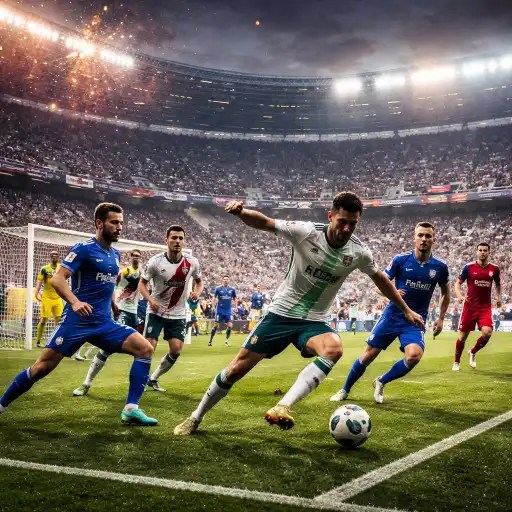
Packed stadiums, ambitious clubs and fresh investment are reshaping Poland’s top division as the championship battle tightens after the winter pause.
The Polish Ekstraklasa is emerging from the winter break with a sense of momentum rarely felt in the league’s modern history. Stadiums across the country are filling again, television interest is rising, and the title race has compressed into a gripping contest that reflects a broader revival in Polish domestic football.
For years, the Ekstraklasa struggled to translate Poland’s passion for the game into sustained league-wide growth. That narrative is now shifting. Supporters are returning in force, drawn by competitive matches and clubs that are increasingly confident both on and off the pitch. The atmosphere in traditional football cities has become louder and more intense, giving the league a renewed sense of identity.
At the top of the table, the championship picture remains finely balanced. Established powers such as Legia Warsaw and Lech Poznań are being pushed hard by ambitious challengers including Raków Częstochowa, Jagiellonia Białystok and Śląsk Wrocław. The gap between leaders and pursuers is narrow enough to keep multiple clubs firmly in contention, ensuring that each round carries real significance.
This competitive density is no accident. Clubs have invested heavily in squad depth, sports science and recruitment strategies designed to avoid the traditional post-winter slump. Coaches speak of a league where tactical preparation and physical conditioning have become decisive margins, rather than reputation alone. Matches are increasingly decided by small details, reinforcing the sense that the Ekstraklasa has matured.
A crucial driver of this renaissance has been infrastructure. Modernized stadiums, improved training centers and enhanced matchday facilities are changing how clubs operate and how fans experience football. These investments are not limited to the biggest markets; smaller cities are also benefiting, helping to spread interest beyond a handful of historic giants.
Foreign players have played a significant role in raising standards. The Ekstraklasa has become a more attractive destination for emerging talents seeking regular minutes in a competitive European league, as well as experienced professionals looking for a fresh challenge. Their presence has lifted the tempo and technical quality of matches, while also increasing the league’s visibility abroad.
Importantly, domestic players are benefiting as well. Young Polish prospects are developing in a more demanding environment, one that better prepares them for international competition. The league’s clubs are increasingly viewed as credible stepping stones rather than final destinations, a shift that aligns Poland more closely with successful development models elsewhere in Europe.
Commercially, the mood is cautiously optimistic. Sponsors and broadcasters are paying closer attention, encouraged by rising attendance and a title race that remains unpredictable. While financial gaps between clubs still exist, there is a growing sense that the Ekstraklasa’s overall ecosystem is stabilizing.
As the season resumes, the narrative is clear: this is no longer a league waiting for a single dominant force to emerge. Instead, it is a competition defined by balance, ambition and a fan base eager to believe again. If the current trajectory holds, the Ekstraklasa’s winter thaw may mark the beginning of a lasting spring for Polish football.



 The Tower Post