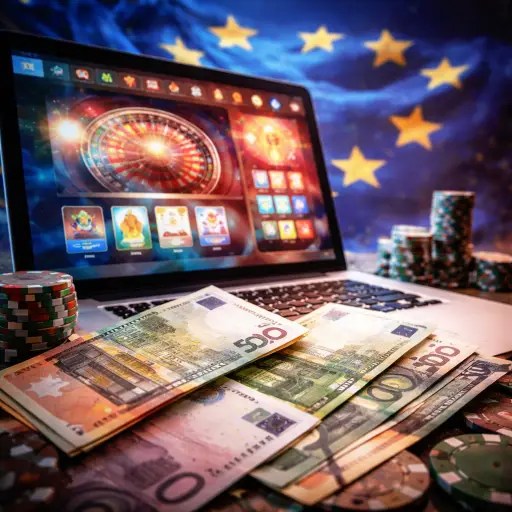
Unlicensed platforms dominate the market, siphoning public revenue and weakening Europe’s long-term competitiveness
Illegal online gambling has quietly become one of the European Union’s most significant and least visible economic leaks. While regulated gambling operators are subject to licensing, consumer protection rules, and taxation, a growing share of digital betting activity now takes place on unlicensed platforms operating outside national and EU oversight. Industry and regulatory estimates suggest that illegal operators account for roughly 71 percent of the online gambling market in the EU, diverting billions of euros away from lawful businesses and public budgets.
The scale of the problem reflects a broader challenge facing Europe’s digital economy: enforcement has not kept pace with the speed, reach, and sophistication of cross-border online services. Illegal gambling websites can be launched within days, hosted outside the EU, marketed through social media or influencers, and accessed instantly from any member state. In contrast, regulators remain bound by national jurisdictions, lengthy legal procedures, and fragmented enforcement tools.
The economic impact is substantial. Lost tax revenue linked to illegal online gambling is estimated to exceed €20 billion annually across the EU. These are funds that, under regulated conditions, would normally flow into national treasuries through gaming taxes, licensing fees, and corporate income taxes. Instead, they are captured by offshore operators that contribute nothing to public finances and often operate in opaque corporate structures designed to evade scrutiny.
Beyond the headline figures, the opportunity cost is even more striking. At a time when the EU is under pressure to strengthen its competitiveness, invest in workforce skills, and accelerate research and development, illegal gambling represents a direct drain on resources that could support these priorities. Billions lost each year could help finance digital infrastructure, vocational training, or innovation programs aimed at closing the gap with global competitors.
The damage is not limited to public budgets. Regulated gambling operators, which comply with strict rules on advertising, responsible gaming, and anti-money-laundering controls, face unfair competition from illegal platforms that ignore these obligations. This imbalance discourages investment in the legal market, reduces incentives to innovate responsibly, and threatens jobs in a sector that employs hundreds of thousands across Europe, from software developers to customer support staff.
Consumers also pay a price. Unlicensed gambling sites typically offer no meaningful player protection. Dispute resolution is weak or nonexistent, personal data may be misused, and safeguards against addiction are minimal. In many cases, illegal platforms are linked to broader criminal ecosystems, including fraud and money laundering, further amplifying the societal risks.
EU institutions and national governments are increasingly aware of the scale of the challenge. Recent policy discussions have highlighted the need for stronger cross-border cooperation, more effective blocking of illegal websites and payment flows, and closer collaboration with digital platforms and financial intermediaries. However, progress remains uneven, and enforcement gaps continue to be exploited by illegal operators.
The timing is critical. As Europe debates how to finance strategic priorities and strengthen economic resilience, allowing such a large share of a mature digital market to operate in the shadows undermines both fiscal capacity and regulatory credibility. Illegal online gambling is no longer a niche issue or a marginal loss. It is a systemic problem with clear economic consequences.
Addressing it will require coordinated action at EU level, combining regulatory harmonization, technological enforcement tools, and sustained political commitment. The potential payoff is significant: restoring fairness in the market, protecting consumers, and reclaiming billions of euros that could be reinvested in Europe’s future competitiveness.



 The Tower Post