Europe’s ministers confront stagnation, shrinking factories, and a hard rethink of the single market
By early February 2026, Europe’s long-running anxiety about its economic future has taken on a sharper edge. As EU industry ministers gather in Cyprus, the mood is less about cautious optimism and more about urgency. Across the bloc, industrial output has been sliding for years, growth has struggled to regain momentum, and confidence in Europe’s competitive position has been eroded by global shocks and internal fragmentation.
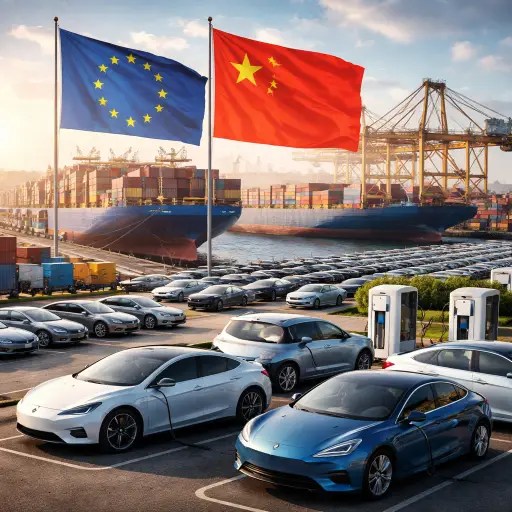
The meeting comes at a moment when the European Union is being forced to confront uncomfortable realities. Once a global benchmark for advanced manufacturing, the bloc now finds itself squeezed between lower-cost producers in Asia and heavily subsidized competitors in the United States. Energy costs remain high, investment is uneven, and regulatory complexity continues to weigh on firms already under pressure.
Industrial decline at the core
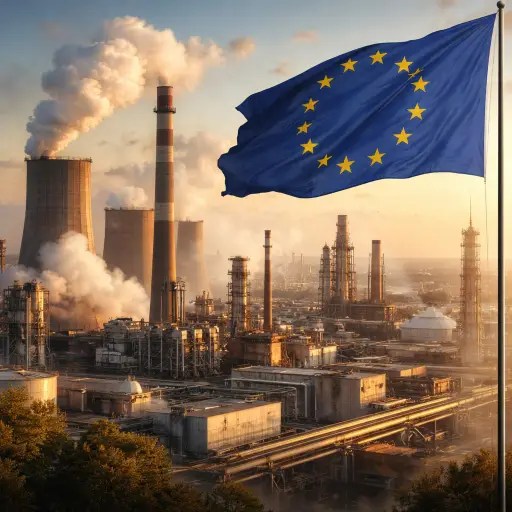
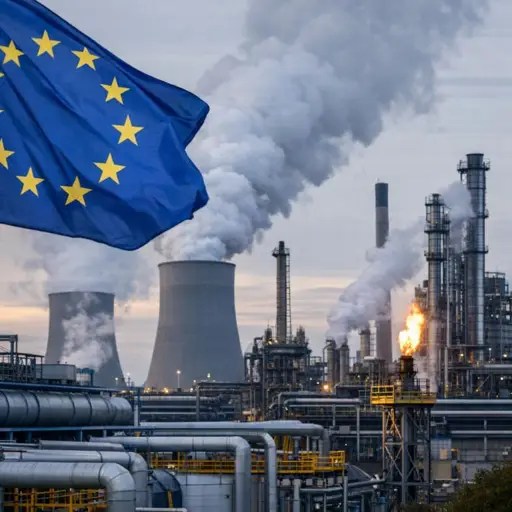
Few sectors illustrate the challenge as starkly as chemicals and cement. Both are foundational to Europe’s industrial ecosystem, feeding construction, automotive manufacturing, pharmaceuticals, and countless downstream activities. Yet production in these sectors has fallen sharply since the late 2010s, reflecting a mix of weak demand, high input costs, and stricter environmental requirements that have not always been matched by supportive investment frameworks.
Executives warn that capacity closures risk becoming permanent. Plants that shut down in one country rarely reopen in another EU member state; more often, production migrates outside the bloc altogether. This has raised fears not only of job losses, but of strategic dependence on imports for materials that underpin Europe’s green and digital transitions.
At the same time, smaller manufacturers face mounting difficulties. Access to finance remains uneven across member states, and supply chains fractured during recent global crises have yet to fully stabilize. For many firms, survival has taken precedence over innovation.
Competitiveness under strain
The broader economic picture adds to the concern. Growth across the euro area has remained stubbornly weak, lagging behind other major economies. Productivity gains are modest, and investment in research and development, while significant in absolute terms, struggles to translate into market-leading technologies at scale.
Business groups argue that Europe’s single market, often described as the EU’s greatest asset, is not functioning as effectively as it should. Differences in national rules, slow permitting procedures, and fragmented capital markets limit companies’ ability to grow across borders. For digital and clean-tech firms in particular, scaling up in Europe can be harder than expanding abroad.
Against this backdrop, the Cyprus meeting has become a focal point for a broader debate: how to restore Europe’s economic dynamism without abandoning its social and environmental ambitions.
Revitalizing the single market
Many ministers are expected to push for a renewed drive to deepen the single market. Proposals include harmonizing standards, accelerating cross-border infrastructure projects, and easing the movement of capital and skilled labor. Supporters argue that a more integrated market would allow European companies to compete globally on size and efficiency, rather than being confined by national boundaries.
There is also growing support for a more assertive industrial policy. While opinions differ on the extent of state involvement, few now dispute that public investment and coordinated strategies will be necessary to safeguard key industries. The challenge lies in striking a balance between targeted support and fair competition, both within the EU and with external partners.
Economic autonomy and global role
Underlying the discussions is a strategic concern about Europe’s place in the world. Recent years have exposed vulnerabilities in energy supply, critical raw materials, and advanced technologies. Strengthening domestic industrial capacity is increasingly framed not just as an economic necessity, but as a matter of security and autonomy.
Yet ministers are acutely aware that protectionism carries its own risks. Europe’s prosperity has long depended on open trade, and any turn inward could invite retaliation or undermine global cooperation. The question, many argue, is how to be open without being exposed.
A decisive moment
As the Cyprus talks unfold, expectations are tempered. Few anticipate immediate breakthroughs, but there is a sense that delay is no longer an option. Industrial decline, once seen as a gradual trend, is now viewed as a potential tipping point.
For the European Union, the challenge is to transform concern into action: to modernize its industrial base, unlock the full potential of the single market, and restore confidence in its economic model. Whether this moment marks the start of a revival or another missed opportunity will depend on choices made now, under growing pressure from both global competitors and Europe’s own citizens.

 The Tower Post