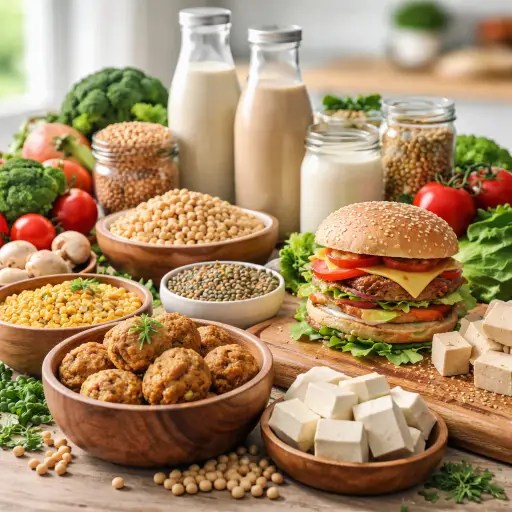
New research suggests Europe’s fast-growing alternative protein sector could rival the economic weight of the wine industry, reshaping food systems, jobs, and industrial strategy.
As winter debates over Europe’s food future intensify, new research is giving the alternative protein sector a distinctly economic dimension. The findings indicate that a large-scale expansion of alternative protein production across the European Union could generate up to €111 billion in annual economic value by 2040, placing the sector on a par with the EU’s wine industry in terms of overall impact.
The projection has drawn attention well beyond sustainability circles. It reframes alternative proteins not merely as a response to environmental or dietary concerns, but as a potential growth engine for Europe’s agri-food economy. The estimated value spans the entire supply chain, from ingredient production and fermentation infrastructure to food manufacturing, branding, logistics, and distribution.
From niche market to industrial pillar
Alternative proteins include plant-based foods, precision-fermented ingredients, and cultivated meat. What was once a start-up-driven niche has steadily entered the mainstream, supported by rising consumer awareness and increasing availability in retail and food-service channels.
The scale suggested by the research changes the narrative. An industry capable of generating €111 billion annually would approach the economic footprint of wine, one of Europe’s most established and culturally significant agri-food sectors. The comparison underscores the sector’s potential to support employment, regional development, and exports on a similar scale.
A significant share of this value would be created upstream. Ingredient production, including protein-rich crops and microbial biomass, alongside fermentation inputs and processing technologies, represents a major opportunity for Europe. The region’s strengths in agricultural science, biotechnology, and industrial manufacturing position it well to capture this growth, provided investment and policy frameworks are aligned.
Opportunities across the value chain
Unlike traditional livestock farming, alternative protein production is not tied to specific geographies. Fermentation facilities can be located near renewable energy sources or existing industrial hubs, while plant-based ingredient processing can offer diversification opportunities for agricultural regions seeking new revenue streams.
This flexibility could support a more balanced economic impact across the EU. Southern and Eastern European regions may benefit from new processing plants and ingredient hubs, while Northern and Western Europe, with established research and biotechnology ecosystems, are well placed to lead in precision fermentation and cultivated protein development.
Downstream, food processing and distribution account for a substantial portion of the projected value. As alternative protein products move beyond basic substitutes into ready meals, bakery products, and food-service offerings, value increasingly shifts toward formulation expertise, branding, and logistics. European food companies, experienced in navigating complex regulatory environments and export markets, are well positioned to scale these products internationally.
Regulation and investment signals
The economic promise of alternative proteins comes amid ongoing regulatory debate. Plant-based products generally face few barriers, but cultivated meat and fermentation-derived ingredients remain subject to lengthy approval processes. Industry representatives argue that clearer and more predictable regulatory pathways will be essential if Europe is to remain competitive with other global regions where commercialization is advancing more rapidly.
At the same time, the research strengthens the case for public and private investment. By framing alternative proteins as an industrial opportunity rather than a niche dietary trend, it aligns the sector with broader objectives around food security, innovation, and competitiveness.
Sceptics, particularly within traditional livestock sectors, warn that projections may be optimistic. They point to challenges such as consumer acceptance, production costs, and energy prices. Supporters counter that similar concerns accompanied the early stages of renewable energy and electric mobility, sectors that later achieved scale through sustained investment and policy support.
Strategic benefits beyond growth
Beyond headline economic figures, the research highlights strategic advantages. Alternative protein systems typically require less land and water than conventional livestock production, reducing exposure to climate-related risks. In a context of increasing weather volatility and supply chain disruption, more resource-efficient protein sources can enhance resilience.
There is also a trade dimension. Europe currently relies heavily on imported protein-rich feed, exposing its food system to global market fluctuations. Expanding domestic alternative protein production could reduce this dependence while supporting higher-value exports of finished food products.
Investor interest reflects this potential. After a period of caution, funding for European food technology is recovering, with alternative proteins viewed as one of the few areas combining long-term growth prospects with relevance to climate and food security goals.
A decisive moment
Whether the projected €111 billion opportunity is realised will depend on choices made in the near term. Investment in infrastructure, skills development, and research, alongside regulatory clarity, will shape the sector’s trajectory. The comparison with the wine industry offers both ambition and perspective: building a resilient, globally competitive food sector requires time, regional ecosystems, and consistent support.
As discussions continue across Europe, alternative proteins are increasingly seen not as a replacement for traditional food systems, but as a complementary pillar. If the projections hold, the sector could play a significant role in delivering jobs, innovation, and economic resilience in the decades ahead.



 The Tower Post