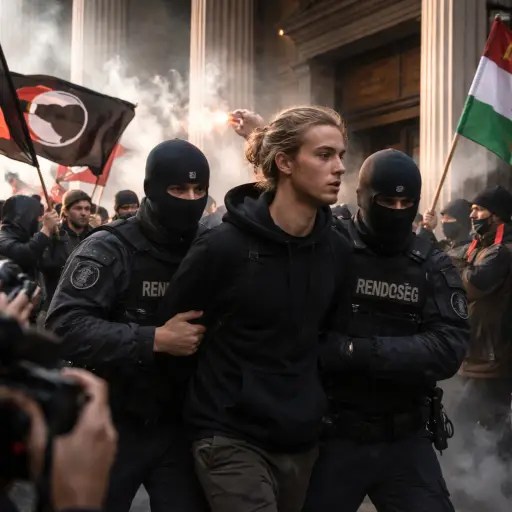
Verdict over 2023 street violence fuels accusations of political justice as Hungary presses extraditions and draws scrutiny from across Europe

A Hungarian court has sentenced a 25-year-old German anti-fascist activist to eight years in prison for violent assaults linked to clashes surrounding a far-right gathering in the capital, closing one of the most closely watched political trials in the country in recent years.
The ruling, delivered after months of hearings and heavy security, stems from attacks on several participants and bystanders during confrontations that erupted on the margins of a far-right rally in Budapest in 2023. Prosecutors argued the defendant had travelled to Hungary with the intent to commit acts of violence against ideological opponents and presented video footage and witness testimony tying the activist to multiple assaults.
Judges said the severity of the sentence reflected both the seriousness of the injuries inflicted and the premeditated nature of the attacks. In a brief statement from the bench, the court emphasised that political motivation could not justify violence and that Hungary had a duty to ensure public order during demonstrations, regardless of ideology.
Supporters of the convicted activist, however, denounced the verdict as emblematic of a justice system increasingly shaped by the priorities of Hungary’s populist government. Outside the courthouse, sympathisers held banners and chanted slogans accusing authorities of criminalising anti-fascist activism while tolerating or even encouraging the far-right groups whose events have become a regular feature of the political landscape.
Human rights organisations echoed those concerns, arguing that the case had taken place in a charged atmosphere in which the government has repeatedly portrayed anti-fascist networks as extremist or terrorist threats. Critics say such rhetoric risks prejudicing courts and narrowing the space for dissent, particularly when cases involve foreign nationals.
The government has rejected claims of political interference, insisting that the trial was conducted according to Hungarian law and that the defendant received full legal protections. Officials have pointed to what they describe as a rise in organised political violence across Europe, arguing that firm sentences are necessary to deter cross-border militant activism.
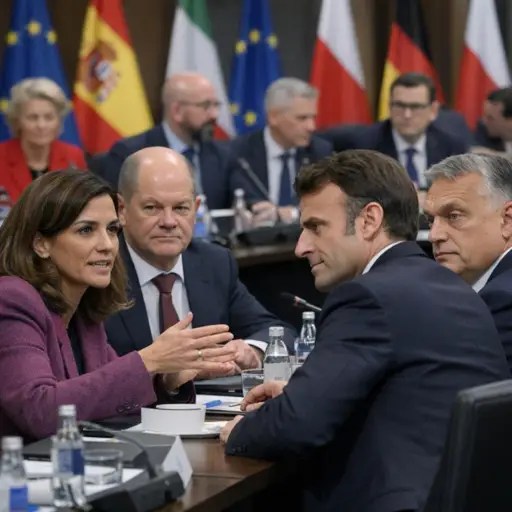
The case has also revived debate over Hungary’s relationship with its European partners. German officials monitored the proceedings closely, while lawmakers in several EU countries raised questions about prison conditions, pre-trial detention practices and judicial independence in Hungary. Diplomatic exchanges remained measured, but the verdict is expected to add strain to already complex relations.
Adding another layer of controversy, one co-defendant in the broader investigation was released after winning a seat in the European Parliament, a development that halted domestic proceedings against that individual under parliamentary immunity rules. Hungarian prosecutors have since sought to pursue the case through international legal channels, signalling their intent to request extradition once immunity lapses or can be lifted.
Legal experts say the contrasting outcomes underscore the collision between national criminal law and European political institutions. While parliamentary immunity is designed to protect democratic representation, its use in cases involving alleged violent crimes has drawn criticism from across the political spectrum.
For activists on both sides, the Budapest verdict has become a symbol. Far-right groups hailed the sentence as proof that authorities are finally taking action against what they call left-wing extremism. Anti-fascist networks, meanwhile, warned that the ruling could have a chilling effect on protest movements and embolden governments to frame political opponents as security threats.
As appeals are prepared and extradition requests loom, the case is unlikely to fade from public view. Instead, it stands as a stark illustration of Europe’s widening ideological divides — and of how street violence, courtroom decisions and electoral politics are increasingly intertwined.



 The Tower Post