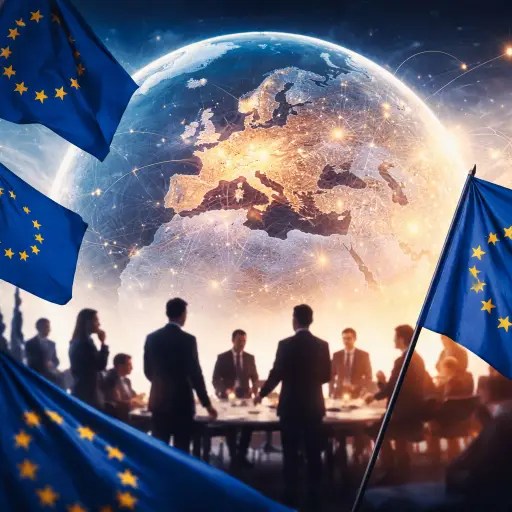
A growing chorus in the Netherlands and across the EU urges the Union to step up its diplomatic presence amid rising geopolitical uncertainty.
Public opinion in the Netherlands is increasingly aligned with a broader European sentiment: the belief that the European Union must assert itself more confidently on the international stage. According to a report released today, Dutch citizens, alongside respondents from other EU member states, are calling for Europe to speak with a clearer, stronger voice in global affairs.
The findings reflect a public mood shaped by a rapidly changing geopolitical environment. From shifting alliances to renewed great-power competition, many Europeans feel that the EU can no longer afford hesitation or fragmentation in its external posture. Instead, they expect the bloc to act as a coherent force capable of defending its interests and values abroad.
In the Netherlands, traditionally a strong supporter of multilateralism and international law, the message is particularly pointed. Respondents emphasized that Europe’s economic weight and regulatory influence should be matched by diplomatic and strategic clout. For many, the EU already possesses the tools to lead on issues such as climate diplomacy, trade standards, and conflict mediation — what is missing is the political will to deploy them decisively.
Across the Union, similar concerns are emerging. Citizens surveyed highlighted the need for Europe to be more visible and assertive in addressing global crises, from regional conflicts to humanitarian emergencies. There is also a strong expectation that the EU should play a stabilizing role in relations between major powers, acting as a mediator rather than a bystander.
Analysts say this surge in public support for a stronger international role is closely linked to anxieties about Europe’s strategic autonomy. As global power dynamics become more volatile, reliance on external actors for security, energy, and technology is increasingly viewed as a vulnerability. A more self-reliant Europe, many argue, would be better positioned to protect its interests while contributing constructively to global governance.
“The public mood suggests a shift from cautious pragmatism to strategic urgency,” said one European policy analyst. “People are aware that Europe’s influence will diminish if it does not adapt to a more competitive world.”
At the same time, respondents were clear that a stronger voice does not necessarily mean a more confrontational one. Diplomacy, conflict prevention, and rule-based international cooperation remain central to the vision many citizens have for Europe’s role. The emphasis is on leadership through engagement rather than power projection.
For the Dutch public, this approach resonates with a long-standing national preference for consensus-building and international cooperation. Yet there is also an acknowledgment that consensus must translate into action if Europe is to remain credible. Calls for more unified foreign policy positions and faster decision-making within EU institutions featured prominently in the responses.
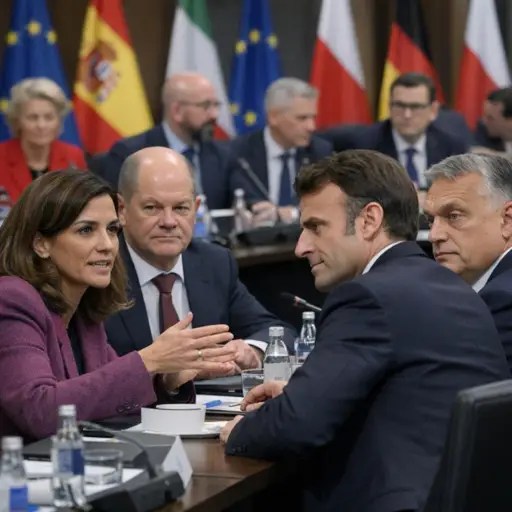
As European leaders prepare for a series of high-level international engagements in the coming weeks, the message from the public is clear: Europe should not wait for others to set the agenda. Instead, it should articulate its own priorities and act collectively to advance them.
Whether policymakers will meet these expectations remains to be seen. But the report underscores a notable shift in public opinion — one that frames a stronger European voice not as an aspiration, but as a necessity in an increasingly uncertain world.


 The Tower Post