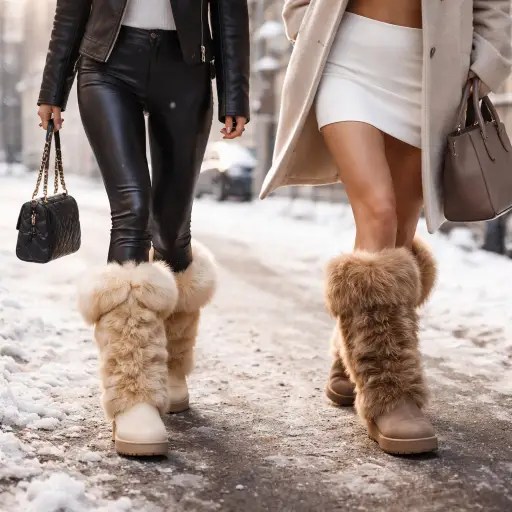
A revived ‘80s silhouette meets sleek 2026 styling as winter fashion embraces expressive confidence
By early winter, sidewalks from Paris to New York began telling the same story: boots edged, trimmed, or unapologetically crowned with visible fur were back. Once synonymous with alpine nostalgia and ‘80s excess, exposed-fur boots have re-emerged as one of the most talked-about cold‑weather statements of the season. Their return is not ironic, nor purely nostalgic. Instead, the look has been reworked into something sharper, more urban, and distinctly 2026.
Fashion historians trace the exposed-fur boot to a time when winter footwear was designed to be noticed. In the late twentieth century, bulky silhouettes, plush linings worn on the outside, and tactile materials signaled warmth as much as status. Today’s iteration keeps that visual warmth but pares down the excess. The new exposed-fur boot is deliberate: fur appears at the cuff, spills subtly over the edge, or contrasts against streamlined leather and suede bases.
On the street-style circuit, the boots are being worn with an unexpected restraint. Influencers favor monochrome palettes—black tailored coats, charcoal knits, or minimalist slip dresses—allowing the texture of the fur to do the talking. The effect is controlled yet playful, a balancing act that reflects the broader fashion mood of the year.
Celebrities have played a key role in pushing the trend into the mainstream. Figures like Bella Hadid and Dua Lipa have been photographed pairing exposed-fur boots with sharply cut outerwear and sleek sunglasses, reframing what was once considered cozy or casual into something confidently directional. The message is clear: comfort and glamour are no longer opposites.
Designers, too, have leaned into the revival. Luxury houses and independent labels alike are experimenting with proportions, offering everything from knee-high boots with subtle fur trims to ankle styles where the lining becomes the focal point. Importantly, much of the conversation now centers on material sourcing. Faux fur and responsibly sourced alternatives dominate collections, aligning the aesthetic with the industry’s growing emphasis on transparency and ethics.
The resurgence of exposed-fur boots also mirrors a cultural shift toward expressive dressing. After seasons defined by quiet luxury and muted minimalism, fashion in 2026 is loosening its grip. Color, texture, and personality are reasserting themselves. Exposed fur, tactile and visually rich, fits neatly into this narrative. It invites touch, sparks conversation, and resists blending into the background.
Retail data suggests that consumers are responding to this bolder approach. Boots featuring visible fur details are selling not just as novelty items but as core winter investments. Stylists attribute this to versatility: the same pair can anchor a daytime look with denim and knitwear or elevate an evening outfit built around clean lines and understated accessories.
There is also a sense of reassurance in the trend. In uncertain times, clothing that signals warmth—both literal and emotional—resonates. Exposed-fur boots project a kind of wearable protection, a visual cue that winter dressing can be indulgent without being impractical.
Critics who once dismissed the style as dated are now reconsidering. The modern exposed-fur boot avoids costume territory through thoughtful styling and refined construction. It is less about nostalgia for its own sake and more about reclaiming joy in winter fashion.
As the season unfolds, one thing is certain: exposed-fur boots are no longer confined to ski lodges or throwback editorials. They are firmly planted on city streets, redefining how winter footwear can look and feel. In embracing this revived silhouette, fashion signals its readiness to be seen, felt, and enjoyed again.




 The Tower Post