Prisoner Exchange as Russia and Ukraine Test Prospects for a Broader Peace
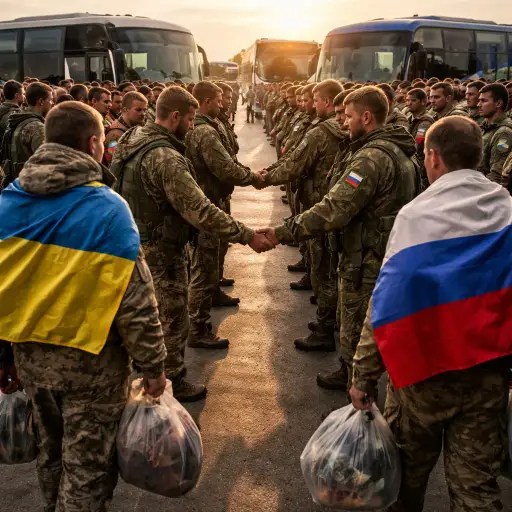
In a cautiously optimistic development in the prolonged conflict between Russia and Ukraine, representatives from both countries concluded a new round of U.S.-brokered peace negotiations in Abu Dhabi, reaching an agreement to exchange approximately 314 prisoners of war. The exchange marks the first such coordinated release in several months and signals a tentative step toward rebuilding diplomatic communication channels between the warring sides.
Officials from Kyiv and Moscow described the talks as constructive, though both delegations acknowledged that significant political and territorial disputes continue to stand in the way of a comprehensive peace settlement. Despite the unresolved issues, the prisoner exchange has generated renewed attention among international observers, humanitarian organizations, and regional governments hoping to see incremental progress toward ending the largest armed conflict in Europe since the mid-twentieth century.
Humanitarian Momentum
The prisoner swap is widely viewed as a humanitarian breakthrough. Families of captured soldiers and civilians have spent months with limited or no information about their relatives’ conditions or whereabouts. Human rights advocates have repeatedly urged both governments to prioritize prisoner exchanges as a trust-building measure and as a demonstration of compliance with international humanitarian law.
Diplomatic intermediaries involved in the negotiations emphasized that the exchange required weeks of logistical coordination, verification of prisoner identities, and security assurances from both militaries. According to individuals familiar with the discussions, international monitors and humanitarian representatives are expected to oversee portions of the transfer process to ensure that the releases proceed safely and transparently.
For Ukraine, the agreement provides relief to families awaiting news of captured service members, many of whom were detained during heavy fighting along eastern and southern frontlines. Ukrainian officials have consistently portrayed prisoner recovery as a moral obligation and a demonstration of the government’s commitment to its military personnel.
Russia, meanwhile, has framed the exchange as evidence that dialogue with Kyiv remains possible despite the ongoing hostilities. Russian authorities have repeatedly highlighted the importance of reciprocal arrangements, arguing that such deals help maintain communication channels even during periods of heightened military confrontation.
Territorial Disputes Remain Central
While the prisoner exchange has been welcomed as a positive development, the underlying political disagreements between Russia and Ukraine remain largely unchanged. The most significant obstacle continues to center on Russia’s insistence that Ukraine relinquish control over contested territories in the Donetsk region.
Ukrainian negotiators have rejected the demand, reiterating that national sovereignty and territorial integrity are non-negotiable principles under the country’s constitution and international law. Ukrainian leadership has also emphasized that any agreement requiring territorial concessions could undermine domestic political stability and risk setting a precedent affecting future national security.
Russian representatives, on the other hand, maintain that the disputed areas are integral to their strategic and security interests. Moscow has argued that recognition of territorial changes is essential for achieving a durable settlement and preventing future escalation. Analysts note that this position reflects Russia’s broader strategic objective of securing influence over eastern Ukrainian territories.
The gap between these positions continues to define the broader negotiation landscape. Diplomatic observers suggest that while humanitarian agreements such as prisoner exchanges can create momentum, they rarely resolve fundamental geopolitical disputes without sustained international mediation and broader security guarantees.
The Role of External Mediators
The involvement of the United States as a mediator in the Abu Dhabi talks highlights the continued importance of international diplomatic engagement in the conflict. American officials have framed their role as facilitating dialogue rather than imposing solutions, stressing that any long-term settlement must be negotiated directly between Russia and Ukraine.
Regional actors and international organizations have also played supportive roles, offering logistical assistance, technical expertise, and monitoring capabilities. Several European governments have expressed cautious optimism about the outcome of the talks, describing the prisoner exchange as a confidence-building measure that could pave the way for more comprehensive discussions.
At the same time, some analysts warn that mediation efforts face significant limitations. The conflict has evolved into a complex confrontation involving military, economic, and ideological dimensions. Sanctions, security alliances, and competing strategic priorities continue to shape the negotiating environment and influence both sides’ willingness to compromise.
Military Realities Shape Diplomacy
The continued fighting on multiple fronts remains a powerful factor influencing the negotiation process. Military developments frequently affect the tone and substance of diplomatic discussions, with battlefield shifts often strengthening or weakening each side’s bargaining position.
Recent months have seen fluctuating levels of combat intensity, with both Russia and Ukraine attempting to consolidate defensive lines while maintaining pressure in contested zones. Military analysts suggest that neither side currently possesses the decisive advantage needed to force a rapid political settlement, reinforcing the likelihood of prolonged negotiations accompanied by intermittent humanitarian agreements.
The ongoing hostilities have also intensified economic and social pressures within both countries. Infrastructure damage, population displacement, and rising defense expenditures continue to strain national resources. International aid programs and reconstruction planning efforts remain critical components of Ukraine’s domestic stability, while Russia faces its own economic adjustments linked to prolonged wartime conditions and global political tensions.
Cautious Optimism Among Observers
International reaction to the Abu Dhabi talks has been cautiously positive. United Nations representatives and humanitarian organizations have welcomed the prisoner exchange as a life-saving initiative and urged both sides to pursue additional humanitarian agreements, including civilian evacuations and expanded access to detainees.
Diplomatic experts suggest that incremental steps, while modest in scope, can gradually build the trust necessary for more complex political negotiations. However, they also caution that such progress is fragile and can be reversed quickly if military escalation or political tensions intensify.
The continued participation of both Russia and Ukraine in mediated discussions indicates that neither side has fully closed the door to a negotiated outcome. Observers note that sustained dialogue, even when progress appears limited, can help prevent further deterioration of diplomatic relations and maintain pathways toward eventual conflict resolution.
Prospects for Continued Negotiations
Negotiators from both countries have indicated that further talks are expected to continue, though the timeline and structure of future meetings remain uncertain. Diplomatic sources suggest that upcoming discussions may focus on additional humanitarian measures, security arrangements, and potential frameworks for broader ceasefire proposals.
The path toward a comprehensive peace agreement remains complex and uncertain. The war has reshaped geopolitical relationships, regional security structures, and global energy and economic patterns. Any lasting settlement would likely require extensive international guarantees, phased implementation measures, and strong domestic political support within both countries.
For now, the prisoner exchange stands as a rare moment of cooperation in a conflict defined largely by confrontation. While it does not resolve the fundamental disputes driving the war, it offers a reminder that diplomatic engagement remains possible even amid deep divisions and ongoing hostilities.
As international diplomats continue their efforts, the world’s attention remains fixed on whether incremental agreements like this can eventually lead to a broader peace or merely represent temporary pauses in a conflict that has already reshaped Europe’s modern security landscape.



 The Tower Post