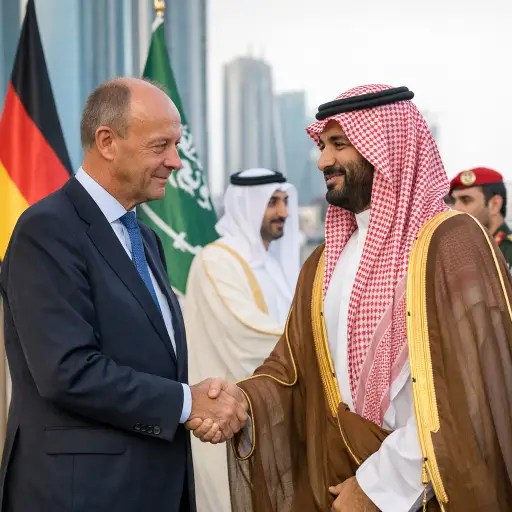
Berlin pursues long-term supply security and military cooperation as geopolitical alliances evolve
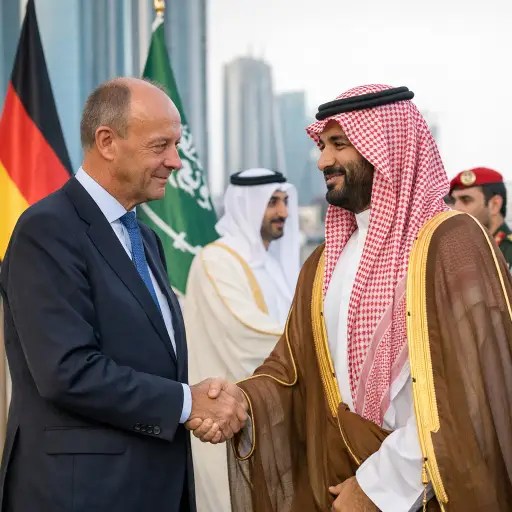
Germany is intensifying its diplomatic and economic engagement with key Gulf nations as part of a broader strategy to reinforce its energy security and expand its global defence partnerships. The initiative reflects Berlin’s determination to navigate a rapidly changing geopolitical environment, where traditional alliances are being reassessed and economic resilience is becoming inseparable from national security priorities.
German Chancellor Friedrich Merz is currently leading a high-profile diplomatic mission across Saudi Arabia, Qatar, and the United Arab Emirates. The visit marks one of the most significant outreach efforts by Berlin toward the Gulf region in recent years, underlining the importance of the Middle East as a strategic partner in both energy supply and defence cooperation.
A Shift in Germany’s Energy Strategy
Germany’s outreach to the Gulf comes as the country continues to adapt to the long-term consequences of reduced Russian gas imports. The decline of Russian energy flows reshaped Europe’s supply landscape, forcing Germany, the continent’s largest economy, to diversify its energy sources at an unprecedented pace.
The Gulf region has emerged as a crucial pillar in this diversification strategy. Countries such as Qatar and the United Arab Emirates have established themselves as reliable suppliers of liquefied natural gas and are investing heavily in hydrogen technologies and renewable energy projects. These sectors align with Germany’s ambition to secure transitional energy resources while maintaining its commitment to climate targets and industrial stability.
German officials emphasize that the new agreements under negotiation are designed to extend beyond emergency supply arrangements. Instead, they aim to create long-term frameworks that include joint investment, technological cooperation, and infrastructure development. Such partnerships are intended to strengthen Europe’s resilience against future supply disruptions and enhance economic cooperation with fast-growing Gulf economies.
Strengthening Industrial and Technological Cooperation
Beyond immediate energy concerns, Berlin is seeking to position German industry as a leading partner in the Gulf states’ ambitious modernization programs. Gulf nations are investing heavily in economic diversification, focusing on advanced manufacturing, digital technologies, and green energy initiatives.
Germany’s industrial expertise is viewed as highly compatible with these ambitions. Negotiations during the chancellor’s visit are expected to focus on joint ventures in hydrogen production, smart infrastructure development, and advanced engineering projects. German companies have already demonstrated strong interest in expanding their presence in the region, viewing the Gulf as both a strategic investment destination and a gateway to broader Middle Eastern and Asian markets.
Analysts note that these partnerships are likely to deepen technological exchanges and create new economic corridors linking European and Gulf markets. Such cooperation could also accelerate innovation in renewable energy technologies, an area where both sides are investing heavily.
Defence Cooperation Gains Momentum
Alongside energy diplomacy, defence cooperation is playing an increasingly prominent role in Germany’s Gulf engagement. European security dynamics have evolved significantly, prompting Germany to reassess its role as a major defence supplier and security partner.
Potential defence agreements under discussion include advanced surveillance systems, maritime security technologies, and joint training initiatives. These collaborations are seen as mutually beneficial, enabling Gulf nations to enhance regional security capabilities while providing German defence industries with new international opportunities.
Berlin has also signaled a more flexible approach to defence export regulations, a shift that reflects the European Union’s broader effort to strengthen global partnerships in response to rising geopolitical competition. German policymakers argue that responsible defence cooperation with trusted partners contributes to regional stability and reinforces shared security interests.
Balancing Ethics and Strategic Interests
The expansion of defence exports to the Gulf continues to generate political debate within Germany and across Europe. Critics have raised concerns about human rights considerations and the potential risks associated with supplying advanced military equipment to regions affected by longstanding conflicts.
Government representatives maintain that all defence agreements will comply with strict oversight mechanisms and international legal standards. They argue that engagement, rather than isolation, provides greater leverage for promoting responsible security policies and encouraging diplomatic solutions to regional challenges.
Europe’s Broader Strategic Reorientation
Germany’s Gulf initiative is widely viewed as part of a larger European effort to redefine global partnerships. The shifting international order has encouraged European states to diversify their diplomatic and economic relationships, reducing reliance on a narrow set of traditional allies.
By strengthening ties with Gulf nations, Germany aims to build a network of partnerships capable of supporting both economic stability and geopolitical influence. The strategy reflects a growing recognition within Europe that energy security, defence cooperation, and technological innovation are increasingly interconnected.
European policymakers are also observing the Gulf states’ expanding role as global investors and diplomatic actors. Their involvement in international mediation efforts and global energy markets has elevated their importance as strategic partners for European nations seeking stability and economic growth.
Regional Implications and Global Outlook
The chancellor’s visit is expected to reinforce Germany’s standing as a key European interlocutor in the Middle East. Gulf leaders have expressed interest in strengthening relations with Europe as they pursue economic diversification and expand their geopolitical influence.
Observers suggest that the agreements being negotiated could reshape energy trade patterns and create new defence cooperation frameworks that extend well beyond bilateral relationships. These developments may contribute to a more multipolar global partnership network, where energy, security, and technological collaboration operate across regional boundaries.
Germany’s engagement also signals a pragmatic approach to foreign policy, balancing economic interests with broader strategic objectives. As global competition intensifies and energy markets continue to evolve, Berlin’s outreach to the Gulf region highlights its determination to secure long-term stability and strengthen its role as a leading European power.
A New Chapter in Transregional Cooperation
The diplomatic mission reflects a broader transformation in international relations, where economic partnerships increasingly serve as the foundation for political and security alliances. Germany’s efforts to deepen ties with Saudi Arabia, Qatar, and the United Arab Emirates illustrate how global power dynamics are shifting toward diversified networks of cooperation.
As negotiations progress, policymakers and industry leaders alike will be closely watching the outcomes of the chancellor’s visit. The agreements under discussion have the potential to redefine Germany’s energy strategy, reshape defence export policies, and establish new pathways for collaboration between Europe and the Gulf.
The mission underscores a central message emerging from Berlin’s foreign policy agenda: in a world shaped by uncertainty and rapid transformation, strategic partnerships built on economic cooperation, technological innovation, and shared security goals are becoming essential pillars of national and regional stability.


 The Tower Post