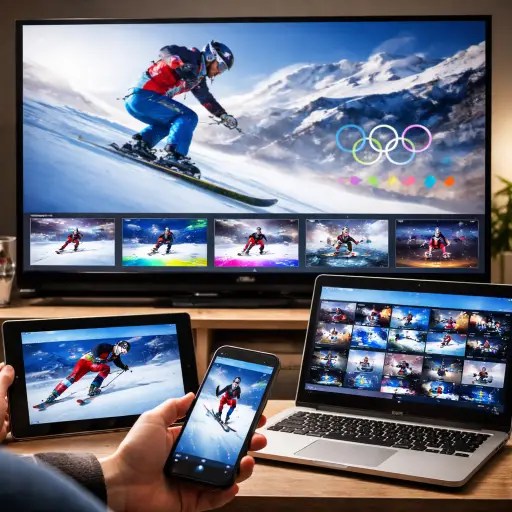
Advanced streaming tools and multi-screen viewing redefine how global audiences experience winter sports
As global audiences turn their attention to winter sports, NBC is unveiling a sweeping expansion of its digital broadcasting technology, signaling a significant shift in how Olympic coverage is delivered to viewers worldwide. The media company is introducing a suite of advanced streaming features and mobile viewing innovations designed to bridge the gap between traditional television and modern digital consumption. The move represents one of NBC’s most ambitious steps toward a fully integrated broadcasting ecosystem, reflecting broader industry trends and changing viewer expectations.
The expansion comes at a time when audience behavior is undergoing a rapid transformation. Increasingly, viewers are turning to mobile devices, smart televisions, and multi-platform streaming services to watch live sports events. NBC’s strategy aims to meet audiences where they are, offering enhanced accessibility, customization, and flexibility across a variety of digital channels. Executives describe the initiative as part of a long-term digital transformation designed to modernize sports broadcasting while preserving the high production standards associated with Olympic coverage.
One of the central components of NBC’s technological upgrade is the introduction of multi-screen streaming capabilities. Viewers can simultaneously watch multiple sporting events, switch between camera angles, and access live data feeds without leaving the primary broadcast interface. This approach is designed to give audiences greater control over their viewing experience, allowing them to tailor coverage according to personal interests, favorite athletes, or specific competitions.
Industry analysts note that the integration of multi-screen functionality reflects an emerging standard in sports broadcasting. As viewers demand more interactive and immersive experiences, broadcasters are increasingly investing in technologies that allow users to customize their content. NBC’s implementation extends beyond simple picture-in-picture features, incorporating synchronized feeds that maintain broadcast quality across different devices, including smartphones, tablets, and connected televisions.
Mobile viewing technology is also receiving a substantial upgrade as part of NBC’s Olympic coverage. The company has introduced optimized streaming algorithms that adjust video quality dynamically, ensuring stable performance even in areas with limited bandwidth. The improvements are particularly significant for viewers accessing content on mobile networks, where fluctuations in connection strength have historically affected streaming reliability.
NBC engineers have focused on reducing latency between live events and digital broadcasts, addressing one of the most persistent challenges in streaming sports. By deploying advanced encoding techniques and expanding cloud-based distribution networks, the company aims to deliver near real-time coverage across digital platforms. The reduced delay is expected to enhance viewer engagement, particularly for audiences following live results and social media discussions simultaneously.
Another key aspect of NBC’s digital transformation involves integrating traditional television production workflows with streaming infrastructure. The company has redesigned its broadcast operations to allow content to be produced simultaneously for linear television and digital platforms. This unified production model ensures consistent quality while enabling the rapid distribution of highlights, replays, and behind-the-scenes content through online channels.
The expansion also includes enhanced personalization features powered by data analytics. NBC’s digital platforms now offer curated recommendations based on viewing habits, preferred sports categories, and previous interactions with Olympic content. The company emphasizes that personalization is intended to simplify navigation through the vast array of available events, helping viewers discover competitions that might otherwise go unnoticed.
Advertising strategies are also evolving alongside NBC’s technological upgrades. The company is implementing targeted advertising models that allow brands to reach specific audience segments without disrupting the viewing experience. By leveraging real-time data insights, NBC aims to deliver advertising content that aligns more closely with viewer interests, potentially increasing engagement while maintaining revenue streams critical to Olympic broadcasting rights.
Media industry experts suggest that NBC’s expanded digital capabilities reflect a broader shift in the competitive landscape. Traditional broadcasters are increasingly positioning themselves as hybrid content providers, combining the reliability of established television networks with the flexibility of streaming platforms. NBC’s Olympic coverage is being closely watched as a potential blueprint for how major sporting events may be broadcast in the future.
The company’s investment in digital infrastructure also highlights the growing importance of global accessibility. NBC has emphasized the role of streaming technology in reaching international audiences and younger viewers who consume sports primarily through digital platforms. By offering seamless cross-device functionality, NBC aims to expand the global reach of Olympic coverage while strengthening viewer loyalty.
Behind the scenes, NBC’s transformation relies heavily on cloud computing and artificial intelligence technologies. Automated systems assist in video editing, content tagging, and distribution scheduling, enabling faster turnaround times for highlights and supplementary content. These tools also support NBC’s ability to deliver customized viewing experiences, reinforcing the company’s commitment to innovation in sports media.
Despite the technological advancements, NBC executives stress that storytelling remains at the core of Olympic broadcasting. The enhanced digital features are designed to complement, rather than replace, traditional broadcast narratives. By combining immersive technology with human-centered storytelling, NBC aims to preserve the emotional impact that has long defined Olympic coverage.
As the Olympic competition unfolds, NBC’s digital broadcasting expansion represents a pivotal moment in the evolution of sports media. The integration of advanced streaming tools, mobile optimization, and multi-screen functionality underscores the company’s effort to redefine how audiences engage with global sporting events. The initiative demonstrates how legacy broadcasters are adapting to an increasingly digital world, where viewers expect instant access, personalized content, and interactive experiences.
NBC’s strategy signals a broader transformation that extends beyond Olympic coverage. As technological innovation continues to reshape the media industry, the company’s investment in digital broadcasting may serve as a model for future large-scale sporting events. The success of these initiatives could influence how broadcasters worldwide approach the convergence of television and streaming, marking a new era in the delivery of live sports content.




 The Tower Post