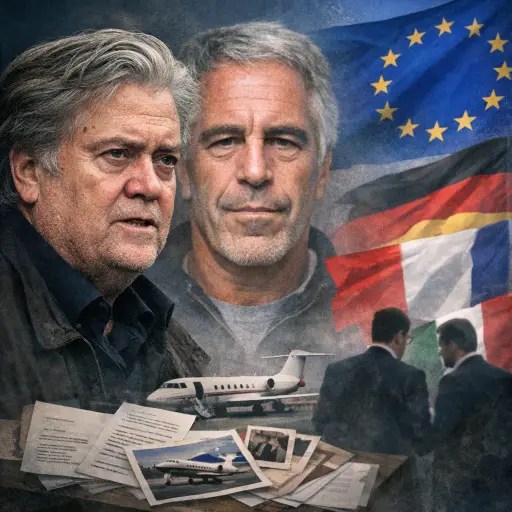
Newly released documents raise questions about alleged outreach to nationalist figures across Europe, reigniting debates over transparency, foreign influence, and democratic safeguards.
The release of a new tranche of documents linked to the late financier Jeffrey Epstein has triggered fresh political unease across Europe, after references surfaced suggesting attempts to leverage Epstein’s elite international network to cultivate relationships with far-right political actors on the continent.
At the center of the controversy is Steve Bannon, the former strategist to U.S. President Donald Trump, whose name appears in correspondence and meeting notes contained in the files. According to the documents, Bannon explored the possibility of using Epstein’s connections—spanning business leaders, academics, and political figures—to open doors for nationalist and populist movements in several European countries.
While the materials do not indicate direct financial transfers, they describe outreach efforts and strategic discussions involving political figures and intermediaries in Italy, France, and Germany. The disclosures have prompted members of the European Parliament and several national legislatures to call for formal inquiries into whether foreign political operatives sought to influence domestic political landscapes through informal networks and personal relationships.
The documents, released as part of ongoing legal and archival proceedings related to Epstein’s estate and associates, depict a pattern of networking that extended well beyond the United States. In private communications, Bannon reportedly framed Europe as a decisive battleground for the future of nationalist politics, emphasizing the need for coordination among like-minded movements.
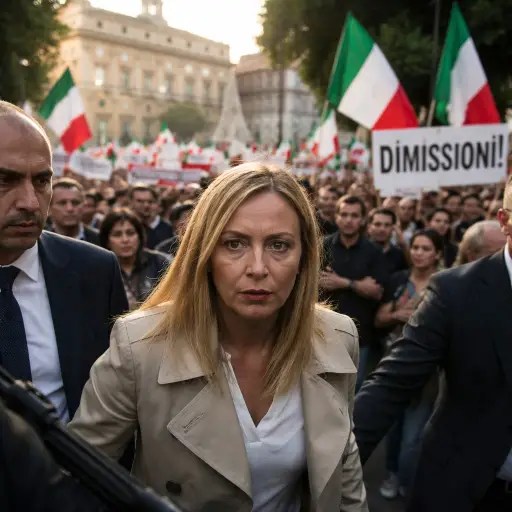
Italy features prominently in the files, with references to meetings involving conservative intellectual circles and political advisers close to hard-right parties. In France, the documents allude to attempted introductions to figures aligned with sovereigntist and anti-globalist platforms, while in Germany the outreach appears more tentative, reflecting the country’s stricter legal and cultural constraints on far-right organizing.
None of the named European politicians have been accused of wrongdoing, and several have issued statements denying any substantive engagement with Bannon or Epstein. Nonetheless, the suggestion that Epstein’s social capital may have been viewed as a tool for political influence has unsettled lawmakers already wary of covert foreign interference.
Members of the European Parliament from across the political spectrum have urged transparency. Lawmakers from centrist and left-leaning groups have called for parliamentary hearings to determine whether existing rules on lobbying, political financing, and foreign influence are adequate to address informal networks that operate outside traditional oversight mechanisms.
Even some conservative lawmakers have acknowledged the need for clarity, warning that unresolved questions could fuel public cynicism. National authorities in several countries are now assessing whether the alleged outreach efforts fall within the scope of current transparency and national security regulations.
Crucially, investigators and journalists reviewing the files emphasize that no evidence has emerged of direct financial support from Epstein or his associates to European political parties or campaigns. The documents instead point to exploratory discussions, networking strategies, and ideological alignment.
Experts say that distinction matters legally, but not necessarily politically. Influence does not always require money changing hands. Access, legitimacy, and coordination can be just as powerful.
The episode has revived broader debates about the resilience of European democracies in an era of globalized politics, where informal channels can sometimes bypass formal safeguards. It also underscores lingering discomfort over Epstein’s enduring shadow and the extent to which his relationships continue to surface in unexpected contexts.
As European institutions weigh possible responses, the controversy is likely to sharpen calls for stronger disclosure rules and cross-border cooperation. For now, the revelations serve as a reminder that political influence can travel through unconventional paths—and that transparency remains a work in progress across democratic systems.


 The Tower Post