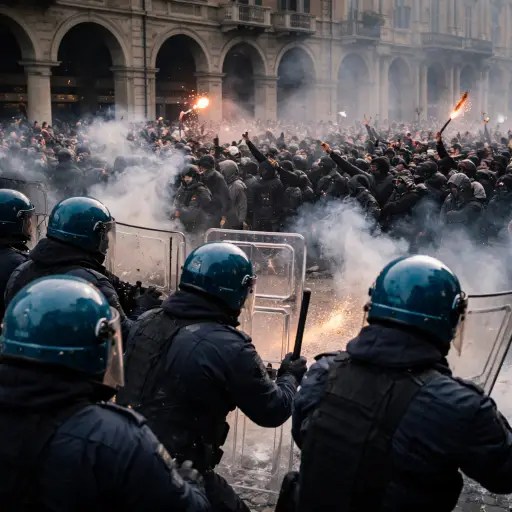
Emergency decree allows preventive detentions and tougher gang measures as government cites public order, critics warn of constitutional overreach
In the wake of violent street unrest in Turin, Italy’s government has approved a sweeping security decree that significantly expands police powers, marking one of the most consequential domestic policy shifts in recent years. The move, framed by ministers as a necessary response to public disorder, has ignited an intense political and legal debate over civil liberties, proportionality, and the limits of state authority.
The unrest that prompted the decree erupted during a protest that devolved into clashes between demonstrators and law enforcement. Scenes of overturned barricades, burning debris, and injured officers circulated widely, amplifying public concern about the state’s capacity to prevent sudden outbreaks of violence in major cities. Government officials argued that existing legal tools were insufficient to intervene early enough to stop disorder from escalating.
At the heart of the new law is a provision allowing police to temporarily detain individuals deemed likely to cause unrest for up to twelve hours, even in the absence of an immediate crime. Authorities describe the measure as preventive rather than punitive, intended to defuse volatile situations before they spiral out of control. Interior officials insist the power will be subject to judicial oversight and used only in exceptional circumstances.
The decree also strengthens measures targeting youth gangs, expanding police authority to intervene in areas identified as high risk and increasing penalties for organized street violence. Supporters within the governing coalition argue that these provisions address a growing sense of insecurity, particularly in urban neighborhoods where confrontations among rival groups have become more frequent and brazen.
Another contentious element of the law extends legal protections for police officers and civilians acting in self-defense during public order operations. The government says the change is designed to shield those who intervene to protect lives and property from lengthy legal uncertainty. Critics counter that the language is overly broad and could lower accountability standards, especially during crowd-control operations.
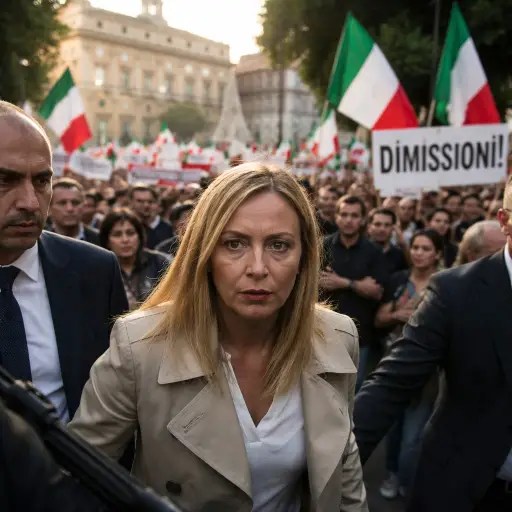
Opposition parties reacted sharply, accusing the government of exploiting public fear to push through repressive measures. Lawmakers from across the center-left and civil liberties groups warned that preventive detention without a clear criminal charge risks violating constitutional guarantees of personal freedom. Several have signaled their intention to challenge the decree before Italy’s constitutional court.
Legal scholars have also weighed in, noting that the law blurs the line between administrative prevention and criminal sanction. While preventive measures exist in Italian law, they argue, the expansion of detention powers represents a qualitative shift that demands strict safeguards. The debate has revived long-standing tensions between security policy and constitutional protections rooted in Italy’s post-war legal framework.
The timing of the decree has further intensified scrutiny. With Italy preparing to host a major international sporting event in the coming years, opponents claim the government is prioritizing image and order over rights, using the promise of security to justify exceptional powers. Ministers reject the accusation, saying the law responds to domestic realities rather than international pressures.
Public opinion remains divided. Some residents of Turin and other large cities say the government is right to act decisively after years of mounting frustration over vandalism and violent protests. Others fear the new rules could be applied unevenly, disproportionately affecting young people and marginalized communities.
As the decree moves into the implementation phase, its real impact will depend on how broadly police interpret their new authority and how rigorously courts enforce oversight. What is clear is that the Turin riot has become a catalyst for a national reckoning over how Italy balances public order with the fundamental rights at the core of its democratic identity.


 The Tower Post