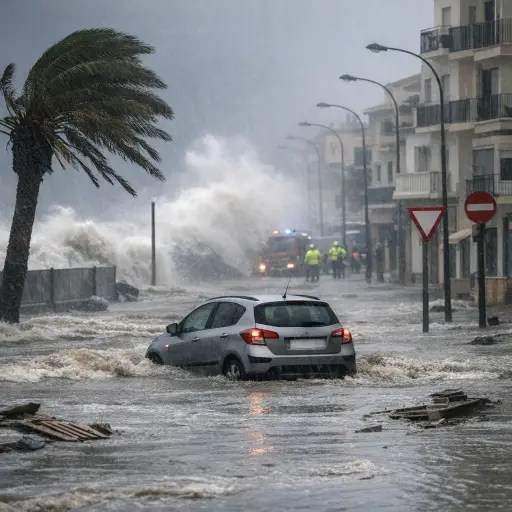
Violent winds, torrential rain and widespread flooding have swept across southern Europe as Storm Leonardo continues to batter the region, triggering evacuations, paralyzing transport networks and pushing emergency services to their limits.
From the Iberian Peninsula to parts of northern Africa, communities are grappling with the most severe winter weather seen in years.
In Spain and Portugal, authorities declared states of heightened alert as rivers burst their banks and coastal areas were lashed by gale-force winds. Entire neighborhoods were evacuated overnight as floodwaters surged through streets, inundating homes, businesses and farmland. Emergency shelters were opened in several regions to accommodate families forced to flee with little notice.
The impact has been particularly severe in southern Spain, where relentless rainfall has shattered long-standing records. In parts of Andalusia, precipitation levels typically expected over an entire year fell within just a matter of days, overwhelming drainage systems and reservoirs alike. Rural areas suffered extensive damage as swollen rivers tore through fields, destroyed crops and cut off access to small villages.
Transport infrastructure across the region has been heavily disrupted. Rail services were suspended on multiple lines after landslides and flooding damaged tracks, while major roads were rendered impassable by debris and standing water. Airports reported delays and cancellations as high winds grounded flights and made landings unsafe. Ports along the Atlantic and Mediterranean coasts were closed to maritime traffic as towering waves and storm surges battered harbors.
Portugal faced similar challenges, with emergency crews responding to hundreds of incidents ranging from fallen trees and power outages to flooded basements and collapsed retaining walls. Coastal towns were placed on high alert as authorities warned of dangerous sea conditions and urged residents to stay indoors. Schools and public buildings were closed in several districts as a precaution.
Beyond Europe, the storm’s reach extended into parts of northern Africa, where heavy rainfall caused flash flooding in low-lying areas. Local authorities reported damage to roads and utilities, underscoring the storm’s unusually broad and destructive footprint.
Emergency services across the affected regions remain under intense pressure. Firefighters, police and medical teams have been working around the clock to rescue stranded residents, restore essential services and assess structural damage. Officials warned that saturated ground conditions increase the risk of further landslides and flooding, even if rainfall begins to ease.
Meteorologists describe Storm Leonardo as part of a pattern of increasingly volatile winter weather affecting southern Europe. Warmer sea temperatures and shifting atmospheric conditions are believed to be intensifying storms, bringing heavier rainfall and stronger winds than previously typical for the season.
As cleanup efforts begin in the hardest-hit areas, authorities are urging caution and patience. Many communities face days, if not weeks, of recovery as infrastructure is repaired and damage assessments continue. For residents of southern Europe, Storm Leonardo has become a stark reminder of the growing vulnerability of the region to extreme weather events.



 The Tower Post