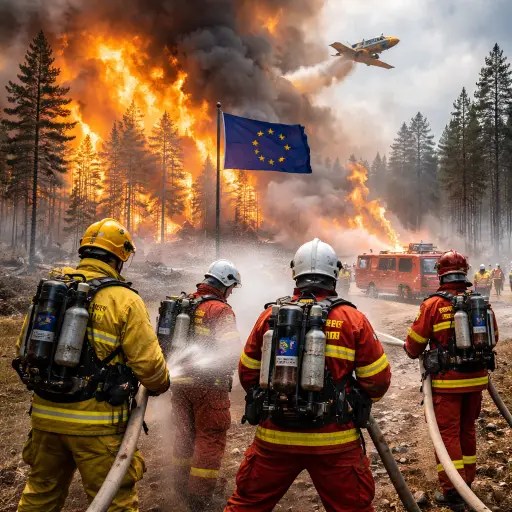
New rapid reaction unit marks a turning point in Europe’s collective response to climate-driven disasters
Europe has taken a decisive step toward confronting the growing threat of wildfires, as the European Union has announced the creation of a 300-strong rapid reaction firefighting force drawn from all 27 member states. The initiative, unveiled by the EU’s climate commissioner, is designed to provide swift, coordinated support to countries overwhelmed by large-scale fires, which have become increasingly frequent and destructive across the continent.
The announcement follows a devastating wildfire season that left an unprecedented mark on Europe. Across multiple regions, fires burned longer, spread faster, and reached areas that had rarely faced such threats before. Prolonged heatwaves, chronic drought conditions, and erratic winds combined to create what scientists have described as a “new normal” for European summers. Climate change, long discussed as a future risk, has become an immediate and visible driver of disaster.
Against this backdrop, EU officials say the new force represents a qualitative shift in how Europe prepares for and responds to climate-related emergencies. The unit, referred to as a rapid reaction force, will consist of professional firefighters seconded from national services and trained to operate together under a common framework. Its purpose is not to replace national firefighting capabilities, but to reinforce them when crises exceed domestic capacity.
According to the climate commissioner, speed is the core objective. Major wildfires can escalate dramatically within hours, overwhelming local responders and causing irreversible damage. By maintaining a permanent pool of firefighters on standby, the EU aims to shorten deployment times and improve coordination during the most critical early phases of an emergency.
The initiative also reflects growing recognition that wildfires are no longer a purely national issue. In recent years, several countries have faced simultaneous fire outbreaks, limiting the effectiveness of traditional mutual aid arrangements. When multiple member states are under pressure at the same time, solidarity mechanisms based on voluntary assistance can quickly reach their limits.
Southern Europe remains particularly vulnerable, with recurring fires threatening rural communities, tourism hubs, and key agricultural regions. However, the geographic spread of recent fires has challenged old assumptions. Northern and central parts of the continent have experienced severe blazes fueled by unusually high temperatures and dry conditions, underscoring the continental scale of the risk.
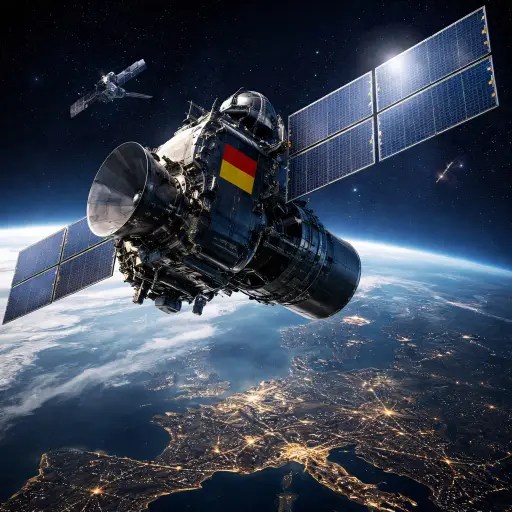
The new firefighting force is expected to operate alongside existing EU civil protection tools, including shared aerial firefighting aircraft, satellite-based early warning systems, and coordinated logistics support. Together, these elements are intended to form a more integrated European approach, spanning prevention, preparedness, and emergency response.
Despite broad political support, important details remain under discussion. EU officials have yet to finalize where the force will be based, how rotational staffing will work, and how deployments will be prioritized during peak fire periods. Funding arrangements and long-term governance structures are also still being refined, reflecting the complexity of building a permanent cross-border emergency service.
Some member states have welcomed the initiative as overdue, arguing that climate-driven disasters now pose risks comparable to other major security threats. Environmental organizations have also praised the move, while stressing that firefighting capacity alone cannot compensate for insufficient climate mitigation, forest management, and land-use planning.
Skeptics, meanwhile, question whether a 300-person unit will be sufficient in the face of increasingly large and frequent fires. Others caution that operational success will depend on clear command structures and legal clarity to avoid delays once an emergency request is made.
EU officials acknowledge these challenges but emphasize that the rapid reaction force is designed as a foundation rather than a final answer. The framework allows for future expansion, both in personnel and resources, as lessons are learned and risks evolve.
As Europe continues to warm faster than the global average, wildfires are expected to remain a defining challenge for policymakers. The creation of a common firefighting force sends a clear signal that the European Union views climate impacts not only as environmental issues, but as shared emergencies demanding collective action.
In an era of intensifying climate extremes, the success of this initiative may ultimately be judged not only by how many fires it helps extinguish, but by how effectively it embodies the principle of European solidarity under pressure.

 The Tower Post